
The Matter of Memory: Dominique Fung and the Afterlives of Objects
What survives of the past depends on what is preserved, how it is displayed, and the
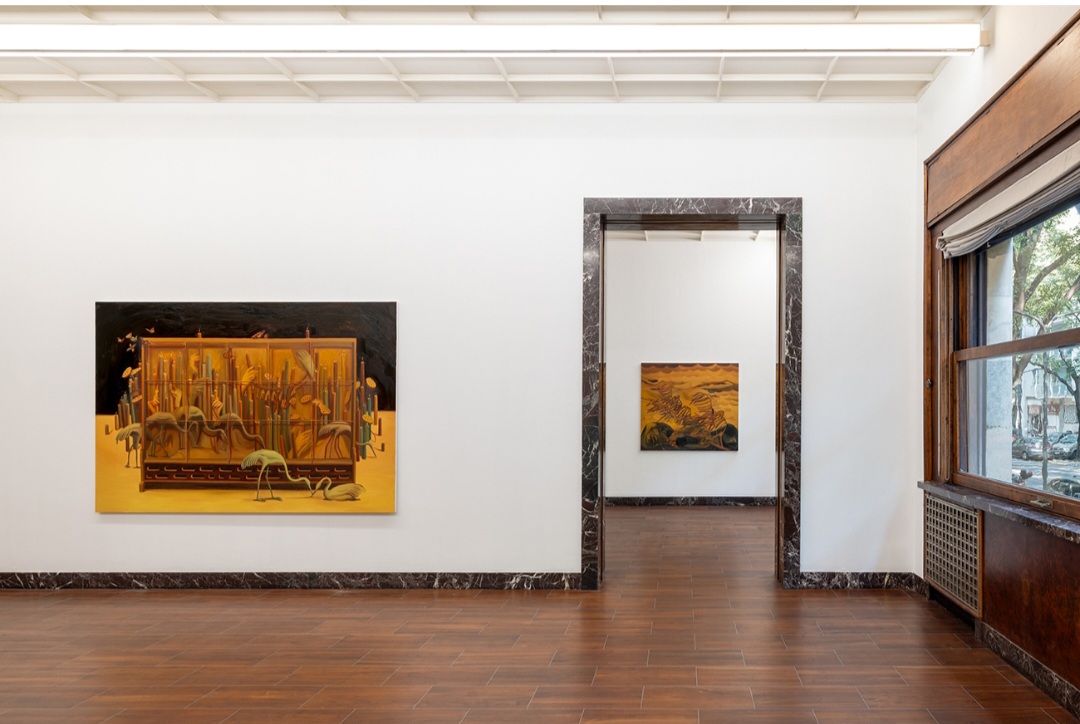
meanings it is made to carry. In The Trace of Things, Dominique Fung’s first solo exhibition in Italy, presented by MASSIMODECARLO in Milan, paintings and drawings explore the relationship between material persistence and cultural memory. Objects and represented forms participate in the construction of history, their significance shifting as they move through different contexts of interpretation.
In The Social Life of Things (1986), edited by Arjun Appadurai, objects acquire value
through their circulation across social and cultural settings. In the same volume, Igor
Kopytoff develops the concept of the “cultural biography” of things, showing how their
identities change through use, exchange, and preservation. Bill Brown’s A Sense of Things (2003) further examines how material forms challenge established systems of meaning. These perspectives illuminate a central question in Fung’s practice: the distance between what survives and what subsequent generations can understand.
In What We Forget, the Earth Keeps (2026), undulating bands of ochre and yellow extend
across the surface, interrupted by dark masses and branching forms in shades of brown
and red. The landscape becomes a field of sedimentation in which traces accumulate
beyond the limits of human recollection. Matter bears witness to transformations unfolding
across time, suggesting a conception of memory grounded in duration and the persistence of form.
In The Garden Before Time (2026), white cranes gather around a tree with exposed roots.
Reddish branches intertwine with the birds’ plumage, blurring the boundaries between
vegetal and animal forms. Candles placed on the ground introduce an indirect human
presence, evoking remembrance and commemoration without prescribing a single
interpretation. Against a dark background, the garden occupies an ambiguous space
between nature and culture, where organic forms coexist with traces of human experience. The title evokes a time preceding any recognisable origin, as though the scene preserved the image of a world not yet subject to a definitive interpretation.
In The Window Between Farewell and Return (2026), a window structured by a grid of
panes is suffused with amber light. Hands, candles, birds, butterflies, and capsule-like
vegetal forms create a constellation of presences extending across and beyond its
divisions. The window becomes a threshold between distinct spaces, bringing proximity
and distance into relation. Its framework organises the viewer’s gaze, while the forms that
cross its boundaries unsettle that order. The window thus shapes the conditions of
visibility, establishing a limit that separates while simultaneously connecting. Its title
deepens this ambiguity, suggesting farewell and return as complementary movements
within the space of vision.
Together, the three paintings articulate different relationships with time: the sedimentation
of matter, the interweaving of living forms and human traces, and the threshold connecting
what appears separate. Memory takes shape through these relationships, remaining open
to successive interpretations. What endures acquires significance through the ways it is
perceived, connected, and reinterpreted.
In Ornamentalism (2019), Anne Anlin Cheng examines how Asian femininity has been
constructed within Western visual culture through the categories of ornament and
objecthood. Her analysis offers a framework for examining the politics of decorative forms and cultural representation. Fung’s engagement with Chinese antiquities raises related questions of inheritance and identity, allowing historical references to acquire new
meanings within a contemporary visual language.
The exhibition also invites comparison with Xu Bing’s Book from the Sky (1987–1991), an
installation of invented characters resembling traditional Chinese writing that remain
unreadable, challenging the conventions that govern cultural legibility. In We the People
(2011–2014), Danh Võ presents a full-scale replica of the Statue of Liberty fabricated in
hundreds of copper fragments and distributed across different locations. The work
questions how context transforms a cultural symbol. Both practices illuminate Fung’s
interest in the relationship between material forms and the narratives through which they
acquire meaning.
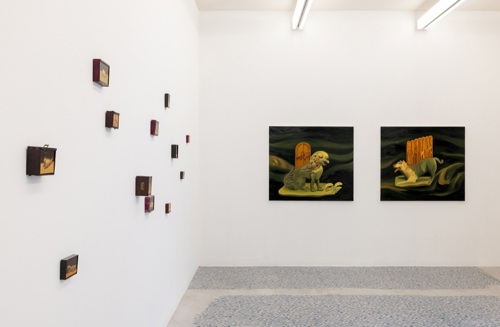
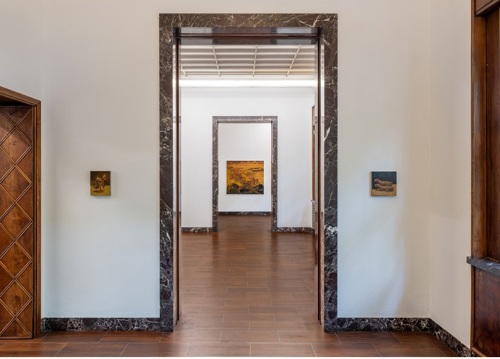
Shang bronzes, Tang-period objects, fossils, butterflies, birds, cranes, and foo dogs,
traditional Chinese guardian figures, bring historical artefacts and natural forms into
dialogue. Presented within a former Milanese residence, they bring different temporalities
and systems of value into proximity, connecting geological duration with cultural history
and the transmission of images. The arrangement invites reflection on how objects derive
significance from the relationships created by their exhibition.
The Trace of Things locates the making of history in the tension between material
persistence and cultural interpretation. Every trace offers evidence while leaving
something unresolved; every act of looking reconstructs relationships between what
remains and what has disappeared. Fung’s works present the past as an active presence,
continually acquiring new meanings as its traces encounter the present.
All Images: Courtesy of the Artist and MASSIMODECARLO Photo by Roberto Marossi