
BEFORE THE IMAGE Conversations on Painting in the Making - Grace Bromley
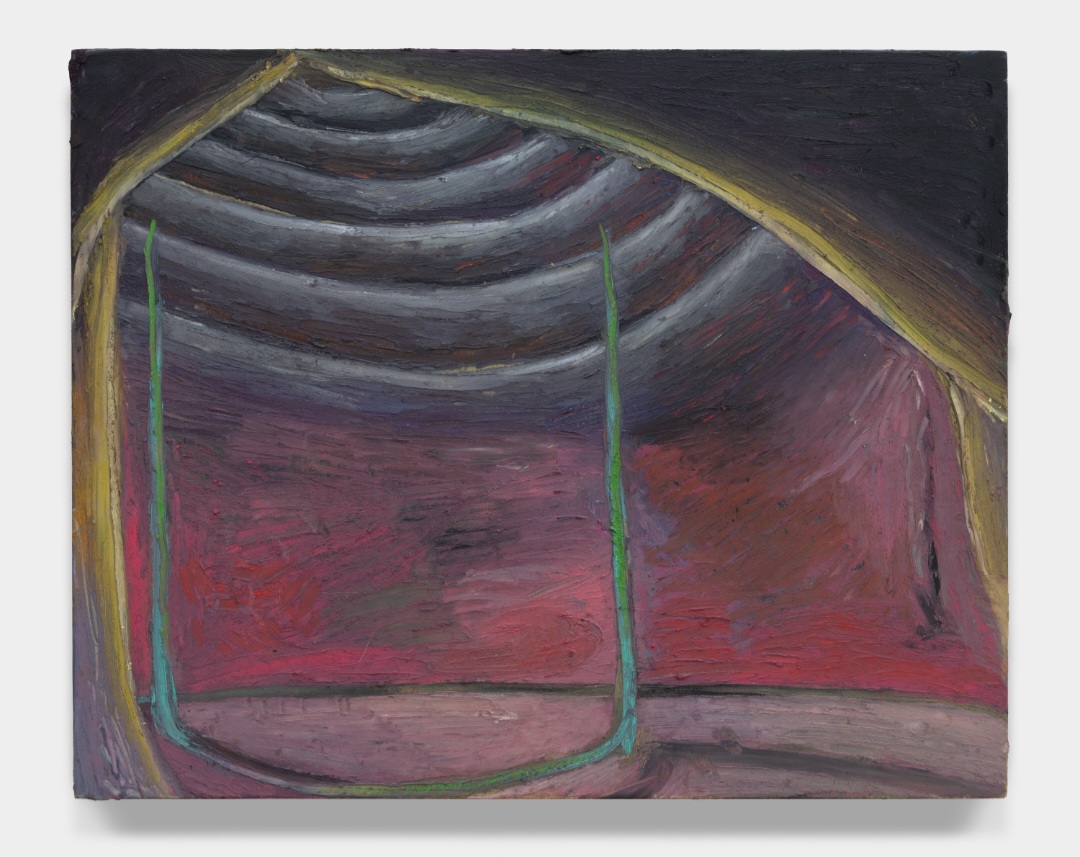
Grace Bromley is an American painter whose work explores the shifting relationships
between bodies, architectural spaces and emotional experience.
Her compositions bring together recognisable environments and elusive forms, creating scenes in which familiar surroundings acquire an uncanny presence. Through these visual ambiguities, Bromley examines the instability of identity and the tensions that emerge within intimate relationships.
Her practice engages with the psychological dimensions of domestic life, particularly the contradictions of care, attachment and personal autonomy. Through a process of layering, alteration and erasure, she develops images in which figures and spaces seem to undergo continuous transformation. Memory, inherited narratives and imagined situations inform a visual language that resists fixed interpretations, allowing vulnerability and uncertainty to remain integral to the work.
In February 2026, Bromley presented Room to Spare at Megan Mulrooney in Los Angeles, continuing her exploration of domestic environments and psychological transformation. The exhibition offers a context for considering how architecture, bodily presence and the emotional structures of everyday life intersect in her paintings.
For BEFORE THE IMAGE, this conversation explores the relationship between reality and imagination, the psychological significance of domestic space, the transformation of the body, and the material processes through which Bromley investigates care, identity and change.
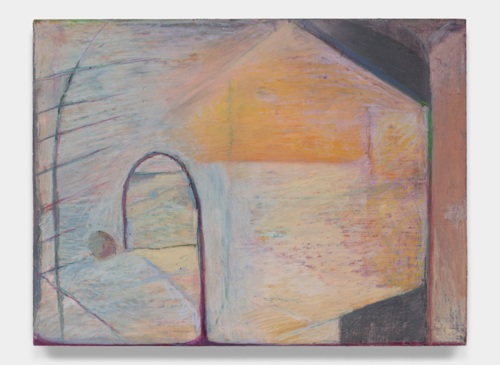
Grace Bromley, The Doghouse, Oil on Canvas, 2026
Margherita Artoni (MA): Your paintings transform recognisable environments into scenes that feel psychologically charged and difficult to locate within a single reality. Familiar spaces become ambiguous, suggesting that the ordinary can conceal experiences or emotions that remain difficult to articulate.
What draws you to these environments? How do you negotiate the relationship between observed reality and imagined situations? What makes an image convincing when its narrative remains unresolved?
Grace Bromley (GB): I think I’m drawn to spaces most recently that feel empty or unused in a real way. Hospital waiting rooms, your house when you’ve first cleaned and staged everything and before you’ve gone to live in it. A stage set up with very intentional lighting. Places that feel stiff and crisp and simple, then I try to approach painting them in a very human and layered and clumsy way. To kind of go in and disrupt the stiffness or imbue it with another energy.
I’m not sure what makes an image convincing when the narrative remains unsolved. I think I’d like the image to feel unsolved too.
MA: Architectural structures organise the relationships between figures, objects and their surroundings in your compositions. Doorways and transitional spaces introduce a sense of passage or suspension, suggesting moments in which familiar structures no longer offer a stable point of reference.
What interests you about doorways and spaces of transition? How do you use architecture to establish psychological tension? Can the arrangement of a space reveal something about the relationships unfolding within it?
GB: Doorways interest me because of the stark geometric contrast between one space and another. When a light is on in one room and not in another, there is such a high spatial and visual contrast in that moment. I feel super drawn to moments that feel magical and haunting and to me that happens usually within some sort of man-made structure.
I do believe arrangement of space can unveil something about a narrative. I like to play with darkness and lightness in that way. If I want to shut the viewer out of part of a painting I will make it as dark and inaccessible as I can. I think painting is really the only place in this life where illogical space can exist and it’s fun to play with logic in that way.
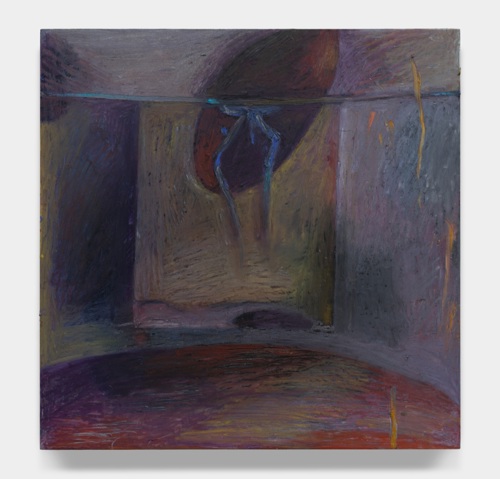
Grace Bromley, Comfortable Distance, Oil on Canvas, 2026
MA: The figures in your paintings often resist clear definition, suggesting that the body can become a site of transformation. Their relationship with the surrounding environment complicates conventional distinctions between individual identity and external experience.
What guides your decisions when transforming the human figure? How do you approach the relationship between bodily form and psychological experience? What can physical ambiguity communicate that a more recognisable representation might leave unexplored?
GB: I like figures to feel like dolls or sculptures, I want them to be almost like a silhouette—where you can project whatever or whoever onto it, maybe in between a silhouette and a mannequin. To me all my figures are always pass-through-able, they barely have boundaries or weight. I want it to be very clear that they’re completely permeable and merged with the environment. I think relationships can feel this way, all-consuming and boundariless and although it’s unpleasant in human life I think it makes an interesting visual concept.
More recognisable representation just wouldn’t make sense for me. There’s no particular person or features that I’m devoting my energy to. It’s more the lack of separation between everything I am devoted to. Everything is made out of the same material and I love to play with how that can come to be.
MA: Your paintings develop through the accumulation, alteration and removal of paint, allowing images to emerge through a process of continuous revision. The surface becomes a record of decisions, accidents and transformations that shape the final composition.
How does a painting begin to take shape in your studio? How do layering and erasure influence the development of an image? Has working with the material ever led you towards a form or composition you had not initially imagined?
GB: I layer a lot, I remove a lot, I try to contradict the layer before with each new pass somehow. If it’s too soft it becomes sharp and vice versa. I love being surprised by a new composition. I don’t necessarily think my strength is in composing an image so in that sense I am open to accidents. I try to find the light and follow it. See what it’s touching and what can come further into it. Painting for me is like slowly opening a dark closet door and letting light in.
MA: Your work engages with the contradictions of care and intimacy, where affection and responsibility can coexist with vulnerability and the desire for independence. These relationships are often shaped by personal histories and inherited expectations that influence how individuals understand themselves and others.
How do personal memories and inherited narratives inform your artistic practice? How do you approach the tension between care and autonomy in your work? What interests you about the contradictions that emerge within familial relationships and cultural expectations?
GB: Personal memories are everything to me. I grew up in a small house with my mom, my sister and my grandma. We were completely on top of each other in a way, there was so much to be learned from my mom and grandma but I struggled to find privacy and my own rhythm. I think this close intergenerational upbringing always fascinated me cause I didn’t see that often, I think in America it’s maybe less common than other places. I was fascinated by womanhood in all its stages from a young age and always thought about relationships, what it meant to be a mother and a grandmother. I was always curious about how the people older than me ended up where they did, what were their desires and fears. Most of my work, the shapes of things and silhouettes of furniture come from memories of that house—I think it formed my visual understanding very much.
MA: Your paintings leave their narratives open to interpretation, inviting viewers to establish their own connections between figures, spaces and events. Their ambiguity allows different experiences to enter into dialogue with the image, extending its meaning beyond the circumstances of its creation.
How important is ambiguity to your practice? How do you respond when viewers interpret your work in ways you had not anticipated? Which questions are currently guiding the next stage of your artistic research?
GB: Ambiguity is important but I do want there to be something familiar to draw someone in. Sometimes people miss a lot of the things I put in the work or hide. I often think that maybe I should be working less ambiguity if I want the viewer to enter in more.
Questions currently guiding my career: What is real?
Main Image: Grace Bromley, Rehearsel, Oil on Canvas, 2026