
Zhen Yang Brings Chinese Diabolo Tradition to Students at P.S. 244Q
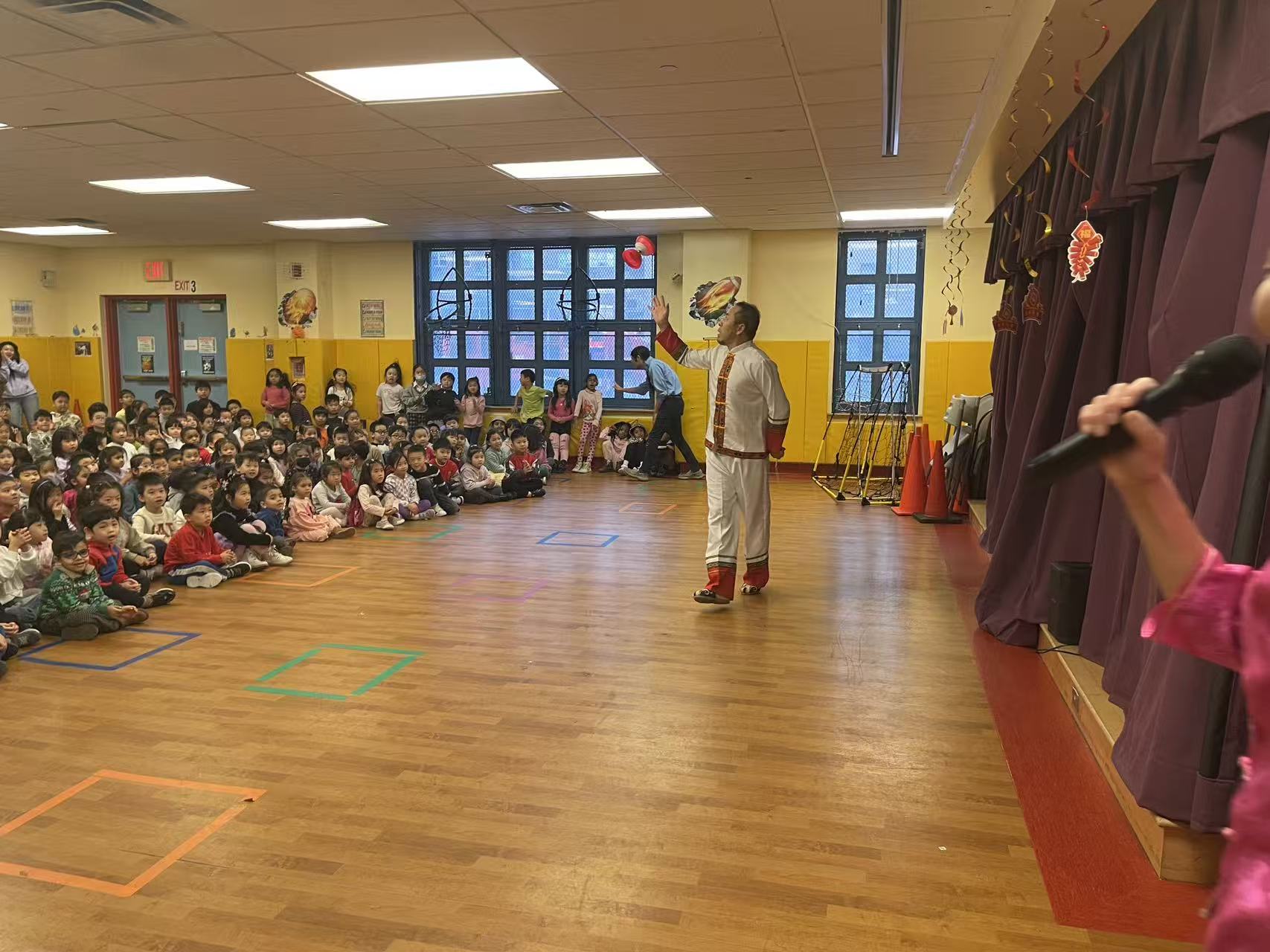
In 2025, Chinese singer and performer Zhen Yang brought a centuries-old Chinese folk
tradition into a New York City classroom, introducing students at P.S. 244Q in Queens to
dou kong zhu, commonly known in English as the Chinese diabolo.
During his visits to the public school, Yang demonstrated how the traditional apparatus
works, using two sticks connected by a string to send the diabolo spinning rapidly,
tossing it into the air, catching it and guiding it through a series of increasingly complex
movements.
For many students, it was their first close-up encounter with the traditional Chinese art
form. “When children see the diabolo spinning and hear the sound it makes, they become
curious immediately,” Yang said. “That curiosity gives me a chance to tell them where it
comes from and why generations of Chinese people have continued to practice it. I hope
they remember not only the performance, but also the culture behind it.”
At P.S. 244Q, Yang did more than demonstrate tricks. He introduced students to the history and cultural meaning behind the diabolo, explained how it works and interacted
with students as they learned about the traditional Chinese practice.
The school setting, he said, offered a particularly meaningful opportunity for cultural
exchange. Rather than encountering the tradition through a video or textbook, students
were able to watch the diabolo move and hear the distinctive sound it produces as it
spins.
Known in Chinese as kong zhu, the diabolo is a traditional folk toy and sport that has been practiced in China for centuries. A spool is balanced and accelerated on a string stretched between two handheld sticks. Skilled performers can control its speed and direction while incorporating throws, catches and increasingly difficult tricks. Traditional versions of the diabolo can also produce a humming or whistling sound while spinning.
The practice of dou kong zhu, or diabolo spinning, was included in China’s first national
list of intangible cultural heritage in 2006, reflecting its long-standing place in Chinese
traditional folk culture.
For Yang, however, the diabolo is not simply a cultural object to be displayed. It is a skill he has practiced for years. In 2014, Yang participated in the Sixth Beijing Municipal Sports Meet in a freestyle diabolo performance event. According to a certificate from the competition, he was recognized as an “Outstanding Athlete.” The event was organized by the Beijing Municipal Bureau of Sports and the Beijing Sports Federation.
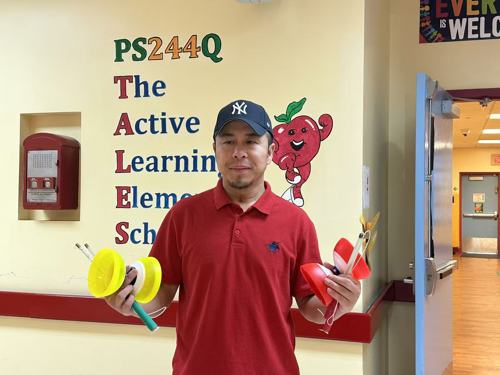
That experience gives Yang a different perspective when introducing the tradition to young audiences. He can demonstrate not only the visual excitement of a spinning diabolo, but also the balance, coordination, concentration and repeated practice required to master it.
Over the years, Yang has also collected a wide variety of diabolo pieces, including specially designed and commemorative versions. His collection reflects both the
traditional roots of the practice and the many forms that the diabolo has taken in modern
China. For Yang, bringing the art into an American public school is also a way of keeping the tradition alive.
“Culture becomes meaningful when people can actually experience it,” Yang said. “Whether I am singing a Chinese song or showing students how to spin a diabolo, I want
them to feel that Chinese culture is something alive, something they can see, hear and
connect with.”
His appearance at P.S. 244Q is part of a broader effort to introduce Chinese culture to New York audiences. Yang is also known for his career as a vocalist and has appeared at concerts, community celebrations and cultural events in New York. His performances often combine his professional background in music with his interest in introducing Chinese traditions to people from different cultural backgrounds.
Earlier in his career in China, Yang accumulated extensive stage and performance
experience. Since coming to New York, he has continued to perform while increasingly
participating in cultural exchange activities across the city. He has also performed at Carnegie Hall, where he sang the well-known Chinese song “The Moon Represents My Heart,” a Mandarin classic familiar to generations of Chinese-speaking audiences. His New York performances have allowed him to introduce different aspects of Chinese culture through both music and traditional folk arts.
But inside P.S. 244Q, the setting was far removed from a formal concert hall. There, the focus was less on the stage and more on the moment when a rapidly spinning piece of traditional Chinese craftsmanship captured the attention of a classroom. The students’ reactions — watching the diabolo rise into the air, spin along the string and return to Yang’s control — created an immediate connection with a tradition that originated thousands of miles away.
For students growing up in Queens, one of the most culturally diverse areas of New York
City, Yang believes that experiences like these can turn cultural exchange into something
direct and personal.
His 2025 visits to P.S. 244Q also illustrate how traditional art forms can find new
audiences far beyond the communities where they originated. Instead of being preserved
only through exhibitions or historical records, the diabolo becomes something that young
people can encounter firsthand. For Yang, that is precisely the point. By bringing dou kong zhu from the traditions of Beijing into a Queens public school, he hopes to create more than a memorable performance. He hopes to give young New Yorkers a window into Chinese culture — and to use performance as a bridge between generations, communities and cultures.
This article is authored by By Felicia Guo