
Wolfgang Tillmans receives the Roswitha Haftmann Prize 2026
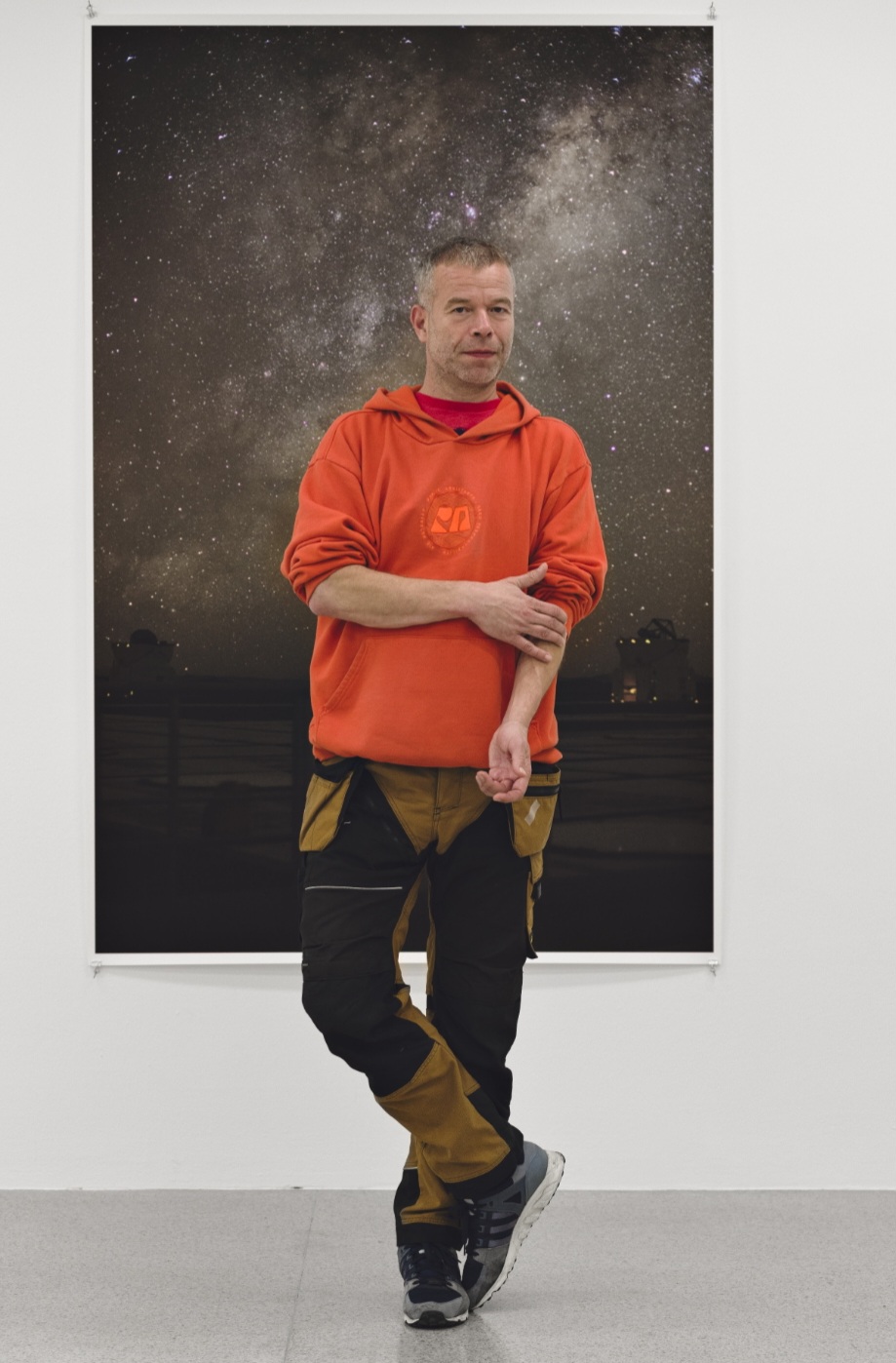
The German artist Wolfgang Tillmans (b. 1968) is recognized for the entirety of his artistic oeuvre and for his social commitment.
The 2026 Prize awarded by the Roswitha Haftmann Foundation, which has a value of CHF 150,000, goes to Wolfgang Tillmans. It is presented by the Foundation Board in acknowledgement of a body of work that, over four decades, has combined artistic innovation with social responsibility. Tillmans is the 28th recipient of Europe’s best-endowed art award. Previous winners of the Roswitha Haftmann Prize have included Walter De Maria, VALIE EXPORT, Maria Lassnig, Cildo Meireles, Sigmar Polke, Robert Ryman, Cindy Sherman, Rosemarie Trockel, Cecilia Vicuña and Jeff Wall.
The official award ceremony will take place on Thursday 17 September 2026 at the Kunsthaus Zürich. The laudation will be delivered by Prof. Bernhart Schwenk, a member of the Board and Chief Curator and Head of the Contemporary Art Collection at the Pinakothek der Moderne in Munich. He says: ‘Wolfgang Tillmans is unquestionably one of the trailblazing artists of his generation in the field of photography internationally. His artistic practice goes far beyond the purely aesthetic, harnessing public presence and language to foster a collective democratic consciousness founded on openness and solidarity.’
Wolfgang Tillmans came to prominence in the 1990s with his seminal portraits of people from his immediate circle, the European club scene and the LGBTIQ+ community. His photographs were published in music and lifestyle magazines and quickly established him as a meticulous documenter of social trends. In the decades that followed, he broadened his activities to encompass still lifes, sky and landscape photographs, astronomical images and new photographic practices in which the camera was replaced by the interplay of mechanical operations or the mineral and chemical processes of photography. The material aspects of the image – paper, surface, printing and form of presentation – also became central to his work. Tillmans’s oeuvre combines aesthetic sensibility with a political interest in constructions of reality and claims to truth, especially as they relate to ideologies and gender issues.
Wolfgang Tillmans places his images in a vast array of constellations and contexts; he plays with visual conventions – in newspapers and magazines, exhibition catalogues and other artists’ publications, but most often in typically large-format installations on museum walls or on tables, in which he arranges photocopies, photographs and magazine articles, postcards, packaging and other materials he has collected beneath glass plates. Although Tillmans’s artistic medium is photography, his practice involves much more than simply taking photographs. Tillmans is interested in the materiality of his images as objects and in the impact of architectural spaces. When first deployed, that multifaceted, often installational approach to photography was entirely new; Tillmans was a pioneer of photography as an art form and, to this day, he exerts a powerful influence on upcoming generations of artists. Beyond photography and installations, Tillmans’s practice has expanded, especially over recent years, to include sound and video works, collaborative music productions and works with text.
For Wolfgang Tillmans, art is closely bound up with social commitment. Above and beyond his unmistakeable photographic work, he speaks out in favour of an open and democratic Europe, launching an anti-Brexit campaign on his own initiative in 2016, as well as campaigns urging people to vote in the German Federal Parliament elections in 2017 and the European elections in 2019 and 2024.
Tillmans views culture as a vital space for dialogue, empathy and shared values. His commitment, now also articulated via the Between Bridges foundation, which he set up in 2017, and a multiplicity of projects supported, reflects a quiet but determined form of moral courage: a willingness to defend freedoms, challenge indifference and encourage participation in democratic life.