
WHO GOES HUNTING DOES NOT COUGH in Helsinki
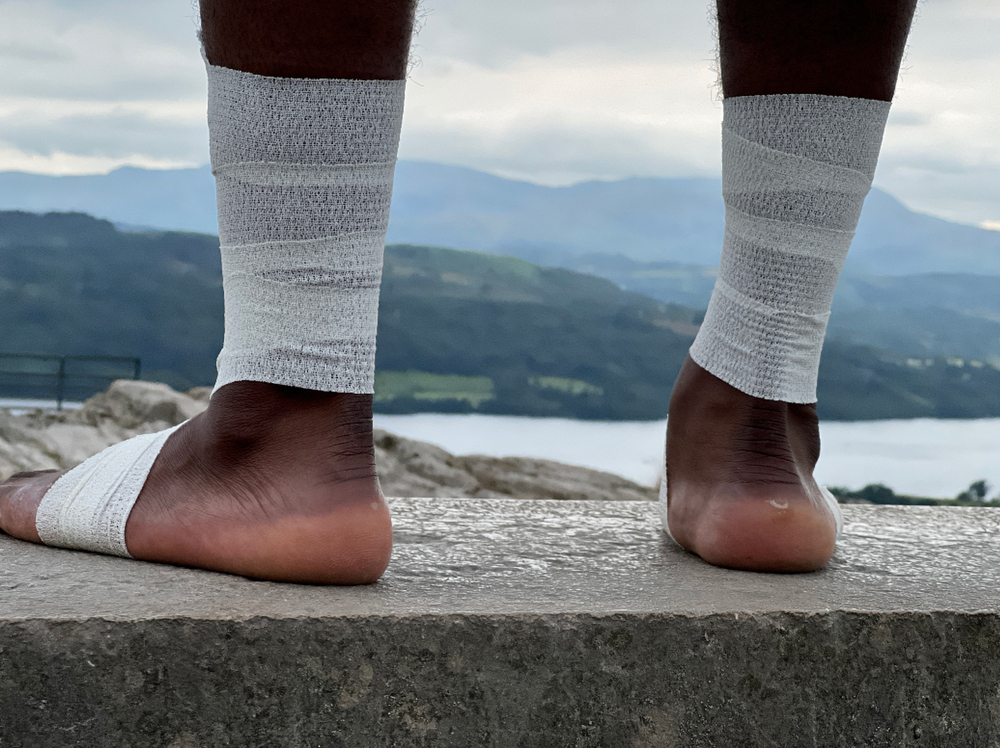
WHO GOES HUNTING DOES NOT COUGH is a group exhibition and a series of public events curated by Kisito Assangni for Pixelache Helsinki, and realised in collaboration with the Finnish Museum of Technology and with EMMA – Espoo Museum of Modern Art.
Participating artists: Kongo Astronauts, Yto Barrada, Neil Beloufa, Theo Eshetu, Cao Fei, Joseph Ijoyemi, Mouna Jemal Siala, Jesper Just, Miatta Kawinzi, William Kentridge, Ali Akbar Metha, Shirin Neshat, Marek Pluciennik, Johan Thom, Eden Tinto Collins, Oliver Whitehead and Sofia Yala.
The project opens its doors to the public on 11.9.2026 at 18:00, with the exhibition vernissage at Museum of Technology, and a screening with a live performance will follow at EMMA – Espoo Museum of Modern Art, on 16.9.2026 starting at 15:00. The activities are a prelude to Pixelache Helsinki Festival’s celebrations, with contents linking directly within the festival’s programme.
The exhibition at the Museum of Technology is on display from September 12 to December 10 featuring works by: Kongo Astronauts, Yto Barrada, Neïl Beloufa, Theo Eshetu, Joseph Ijoyemi, Mouna Jemal Siala, Miatta Kawinzi, Ali Akbar Mehta, Marek Pluciennik, Johan Thom, Eden Tinto Collins, Sofia Yala and Oliver Whitehead.
The event at EMMA – Espoo Museum of Modern Art includes a screening with selected works from the Saastamoinen Foundation Art Collection that explore contemporary narratives around identity, technology, social change and global perspectives: Kongo Astronauts, Yto Barrada, Neïl Beloufa, Theo Eshetu, Cao Fei, Joseph Ijoyemi, Mouna Jemal Siala, Jesper Just, Miatta Kawinzi, William Kentridge, Shirin Neshat, Johan Thom, Eden Tinto Collins, Sofia Yala, and Oliver Whitehead.
In the words of curator Kisito Assangni: “The title Who Goes Hunting Does Not Cough, is derived from an African proverb suggesting that, despite the significance and positioning of projects, you have to let the results speak for themselves. Especially, in a practice where the process holds as much importance as the outcome, and where the notion of an unfinished, remixable project is central.
Media art, through its inherently interdisciplinary, participatory, and technologically responsive nature, has the capacity to radically reshape the future of the museum––transforming it from a static repository of objects into a dynamic site for the co-production of knowledge. The exhibition introduces the public to the works of international artists from different contexts who take on the concepts of power relations, decolonial aesthetics, affective spaces, resilient communities, and new technologies. They reflect about new visualities conducive to look towards the future of the museum as a lived experience. Combining film, video games, sound, photography, installation and performance, most of the pieces in the show embrace a sense of reinvention and agency with the aim to shape various interpretative environments. They speak to the informed viewer as much as the uninitiated."
He continues: "This exhibition is an experimental platform for critical reflection and non-hegemonic world-views. It transcends cultural hierarchies, aligning with what theorist Irit Rogoff in her 2000 book Terra Infirma calls “criticality” – a practice that constantly questions and destabilizes the authority of knowledge production. This shift opens up new interstices and spaces of intersection where diverse forms of knowledge, from indigenous epistemologies to speculative futurisms, can coexist and interact. By challenging linear narratives and fixed hierarchies of values, media art could be the saving grace of the museum of the future. As society becomes increasingly mediated by technology, media art offers a compelling pathway for museums to remain relevant, accessible, and reflective of contemporary life.”
To what extent can media art allow us to shape the future of the museum, and set a greater model for transversal knowledges? Intertwined with the museum, media art marks a profound disruption of the representative regime of aesthetic experiences and objects through its nature to question global cultural systems. Technology establishes a novel infrastructure that affords virtually limitless possibilities for artistic practice within a hyperconnected, post-digital world.
Who Goes Hunting Does Not Cough is part of Another Story, a long term project designed by Egle Oddo and supported by Kone Foundation. Over the course of a three-year program, three invited curators delve into international media art archives to curate annual exhibitions and public programme. Initiated to instigate emerging trends and explore new narratives, the project aims to critically examine contemporary media art practices and compare curatorial approaches.
By showcasing the evolving field, the project’s ambition is to create meaningful connections to diverse global archives, and to unleash valuable repositories of knowledge that warrants further exploration and revitalization.
Main Image © Joseph Ijoyemi, Super Eagles Fly, 2022