
When Drawing Becomes an Act: André de Jong and the Theatre of Making
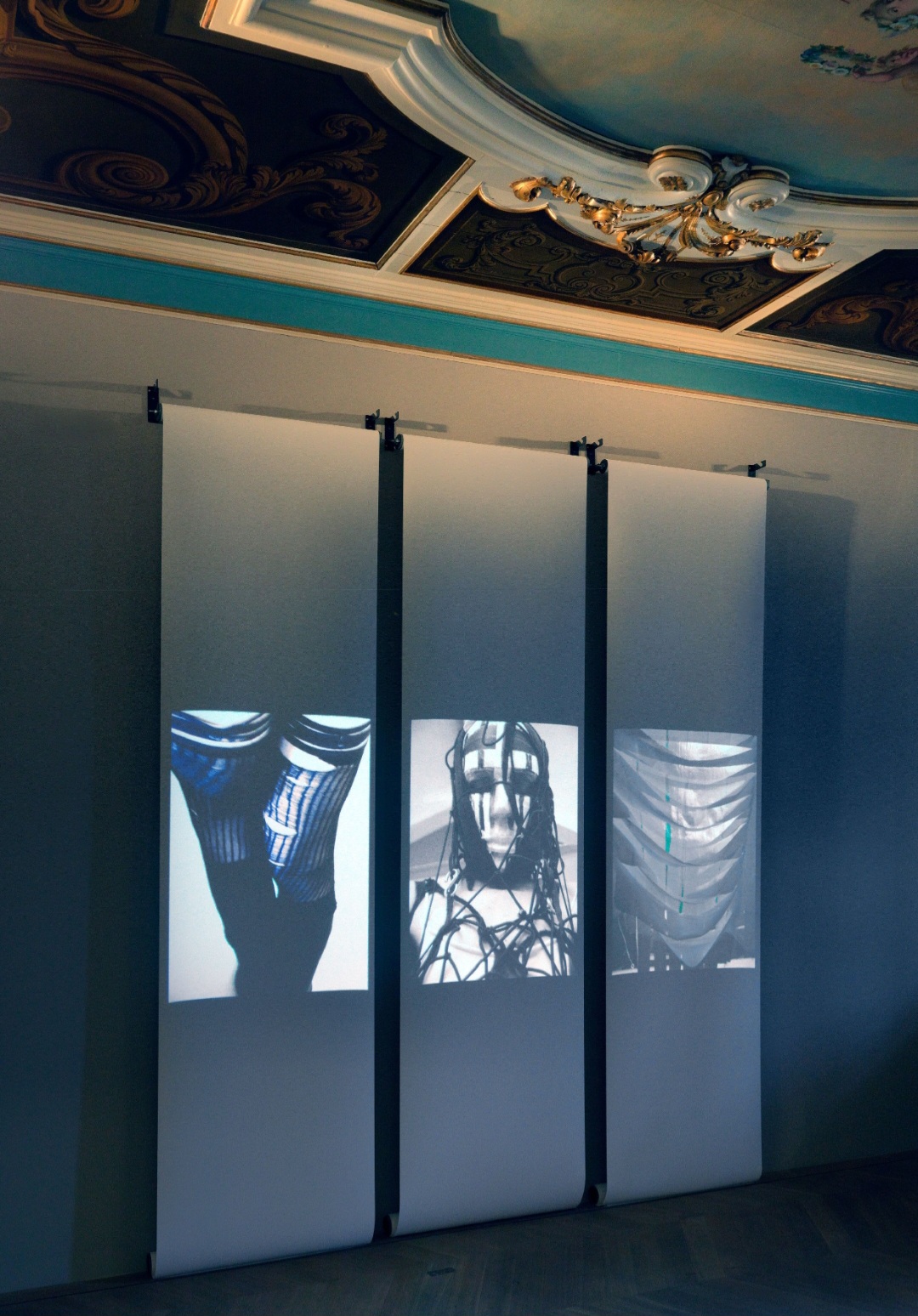
At The Merchant House in Amsterdam, André de Jong's new exhibition taking place during Amsterdam Art Week, brings drawing, photography and performance into conversation, with paintings by Beppie Gielkens offering a counterpoint of colour and expression.
Drawing is often understood as the most immediate of artistic gestures: a line, a mark, an attempt to capture something before it disappears. For Dutch artist André de Jong, however, drawing is rarely a straightforward exercise in representation. It is an activity that involves the whole body, an exchange between movement, observation and imagination that unfolds over time.
This understanding of drawing lies at the centre of André de Jong and His Theater, an exhibition opening at The Merchant House in Amsterdam on 18 November 2026. Bringing together new drawings, photography, sketchbooks, selected objects and a commissioned video work, the exhibition offers an insight into an artistic practice developed over more than five decades. It also introduces paintings by Beppie Gielkens, whose use of colour and line creates a different, yet closely related, visual language.
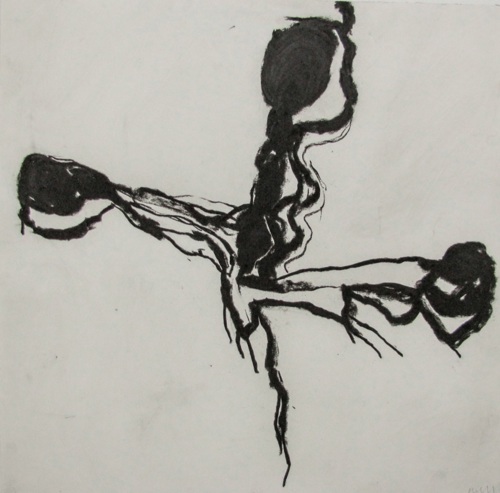
André de Jong, Untitled, 2024 Charcoal and Siberian chalk on Simili Japon paper (250 g)
For de Jong, the studio is not simply a place where images are produced. It is a space of action and experimentation. Objects encountered in everyday life – arrows, lace, string, flowers – can become props in an improvised sequence, prompting new relationships between the artist's body, the materials around him and the marks that eventually appear on paper. Photography plays an important role in this process, documenting moments of transformation and offering material for further exploration.
Rather than beginning with a fixed composition or predetermined outcome, he allows the physical experience of making to guide the work. Drawing becomes a way of thinking through the body, of testing possibilities and registering gestures that might otherwise remain fleeting.
The exhibition takes this idea beyond the individual sheet of paper. Its installation brings together large, unframed paper panels, allowing the drawings to extend across the gallery walls in an expansive sequence. Working in ink, pencil, graphite and charcoal, de Jong develops forms that move between abstraction and recognisable bodily references. The works are presented as an ensemble, yet each retains its own presence, much like an individual scene within a larger theatrical composition.
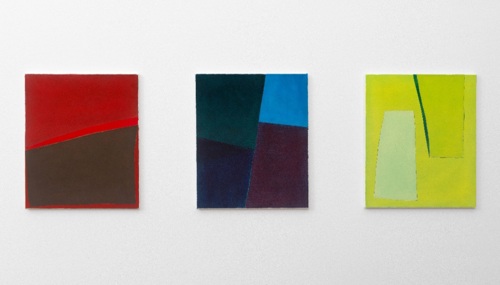
Beppie Gielkens, TMH installation view Photo by Gert Jan van Rooij
The inclusion of Gielkens's paintings adds another dimension to this encounter. An artist in her own right, Gielkens has developed a practice in which colour and line establish complex narrative structures, inviting viewers to return to the image and discover new relationships within it. Her paintings introduce lush colour surfaces alongside de Jong's predominantly monochromatic drawings. The contrast is immediate, but the two practices also share an interest in the expressive possibilities of line and the ways in which visual language can move beyond literal description.
Their presence in the same exhibition is also rooted in a shared artistic life. The presentation acknowledges the role painting has played in their relationship and in de Jong's own understanding of the medium. Rather than treating drawing and painting as separate disciplines, the exhibition places them in a conversation about gesture, material and the many ways an artist can make an idea visible.
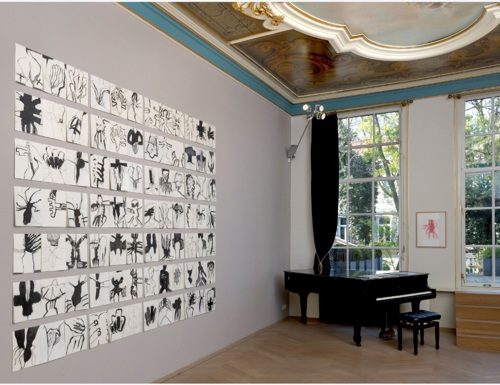
André de Jong, TMH installation view Photo by Gert Jan van Rooij
For The Merchant House, this kind of dialogue reflects a broader curatorial interest in looking at artistic practices through research and sustained engagement. Founded by gallerist Marsha Plotnitsky, the Amsterdam gallery has developed an exhibition programme that brings together artists across generations and disciplines, often accompanied by publications and cultural events that extend beyond the exhibition itself. Its approach places particular emphasis on the process of discovering an artist's work, allowing individual projects to develop their own context and narrative.
De Jong's return to the gallery for his fifth major exhibition there is therefore significant. His work has been developed largely outside the established art centres, following decades of sustained experimentation in the Dutch countryside. Since his rediscovery through a retrospective at Museum Belvédère in 2010, his work has received growing critical and public attention. The exhibition at TMH continues this engagement, offering an opportunity to encounter a practice that has remained remarkably committed to its own methods of inquiry.
Ultimately, André de Jong and His Theater asks viewers to look beyond the finished drawing and consider what takes place before it: the movement, the improvisation, the encounter with an object, the repeated gesture. In doing so, it proposes drawing not simply as a medium, but as an ongoing artistic event. And perhaps this is where the exhibition finds its most compelling point of connection with painting: both begin with an act of making, and both leave traces of the experience behind.
Exhibition: André de Jong and His Theater – André de Jong, with Beppie Gielkens
Venue: The Merchant House, Herengracht 254, Amsterdam
Dates: 18 November 2026 – 28 February 2027
Opening: During Amsterdam Art Week, 18–22 November 2026. Gallery Night: 19 November, 17:00–21:00.
Main Image: André de JongTMH installation view Photo by Gert Jan van Rooij