
Ukraine urges Venice Biennale to exclude Russia
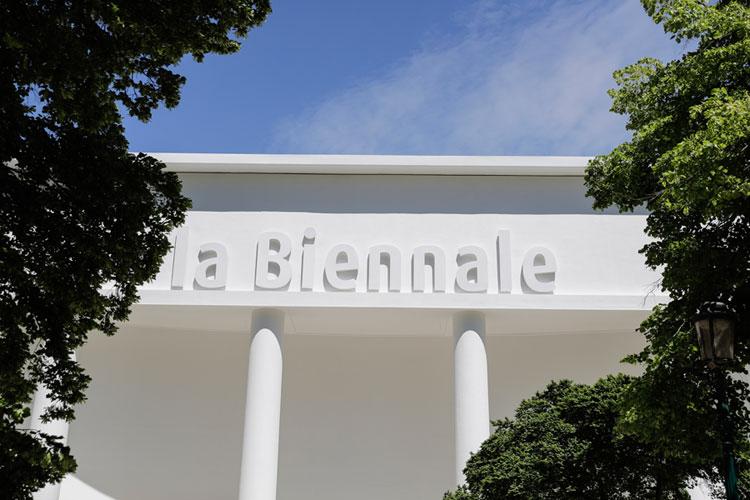
Ukraine on Sunday called on the Venice Biennale to keep Russia out of the prestigious art event after organizers said it could participate for the first time since launching its all-out invasion in 2022.
Organizers of the event said on Wednesday that they would allow Russia to take part in the exhibition this year, which runs from May 9 to Nov. 22.
"La Biennale di Venezia is an open institution" and "rejects any form of exclusion or censorship of culture and art," they said in a statement.
Joint Statement by Andrii Sybiha, Minister of Foreign Affairs of Ukraine, and Tetyana Berezhna, Minister of Culture of Ukraine, on the Inadmissibility of Russia’s Participation in the Venice Biennale:
The Venice Biennale is one of the world’s most authoritative art platforms, and it must not become a stage for whitewashing the war crimes that Russia commits daily against the Ukrainian people and our cultural heritage.
Since 2014, Russia has deliberately destroyed Ukraine’s cultural heritage sites, violating the norms of international humanitarian law and the provisions of the 1954 Hague Convention for the Protection of Cultural Property in the Event of Armed Conflict.
Since the start of the full-scale invasion, Russia has waged a systematic war against Ukrainian culture, identity, and historical memory. Since 2022, Russia’s war has claimed the lives of 346 artists and 132 Ukrainian and foreign media professionals. Russia has destroyed or damaged 1,707 cultural heritage sites and 2,503 cultural infrastructure objects in Ukraine, 558 of which have been completely destroyed. Russian occupiers have illegally seized at least 35,482 museum artifacts, while over 2.1 million items remain in temporarily occupied territories, facing the threat of destruction or illegal displacement.
Direct damage to Ukraine’s cultural sector already exceeds USD 4.2 billion, while total losses to the industry are estimated at more than USD 31 billion.
For centuries, the Russian Empire and subsequently the USSR carried out a deliberate policy of destroying Ukrainian identity: banning the Ukrainian language, appropriating Ukrainian artists and cultural achievements, and promoting the myth of the greatness and superiority of Russian culture.
Russia continues its systematic policy of cultural expansion and forced russification in the temporarily occupied territories today. The Ukrainian language is being displaced from education, media, and public spaces, Ukrainian books are being destroyed, library collections are being rewritten, and educators, journalists, and cultural figures are being persecuted.
Russia also openly uses culture as an instrument of political influence. A telling example is the statement by Mikhail Piotrovsky, director of the Russian Hermitage Museum, who described Russian cultural projects abroad as a "special operation." This confirms that the Russian cultural presence is often part of a broader state policy to legitimize aggression.
In this context, any admission of Russian representatives to international art events is unacceptable.
On February 27, 2022, three days after the start of Russia's full-scale aggression, the Biennale organizers condemned the aggression and spoke out for peace and dialogue. It is incomprehensible to us why this position is changing now, when Russia refuses to stop the war, rejects peace efforts and dialogue, and instead continues to rely on terror and atrocities.
Under such conditions, any policy changes or softening of restrictions have no real basis and can only send a dangerous signal of support for aggression, tolerance of Russian war crimes, and the normalization of the Russian occupiers' genocidal policy.
Excluding Russia from international cultural platforms is critical to maintaining their neutrality, avoiding politicization, and protecting the cultural sphere from state war propaganda.
The information regarding the ties of the announced Commissioner of the Russian Pavilion, Anastasia Karneeva, to the Russian military-industrial complex is of particular concern, once again highlighting that in Russia, culture is inseparable from the militaristic regime.
We call on the organizers of the Venice Biennale to reconsider the decision regarding the return of the Russian Federation and to maintain the principled position demonstrated in 2022–2024.
Adherence to the values of freedom, human dignity, and international law must be defining for the global artistic community, as must solidarity with the Ukrainian people whose culture is being targeted for destruction.