
UK to insure the Bayeux Tapestry for £800 Million
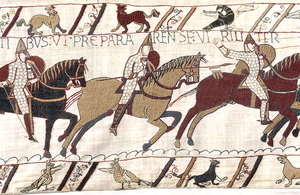
The Bayeux Tapestry, symbolising the Norman conquest of England, will be covered by a British Treasury indemnity of around £800 million (over €900 million) during its loan to the British Museum in 2026, demonstrating the extraordinary value placed by the UK on the 70-metre fabric.
According to the Financial Times, the compensation borne by British taxpayers will cover the work from any damage or loss during its relocation from Normandy, where it is on display at the Centre Guillaume le Conquérant, to London for the entire period of what is expected to be the largest exhibition in recent years.
The Treasury indemnity, to be approved by Chancellor Rachel Reeves, is part of a complex agreement between Britain and France to cover the loan of the tapestry, announced by President Emmanuel Macron during his state visit to London in July.
A recently published six-page 'administrative agreement' between the Ministries of Culture of England and France details how the work will be transported to London and how it is to be protected when the British Museum opens its exhibition in September.
The text stipulates that the British Museum is responsible for the display and safekeeping of the tapestry during its stay in London until July 2027 and that 'at its own expense it will carry out the report on the state of conservation when the tapestry is returned to Bayeux'.
The Bayeux Tapestry is an embroidered cloth nearly 70 metres long and 50 centimetres tall that depicts the events leading up to the Norman Conquest of England in 1066, led by William, Duke of Normandy, challenging Harold II, King of England, and culminating in the Battle of Hastings. It is thought to date to the 11th century, within a few years of the battle. Now widely accepted to have been made in England, perhaps as a gift for William, it tells the story from the point of view of the conquering Normans and for centuries has been preserved in Normandy.