
Uk puts Temporary Block on Rare Anglo-Saxon National Treasure
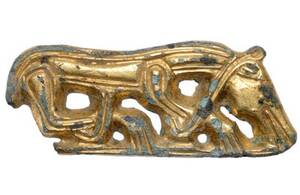
The UK government has temporarily blocked an Anglo-Saxon mount from being taken out of the UK permanently.
Believed to be over 1,400 years old, the delicately crafted metal object depicts a four-legged animal. Depictions such as these are thought to have played a key role in religious and mythological traditions, meaning the mount offers an exceptional opportunity to research how culture was shared in Anglo-Saxon East Anglia.
The Government is creating the opportunity for the piece to remain in the UK because experts have determined it meets all three of the Waverley Criteria, which define whether an item is considered a national treasure. This means the piece is identified as closely connected with our history and national life, of outstanding aesthetic importance, and of outstanding significance for the study of art, learning or history.
The decision to place a temporary export ban on the mount gives museums and galleries time to raise the funds needed to acquire it, with the aim of keeping an important work in the UK and on public display.
A metal detectorist discovered the mount in 2024 in Holme Hale, Norfolk. The item features attachments on its reverse, suggesting it may be designed to be mounted on another object.
This mount is extremely rare because it presents a clear image of a four-legged animal, whilst most other surviving examples are highly stylised. It is made of copper-alloy, with added gilding, featuring impressive detailing despite being just over 3cm long and weighing only 5 grams. It is believed to have been created during the late 5th century or early 6th century.
The Committee made its recommendation on the basis that the mount met the first, second and third Waverley criteria for its outstanding connection with our history and national life, its outstanding aesthetic importance and its outstanding significance to the study of Anglo-Saxon material culture, and the history and culture of Eastern and Southeastern England in the early medieval period.