
UK Government Temporarily Blocks Rare Prehistoric Battle-Axe Head From Leaving
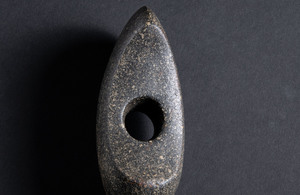
The UK Government has placed a temporary export bar on the Scarthingwell battle-axe head, a rare survivor from prehistoric Britain, in the hope that a UK museum, gallery or institution can acquire it and secure it for public display.
The Scarthingwell battle-axe head is a rare and exceptionally well preserved example of prehistoric craftsmanship. Dating to the Bronze Age, it represents more than 6,000 years of polished stone working in Britain, beginning with the first axes associated with early farming communities.
The temporary export ban gives museums and galleries time to raise the funds needed to acquire the battle-axe head, with the aim of keeping this important object in the UK and on public display.
The battle-axe provides valuable insight into the role these objects played in expressing status, identity and changing ways of life in Neolithic and Bronze Age Britain. It also has significant research potential, offering future generations an opportunity to learn more about this period of our shared national history.
The Committee made its recommendation on the basis that the battle-axe met the first, second and third Waverley criteria for its outstanding connection with our history and national life, its outstanding aesthetic importance and its outstanding significance to the study of artefacts of this kind, regional context, production techniques and use.
The decision on the export licence application for the battle-axe will be deferred for an initial period ending on 22 December 2026 inclusive in which we welcome expressions of interest from an appropriate purchaser to try and acquire the object. At the end of the first deferral period owners will have a consideration period of 15 Business Days to consider any offer(s) to purchase the battle-axe at the recommended price of £15,000. The second deferral period will commence following the signing of an Option Agreement and will last for three months.