
Three Century Old Sculpture at Risk of leaving the UK
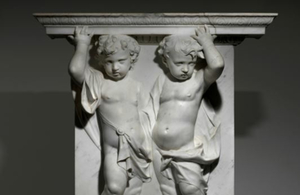
An export bar has been placed on Michael Rysbrack’s sculpture of two ‘putti’ supporting a column to allow time for a UK buyer to be found.
The sculpture was crafted to be one of a pair of chimney pieces, possibly for the grand Bedford House in London. Standing over a metre tall, the sculpture is cut from marble. It has been praised for its excellent quality and condition despite being nearly three hundred years old.
Owning similar sculptures was very popular amongst the British aristocracy during the eighteenth century. Rysbrack’s sculpture is inspired by ancient Greek and Roman art, with ownership of the sculpture symbolising interest and knowledge of the Classical World.
The depiction of the ‘putti’ - childlike figures - is recognised to be of extraordinary artistic quality. At the time of the sculpture’s creation, new research and understanding of childhood development was changing attitudes to children in London society. Rysbrack himself became a governor of London’s Foundling Hospital, which cared for orphaned children.
Michael Rysbrack was born and trained in Antwerp, but is best known for his career in England. He was inspired by Classical art for many of the sculptures he created, including those he crafted for Westminster Abbey.
Culture Minister Baroness Twycross said: "The incredible detail on this marble sculpture of two childlike figures demonstrates a remarkable mastery of the craft. The quality of the putti is a clear testament to why Michael Rysbrack’s sculptures were so highly sought after in the eighteenth century. Today, we continue to appreciate world class art such as this. I hope that this export bar can help secure this sculpture for the public to enjoy."
Committee Member, Stuart Lochead said: "Likely designed for Bedford House, London, this set of putti originally formed part of a monumental fireplace. Despite its scale, the carving is notably delicate: the flesh and hair of the two figures are rendered with remarkable tenderness. The use of infant imagery marks a pivotal moment in Rysbrack’s career. Having recently been elected Governor of the Foundling Hospital in London, alongside William Hogarth, the sculptor’s work reflects on the changing attitudes toward childhood in early eighteenth-century Britain. Displayed in one of London’s most important houses, this refined marble group would represent a significant loss if exported."
This is the fourth temporary export bar issued since the start of the year by this Government. It follows attempts to protect an 18th century bust of John Gordon of Invergordon, a £9 million Baroque painting by Claude Lorrain, and an 18th century terracotta dog sculpture by groundbreaking female sculptor, Anne Damer.