
The National Gallery of Art, Washington, acquires a Masterwork by Artemisia Gentileschi
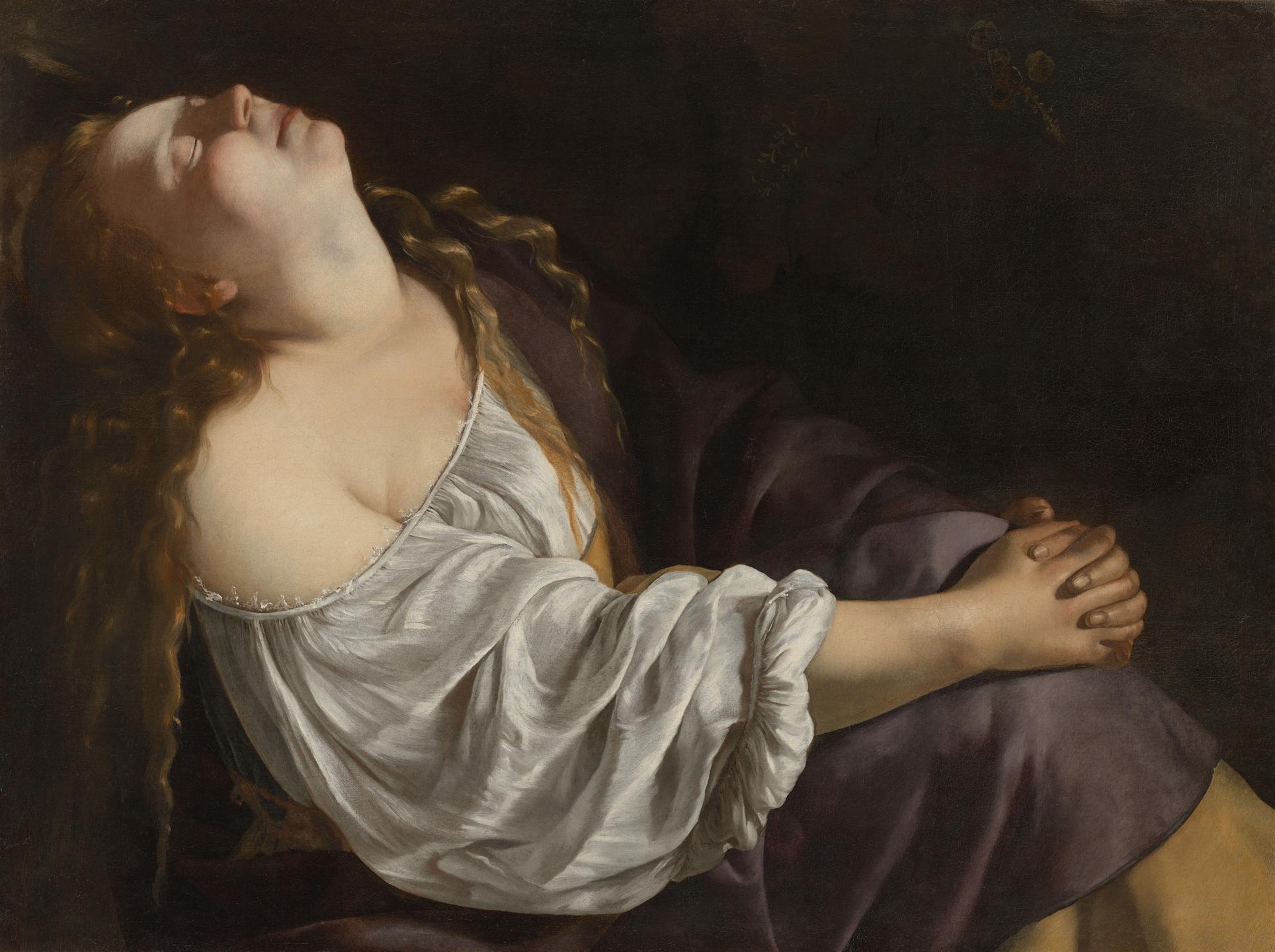
The National Gallery of Art acquired Mary Magdalene in Ecstasy, a rare painting from circa 1625 by renowned Italian painter Artemisia Gentileschi (1593–circa 1654).
This is the first singular work by Gentileschi to enter the National Gallery’s collection. Its acquisition meaningfully expands the museum’s holdings of Italian Baroque paintings by adding a defining artwork by one of the 17th century’s most celebrated artists.
“It is a momentous occasion to bring Mary Magdalene in Ecstasy into the National Gallery’s collection as our first notable example of Artemisia Gentileschi’s remarkable work,” said Kaywin Feldman, director of the National Gallery of Art. “This acquisition marks a major addition to our historical holdings, reflecting our continued commitment to deepening our collection, and in turn, expanding public access to great works of art. We look forward to sharing this seminal painting with visitors to the National Gallery for years to come as it enters a public collection for the first time.”
Featured in numerous publications and exhibitions since its rediscovery in 2011, Mary Magdalene in Ecstasy is widely considered by art historians to be one of Gentileschi’s greatest works, making it one of the most prominent recent additions to the nation’s art collection. Before its acquisition by the National Gallery, the painting spent centuries in a private collection and disappeared from the public record. It resurfaced in the south of France in 2011 and was acquired by a private collection during a Sotheby’s auction in 2014.
Historians date the painting to around 1625, when Artemisia Gentileschi was living in Rome for the second time. This period is widely recognized as the height of the artist’s career, when her works reached a zenith of narrative and expressive potential through highly saturated colors and boldly expressive figures.
“We are thrilled to announce this acquisition by Artemisia Gentileschi, one of the most important artists of the 17th century. Her painterly approach shaped the evolution of early modern and Baroque art,” said E. Carmen Ramos, chief curatorial and conservation officer of the National Gallery of Art. “The acquisition, a depiction of the Magdalene, is unique in its composition and its close-up focus on the figure, showcasing the narrative strength of Artemisia Gentileschi’s work at the height of her career. The National Gallery is honored to steward this masterpiece and broaden access to her genre-defining practice.”
Mary Magdalene in Ecstasy depicts the Magdalene in a powerful state of spiritual transformation. The composition is distinct both from contemporaneous depictions of the Magdalene and from Artemisia Gentileschi’s own earlier paintings. The saint, for example, is not accompanied by her standard attributes of a skull, cross, or ointment jar. Echoing a lost 1606 painting of the same subject by Caravaggio, Artemisia Gentileschi’s composition heightens the narrative potency of the scene by engaging in a close study of the devotional figure. The artist places the Magdalene in close proximity to the viewer as she undergoes a conversion from secular to religious existence.
The painting is a rare historical example of a woman undergoing emotional and psychological transformation directly in front of the viewer—a tangible shift that reflects period interest in making religious experience palpable through artwork.
Born in Rome in 1593, Artemisia Gentileschi is widely regarded as one of the most important painters of the 17th century. Training under her father Orazio Gentileschi, she worked in Caravaggio’s naturalistic style of painting, producing highly skilled paintings throughout her teenage years. Her career led her to Rome, Florence, Venice, England, and Naples as she worked for European nobility, including Philip IV, Charles I, and the Medici family. The acquisition of Mary Magdalene in Ecstasy marks a historic addition to the National Gallery’s holdings of major works by early modern Italian women artists.
Main Image: Artemisia Gentileschi Mary Magdalene in Ecstasy, c. 1625 oil on canvas