
The ‘Mona Lisa Bible’ goes on Display in Rome
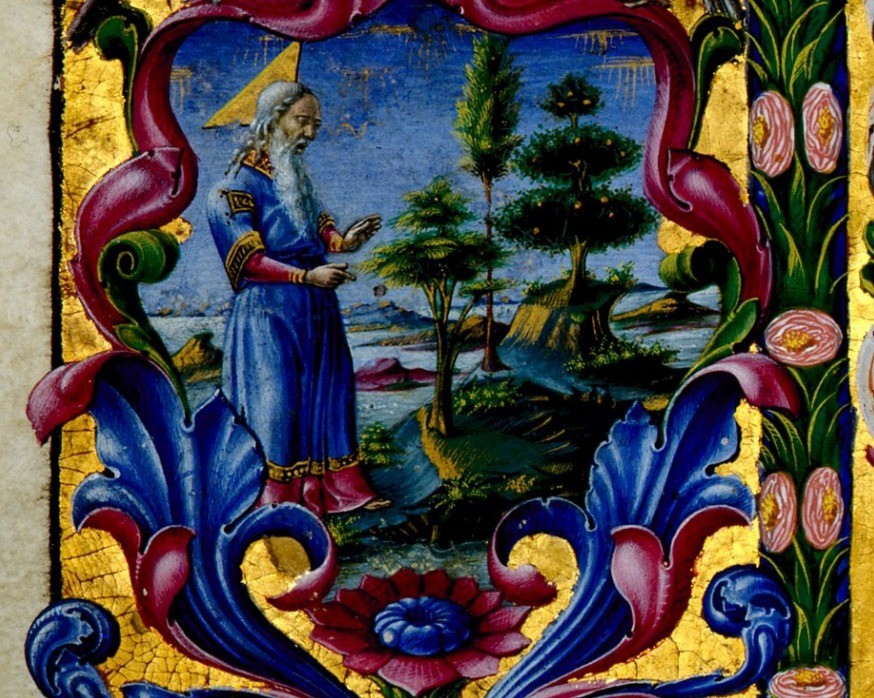
From November 14, 2025, to January 16, 2026, the Borso d'Este Bible, one of the greatest masterpieces of Italian Renaissance art, will be on display in the Capitolare Hall of the Senate of the Republic, at Piazza della Minerva, 38, in Rome.
The exhibition offers an extraordinary opportunity to admire the Borso d'Este Bible, one of the greatest masterpieces of Italian Renaissance art.
The Borso d’Este Bible was made between 1455 and 1461 at the behest of Duke Borso d’Este, lord of Ferrara, Modena and Reggio. It was executed by calligrapher Pietro Paolo Marone and by a team of illuminators led by Taddeo Crivelli and Franco dei Russi, artists of extraordinary talent who created one of the finest examples of the art of Renaissance illumination. The manuscript, consisting of two volumes of finely decorated parchment, combines the sacred value of the biblical text with the magnificence of its illustrations, which reveal the technical mastery and symbolic intensity of the Ferrara school.
Each page is a masterpiece in itself: the miniatures, adorned by frames with plant motifs, allegorical figures and narrative scenes, dialogue with the sacred text in a perfect balance between devotion and beauty. In the panels one can recognize echoes of the art of Pisanello, Donatello, Mantegna, and Piero della Francesca, but also, and above all, the influence of the leading Ferrarese painters of the time, such as Cosmè Tura, Michele Pannonio, and Francesco del Cossa, who helped define the artistic language of the Po Valley Renaissance.
Preserved today at the Biblioteca Estense Universitaria in Modena, the Borso d’Este Bible is exhibited only on very rare occasions, due to its fragility and the priceless value of the artifact. The Roman event, which coincides with the centenary of its first public presentation in the city of Modena, will therefore offer the public a rare opportunity to admire up close a work that is at once a document of faith, historical testimony and the summa of Italian decorative art.
The Borso d’Este Bible is considered one of the highest testimonies of book art of all time. Its value lies not only in its extraordinary material workmanship, but also in its symbolic function: it represents the culmination of an era in which noble and religious patrons invested in art as a form of devotion and cultural affirmation. The work of the illuminators and the calligrapher expresses an ideal of beauty that is both intellectual and spiritual, a universal language that has spanned the centuries and still inspires wonder and admiration today.