
The City of Zurich returns Benin Works held by Museum Rietberg to Nigeria
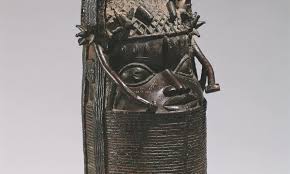
The City of Zurich has resolved to transfer ownership of eleven objects held by Museum Rietberg to the Federal Republic of Nigeria. Originating from the Kingdom of Benin, these objects are of outstanding cultural significance for the royal descendants and for Nigeria.
The City of Zurich is acting in response to a restitution claim filed by Nigeria as the body responsible for colonial-era collections. The National Commission for Museums and Monuments (NCMM) filed an official restitution claim in July 2024 on behalf of the Nigerian government and the Kingdom of Benin for the eleven Benin objects held by Museum Rietberg.
Zurich city council has resolved to comply with the restitution claim from Nigeria. ‘The City of Zurich takes its responsibility seriously. We are convinced that a fair treatment of items of cultural heritage means admitting and actively rectifying past injustices’, says mayor Corine Mauch. The works in question are of outstanding cultural and spiritual significance for Nigeria and the descendants of the Kingdom of Benin. NCMM Director General Olugbile Holloway welcomes this decision, remarking: ‘This decision made by the City of Zurich will indeed go a long way in healing certain aspects of our fragmented colonial past and I have no doubt that the Benin Royal Palace, the Benin people, and all Nigerians will truly appreciate the symbolism of this significant return.’
In recent weeks, NCMM and the Kingdom of Benin determined whether Museum Rietberg Zurich (MRZ) would be permitted to exhibit individual works on a loan basis. The decision has been made to grant this permission. Once the transfer of ownership is complete, some works will remain with Museum Rietberg as loans. This will make it possible to highlight the cultural significance of these works within Switzerland and to strengthen the long-term dialogue with Nigeria. The remaining works will be returned to Nigeria in summer 2026.
Significant restitutions have been carried out in recent years. German museums restituted some 1,100 works to Nigeria in 2022, and the Netherlands returned 119 objects in 2025. Moreover, University of Cambridge announced in February 2026 that it would restitute 116 works to Nigeria.
Together with Museum Rietberg, the Ethnographic Museum at the University of Zurich
and Musée d’ethnographie de Genève (MEG) will also restitute looted works from the Kingdom of Benin to Nigeria. The directors of these three Swiss museums, Dr. Carine Ayélé Durand (MEG), Professor Alice Hertzog (Ethnographic Museum), and Dr. Annette Bhagwati (Museum Rietberg) have issued a joint statement:
‘Through Benin Initiative Switzerland, our museums have meticulously investigated the provenance of the works held from Benin, working in close cooperation with our partners in Nigeria. The results leave no doubt: a number of objects reached our collections through the international art market following the British attack on and looting of the Kingdom of Benin in 1897.
Returning these artworks from Benin to Nigeria makes it possible for the country to independently research, preserve, and share its own history. We are responsible for this transfer of ownership as Swiss museums and institutions aware of our ethical responsibilities, actively seeking as we do a dialogue with the societies of origin. This represents a necessary stage in coming to terms with history and acts as a sign of respect, symbolising international cooperation in action.’
In 1897, British troops looted the royal palace in Benin (present-day Nigeria) and stole thousands of artefacts, including reliefs, depictions of ancestors, and ritual objects. Dubbed the ‘Benin Bronzes’, these works were sold to museums and collections around the world via the international art market. Some of the bronze that served as the raw material originated in Europe and had been exchanged as part of the transatlantic trade in which Africans were abducted and trafficked to be sold to European slave traders.
Led by Museum Rietberg, eight Swiss museums came together in 2021 to research the provenance of the works they held from Benin, working in collaboration with partners from Nigeria. In total, ninety-six works are held by the eight participating museums in German- and French-speaking Switzerland, including Musée d’ethnographie de Genève (9), Ethnographic Museum Zurich (18), and Museum Rietberg (16). The multi-year research carried out by BIS proved that eleven of the sixteen works held by Museum Rietberg had been or most likely had been looted and thus warrant restitution. The Benin Initiative is financed by Switzerland’s Federal Office of Culture.