
The Art Scene in The Riviera Maya
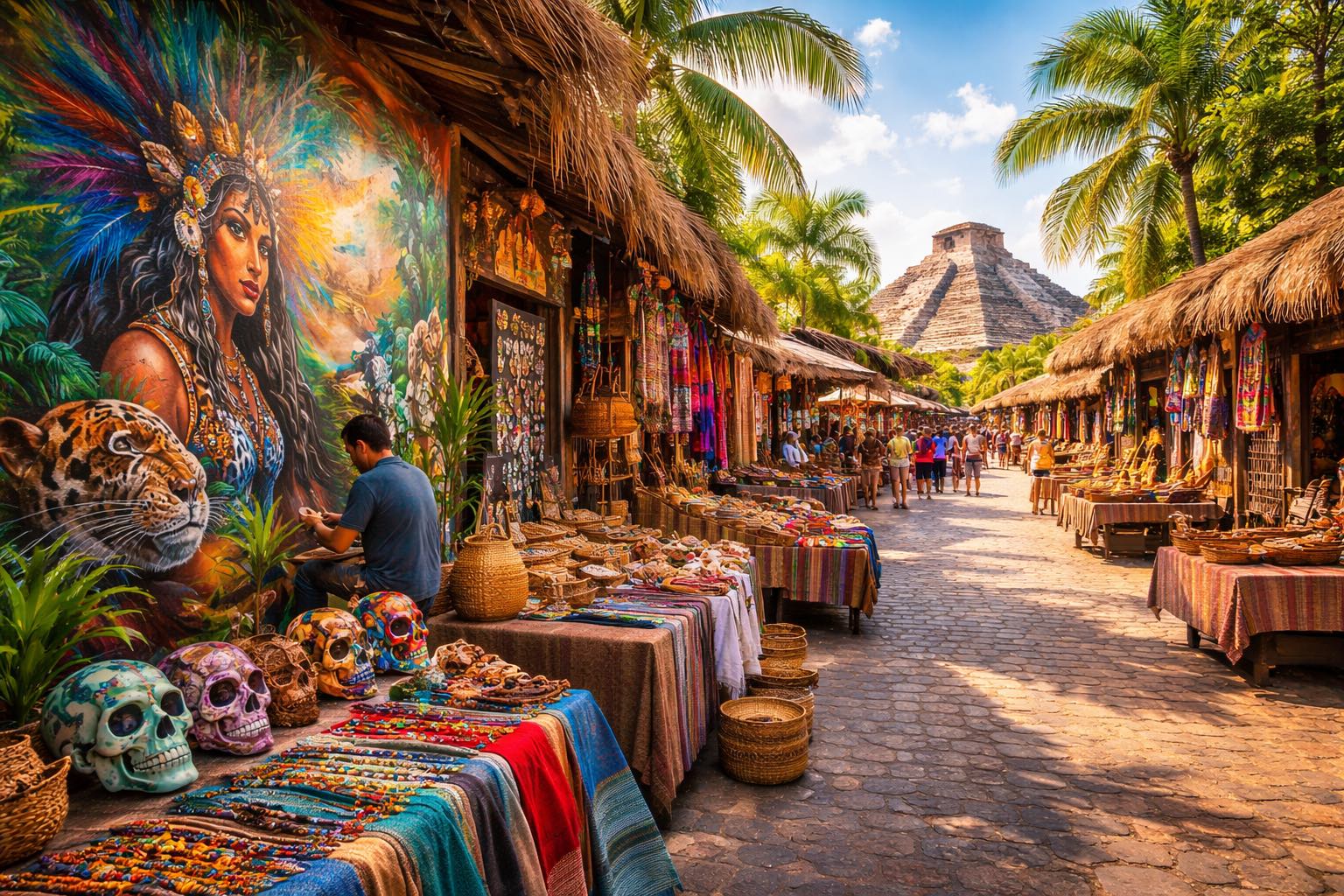
Art is one of the fastest ways to understand a place—because it reveals what people celebrate,
what they remember, and what they refuse to forget. In the Riviera Maya, that story isn’t
confined to museum walls.
Art is one of the fastest ways to understand a place—because it reveals what people celebrate,
what they remember, and what they refuse to forget. In the Riviera Maya, that story isn’t
confined to museum walls. It’s painted across facades in coastal towns, carved into stone and
stucco, stitched into textiles, and echoed in the geometry of ancient sites that still shape the
region’s visual language. If you’re traveling there, you don’t have to choose between culture and
comfort. The most rewarding trips are the ones where you let art guide the itinerary, then return
each evening to a setting that feels restorative.
This is a region where color isn’t decoration; it’s a dialect. The turquoise sea, the dense greens,
the sharp sunlight—all of it pushes artists toward contrast and intensity. Even contemporary
work here often carries a sense of heat and brightness, as if the palette is responding to the
climate. But the deeper influence runs underneath the surface: Maya cosmology and
iconography, colonial architecture, folk traditions, and modern Mexican movements that shaped
everything from muralism to graphic design. Together, they create an ecosystem where art is
both everyday and sacred.
The Riviera Maya as a Living Gallery
Art Dependence readers tend to look for context—not just “what to see,” but why it matters. In
the Riviera Maya, the context is layered.
There’s the legacy of pre-Hispanic cultures, especially the Maya, whose visual systems were
sophisticated long before tourism arrived: symbolic glyphs, stylized figures, ceremonial
architecture built with an awareness of light and alignment. There’s the colonial period, which
brought new materials and religious imagery, often blending with older traditions rather than fully
replacing them. And there’s the contemporary moment, where artists negotiate identity,
environment, and globalized travel culture in real time.
What’s compelling is how seamlessly these layers coexist. You can spend a morning looking at
contemporary street art, an afternoon absorbing the visual rhythm of a ruin site, and an evening
in a gallery where a young painter is remixing ancestral motifs into something unmistakably
modern.
Art Experiences That Feel Genuinely Local
Instead of aiming for a checklist, it helps to follow themes. Here are a few that tend to deliver
depth without requiring insider connections.
Murals and public art as cultural conversation
Across towns in the region, murals function like public storytelling. You’ll see sea life rendered
as myth, portraits that honor local heritage, and surreal compositions that blend jungle flora with
modern symbolism. The best approach is unstructured: walk slowly, photograph details, and
notice patterns—recurring colors, repeated animals, particular faces.
Craft traditions that blur the line between “art” and “design”
Textiles, ceramics, wood carving, and beadwork aren’t side attractions. They’re living practices
with serious aesthetic sophistication. The most meaningful purchases are the ones where you
learn the maker’s process—natural dyes, weaving techniques, kiln methods, regional
iconography—and understand what you’re taking home beyond a “souvenir.”
Architecture that teaches you how the region sees space
The Riviera Maya’s built environment is an underrated art experience. There’s the ancient
architectural intelligence of Maya sites—stonework, elevation choices, sightlines. Then there’s
contemporary architecture that borrows from those principles: open-air design, natural
materials, integration with vegetation, water as a visual element. The most interesting spaces
don’t feel like they were “placed” on the landscape; they feel like they negotiated with it.
Cenotes as aesthetic experience
Cenotes aren’t art in the traditional sense, but they offer an encounter with composition: circular
openings, shafts of light, reflections on still water, mineral textures that look sculpted. If you
photograph, sketch, or simply pay attention, you’ll notice how often local artists borrow from
cenote aesthetics—depth, contrast, repetition, and the idea of hidden worlds beneath the
surface.
How to Build an Art-First Itinerary Without Turning Your Trip Into Homework
The best cultural travel isn’t rigid. It’s responsive. A simple structure works well:
- Morning: slow visual experiences (street art walks, ruins, architectural sites)
- Afternoon: galleries, artisan workshops, or museum time
- Evening: dinner + reflection (journal, editing photos, reading about what you saw)
That rhythm keeps art from becoming a task and lets it feel like what it should be: a way of
seeing. If you’re traveling with someone who’s less art-obsessed, it also keeps the trip
balanced—there’s enough pleasure and beauty built in that nobody feels dragged through a
lecture.
Where Luxury Fits In, Without Feeling Disconnected From Culture
There’s a myth that luxury travel and cultural depth don’t mix—that comfort is somehow the
enemy of authenticity. In reality, comfort can be what makes deeper engagement possible.
When your stay supports rest, you have the energy to explore with attention. When your
environment is beautiful, your eye stays tuned.
And if you’re using the Riviera Maya as a base for art-focused days—murals, crafts,
architecture, archaeological sites—it makes sense to choose accommodations that match the
tone of the trip. One way to browse options that align with that kind of experience is this curated
set of Riviera Maya luxury hotel stays, especially if you want your evenings to feel as
considered as your days: calm spaces, strong design, and the kind of service that keeps
logistics from interrupting your attention.
Bringing the Region Home: Collecting With Intention
If you collect art or design objects, the Riviera Maya can be a powerful place to buy—if you
shop thoughtfully.
A few guidelines that tend to lead to better outcomes:
- Prioritize story and material. Ask what something is made from, where it was made,
and what techniques were used. - Look for work that still feels compelling back home. If you remove the beach
context, would you still love it? - Buy fewer pieces, but better ones. One meaningful object outlasts a bag of impulse
buys. - Respect provenance. When possible, buy directly from artists or reputable galleries
and workshops.
The best pieces don’t just “remind you of vacation.” They extend a conversation. They bring the
textures, colors, and symbols of the region back into your life as something living, not just
nostalgic.
The Riviera Maya Rewards Attention
Some destinations are best experienced through adrenaline—tours, nightlife, constant
movement. The Riviera Maya offers that too, but its deeper reward is visual. This is a place that
responds to attention: to color, to form, to texture, to light. If you travel there with an art lens,
even the ordinary becomes legible—the signage, the patterns on a wall, the way shadows fall
across stone.
And when the day’s looking is done, returning to a beautiful, restful base doesn’t dilute the
cultural experience. It preserves it. You’ll wake up ready to see again—more slowly, more
clearly, and with the kind of focus that makes art travel worthwhile in the first place.