
Structural BUG Art: Digital Failure, Materiality and the Reconfiguration of Sculptural Language
Shuqing Shi is a Beijing-based sculptor and digital artist whose practice engages with the intersection of sculptural form, digital processes, and technological disruption.
Informed by more than three decades of experience in sculpture and public art, his work has progressively expanded into the digital realm, where software becomes both a medium and a site of artistic experimentation.
His ongoing project, Structural BUG Art, transforms software failures intentionally into dynamic and evolving sculptural structures. By embracing glitches, distortions, and unexpected digital behaviours as generative elements rather than errors, Shuqing Shi reconsiders the relationship between control, chance, and materiality in artistic production.
His practice reveals the aesthetic and structural possibilities inherent in technological instability, demonstrating how disruption and unpredictability can become productive forces in the creation of new sculptural languages and expanded forms of contemporary art.
The development of digital technologies has fundamentally expanded the possibilities of contemporary sculptural practice, challenging established conceptions of form, material and artistic production.
It is within this context that I find Shuqing Shi’s manifesto, Structural BUG Art: Software Failure, Structure, and Evolution, genuinely compelling. His proposition contests the conventional perception of software malfunction as something to be corrected, instead presenting the BUG as a generative force capable of producing new sculptural possibilities.
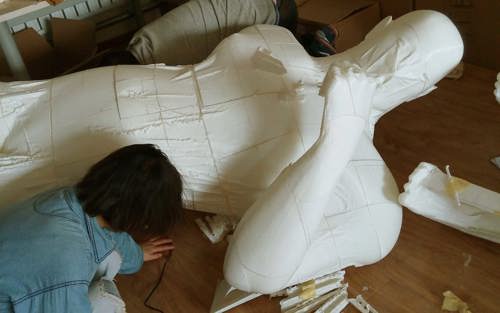
Structural BUG Art — BUG Origin, 3D-printed PLA, 4 m high, 2014, © Shuqing Shi
What interests me most about his work is the reconsideration of failure as a creative condition. In prevailing digital modelling, broken topology, distorted geometry and structural instability are generally perceived as technical problems that interrupt the pursuit of a resolved form. Shuqing Shi reverses this hierarchy by deliberately embracing these conditions, allowing errors to become active participants in the development of sculptural structures.
I see this as a pertinent departure from the established relationship between artistic intention and technical control. It suggests that sculpture need not emerge from the execution of a predetermined idea but can develop through uncertainty, experimentation and unexpected computational behaviour. From this perspective, the sculptural object is not simply made; it evolves through a continuous interaction between intention, material conditions and contingency.
I am particularly intrigued by Shuqing Shi’s distinction between Structural BUG Art and traditional glitch art. While glitch art frequently explores the visual disruption of digital images through pixelation, fragmentation and colour interference, Structural BUG Art operates at the level of three-dimensional geometry and spatial organisation. This distinction is important because it moves beyond the representation of technological failure towards the transformation of sculptural structure itself.
When the human figure is fragmented or geometrically destabilised, the result is not merely an image of distortion. Rather, the relationships between surface, volume, void and spatial tension are radically reorganised. I interpret this as a critique of the historical understanding of the body as a unified and coherent sculptural form. The body becomes an unstable configuration, capable of multiple transformations and alternative modes of existence.
Another aspect that I find important is the redistribution of artistic agency between the artist and the computational system. In Shuqing Shi’s practice, software does not just function as a passive instrument through which an existing artistic intention is realised. It introduces unpredictable possibilities that influence the direction of the work. The artist consequently becomes both an initiator and an interpreter of computational outcomes, selecting and redirecting developments that cannot always be anticipated. The artist's role becomes one of critical judgement, negotiation and selection, establishing meaning within a field of possibilities generated through human and machine interaction.
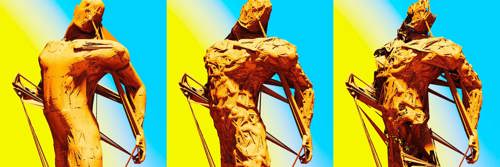
Structural BUG Art — Structural Evolution Triptych, Digital Sculpture, 2026, © Shuqing Shi
Shuqing Shi’s conception of the BUG as a form of digital materiality also raises questions that I consider central to the future of sculpture. Generally, sculptural materiality has been associated with the physical resistance and transformation of substances such as stone, bronze and clay. Structural BUG Art expands this definition by proposing data, algorithms, topology and computational instability as materials in their own right.
Here, I find Vilém Flusser’s writings on technical images and technological apparatuses extremely relevant. Digital materiality does not necessarily require physical substance to establish its sculptural significance. It can exist through relationships, operations and structures that may resist translation into established manufacturing processes. Such structures dispute the notion that sculpture must essentially become a tangible object.
Eventually, I come to understand Structural BUG Art as extending beyond an alternative visual aesthetic. Its importance lies in the possibility of developing a sculptural language that emerges from the specific conditions of digital production rather than merely adapting the conventions of physical sculpture to a virtual environment. As Lev Manovich suggests in The Language of New Media, new technologies generate distinctive cultural and aesthetic possibilities that require their own critical vocabulary.
Shuqing Shi’s project opens precisely this space of investigation. It encourages us to reconsider failure as an integral and productive condition of creation rather than its opposite. The BUG becomes a site of transformation where control and contingency, materiality and information, and human intention and computational emergence intersect. What really appeals to me lies beyond the distorted object as a finished visual statement, towards the potential for sculpture to operate as an ongoing process of transformation: unstable, experimental and continuously open to new forms of becoming.
References Vilém Flusser, Into the Universe of Technical Images, 1985 Lev Manovich, The Language of New Media, 2001
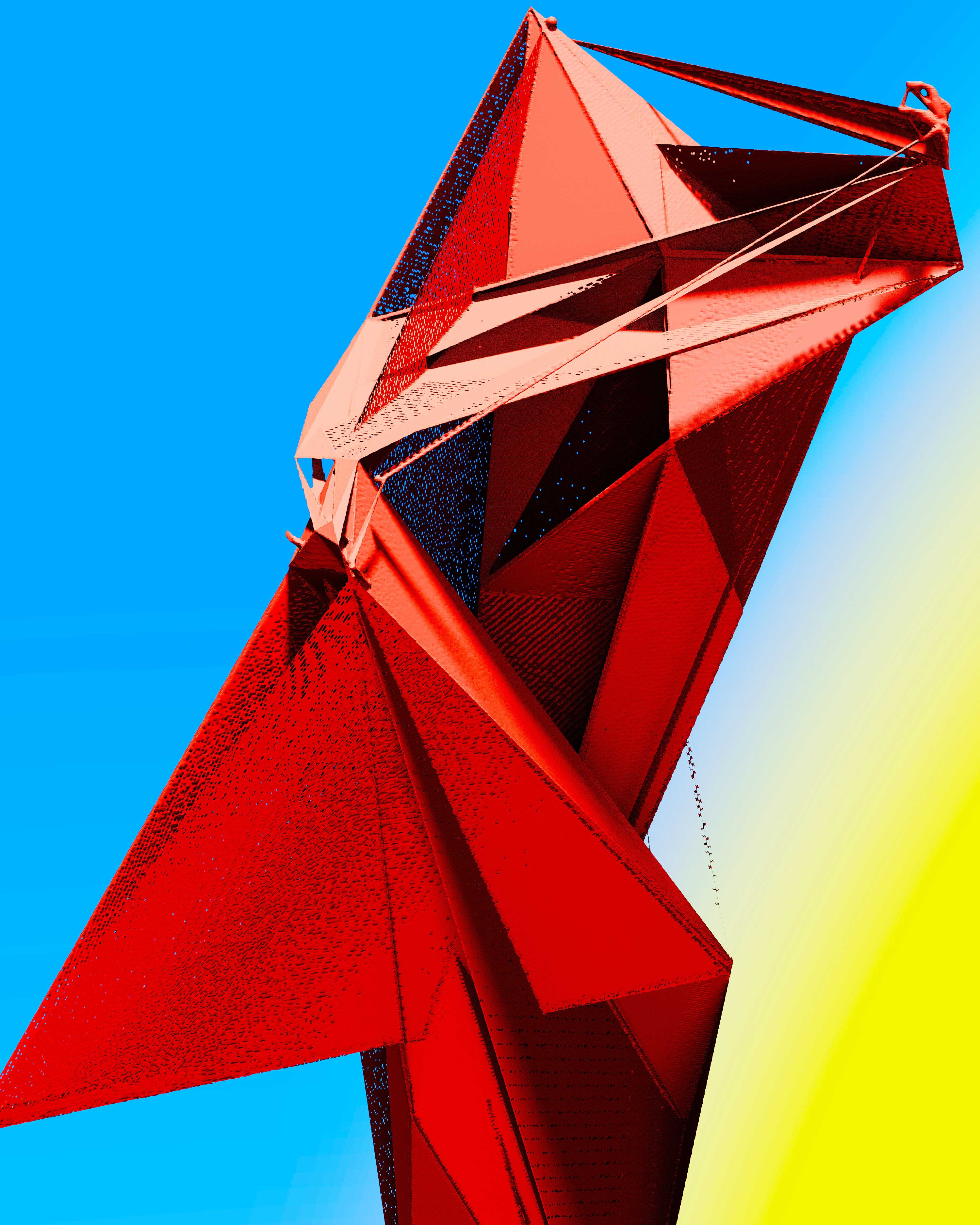
Main Image: Structural BUG Art — Advanced Structure, Digital Sculpture, 2026,© Shuqing Shi