
Secret Life on the Canvas: The Microbes Living on Rembrandt’s The Night Watch
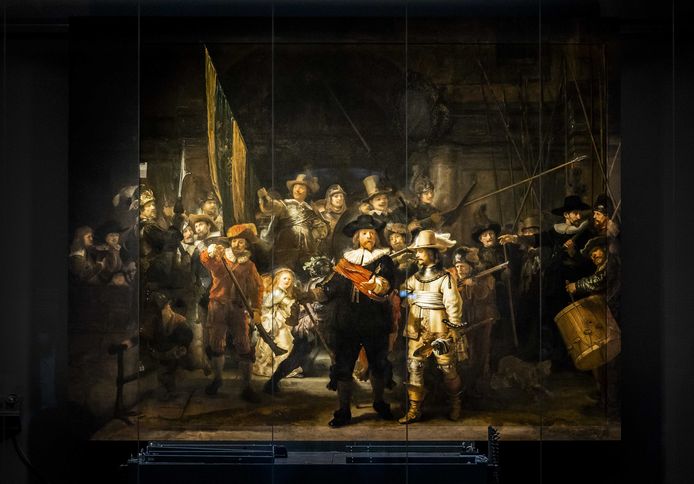
What microbes live on The Night Watch? ARTIS-Micropia and the Rijksmuseum unveiled the new installation The Night Watch Lives during a festive opening. For the first time, visitors can take a close look at the microbes cultivated from Rembrandt’s world-famous painting. From skin bacteria to soil dwellers: there is more life on The Night Watch than meets the eye.
The installation is the result of a special collaboration between ARTIS-Micropia and the Rijksmuseum. Micropia’s laboratory technicians and the Rijksmuseum’s conservators are investigating which micro-organisms live on The Night Watch. To this end, samples are being taken from around sixty locations over a period of six months. In the laboratory, these microbes grow into visible colonies, which are displayed alongside a life-size reproduction of the painting.
The initial research findings reveal a surprising mix of organisms. For example, skin bacteria have been found, including Staphylococcus epidermidis and Micrococcus luteus. Bacteria known to be found in the soil and around plant roots have also been detected.
One striking discovery is Microbacterium saccharophilum, a species of bacterium first identified in 2013 at a Japanese sugar refinery. But how did this bacterium end up on *The Night Watch*? And what stories do the other microbes tell about the painting’s history? That remains a mystery for the time being.