
Rijksmuseum to open Landmark Exhibition of 20th Century Master Willem de Kooning
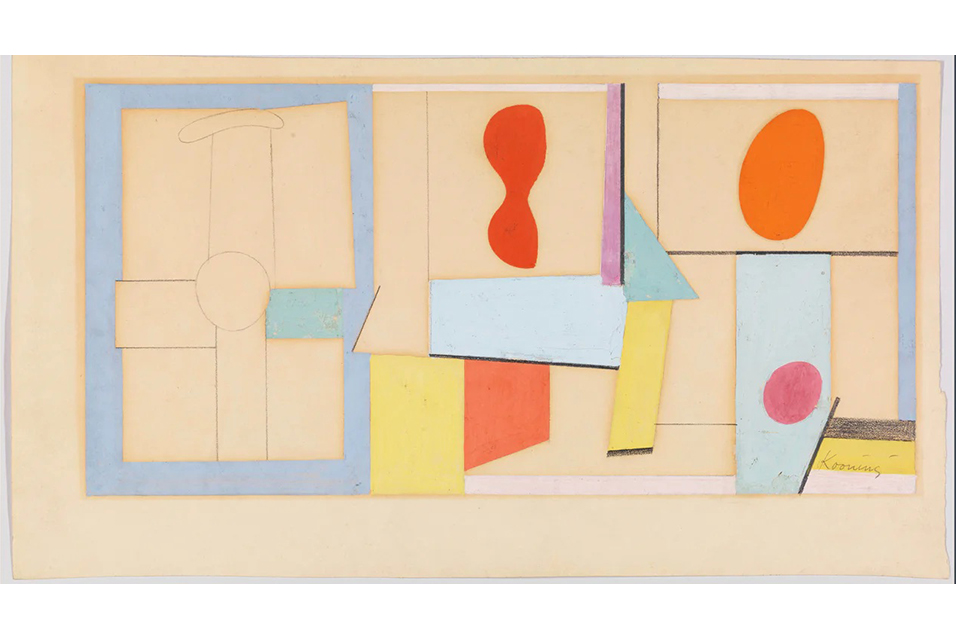
Willem de Kooning at work will be on view from 9 October 2026 through 17 January 2027 and is developed in collaboration with the Art Institute of Chicago and The Willem de Kooning Foundation in New York.
Willem de Kooning at work is the first exhibition to place the full scope of the artist’s drawn oeuvre at its centre, bringing together more than 120 iconic works. They include Reclining Nude (Juliet Browner) (ca. 1938), Itinerant Chapel (1951) and Woman in a Rowboat (ca. 1964-65), all from private collections, Abstraction (1949-1950, Museo Thyssen-Bornemisza), Pink Angels (ca. 1945, Frederick R. Weisman Art Foundation) and Woman (1983, Museum Ludwig).
The exhibition follows Willem de Kooning’s artistic development over a period of more than 65 years, with drawing as its central thread. For de Kooning, drawing was not a preparatory step – it was the very foundation of his practice. By presenting rarely exhibited drawings alongside key works from international collections, such as Excavation (1950, Art Institute of Chicago) and Clam Diggers (1963, private collection), the exhibition reveals how themes such as the human figure and landscape recur throughout his work. Together, these works reveal an artist driven by a continual search for new possibilities and ongoing self-reinvention. The creative process itself became the core of his work. We see de Kooning sketching, experimenting, revising, repeating and, at times, surprising even himself – from apparently rapid pencil and charcoal drawings to works made with his eyes closed, and works where the boundary between drawing and painting has been dissolved completely.
Born and raised in Rotterdam, Willem de Kooning (1904–1997) developed a passion for drawing and painting at an early age. De Kooning took drawing courses as a night student at the city’s Academy of Visual Arts and Technical Sciences and apprenticed at the decorative arts studio of Jan and Jaap Gidding in Rotterdam. In 1926, he stowed away aboard a cargo ship bound for America. He settled in New York, where he worked during his first years as a house painter, illustrator and shop-window designer. The art world beckoned, however, and de Kooning made the transition to becoming an independent artist. Following his breakthrough in the late 1940s, he became a key figure in the New York School, alongside contemporaries such as Jackson Pollock, Lee Krasner, Barnett Newman and Mark Rothko. In the decades that followed, de Kooning grew into one of the most influential modern artists. Although his work is often associated with Abstract Expressionism, he resisted every attempt to place him within a particular category.
Main Image: Willem de Kooning, Untitled, circa 1937.