
REIVGEN Studio: The Refined Technological War Against the Established Path
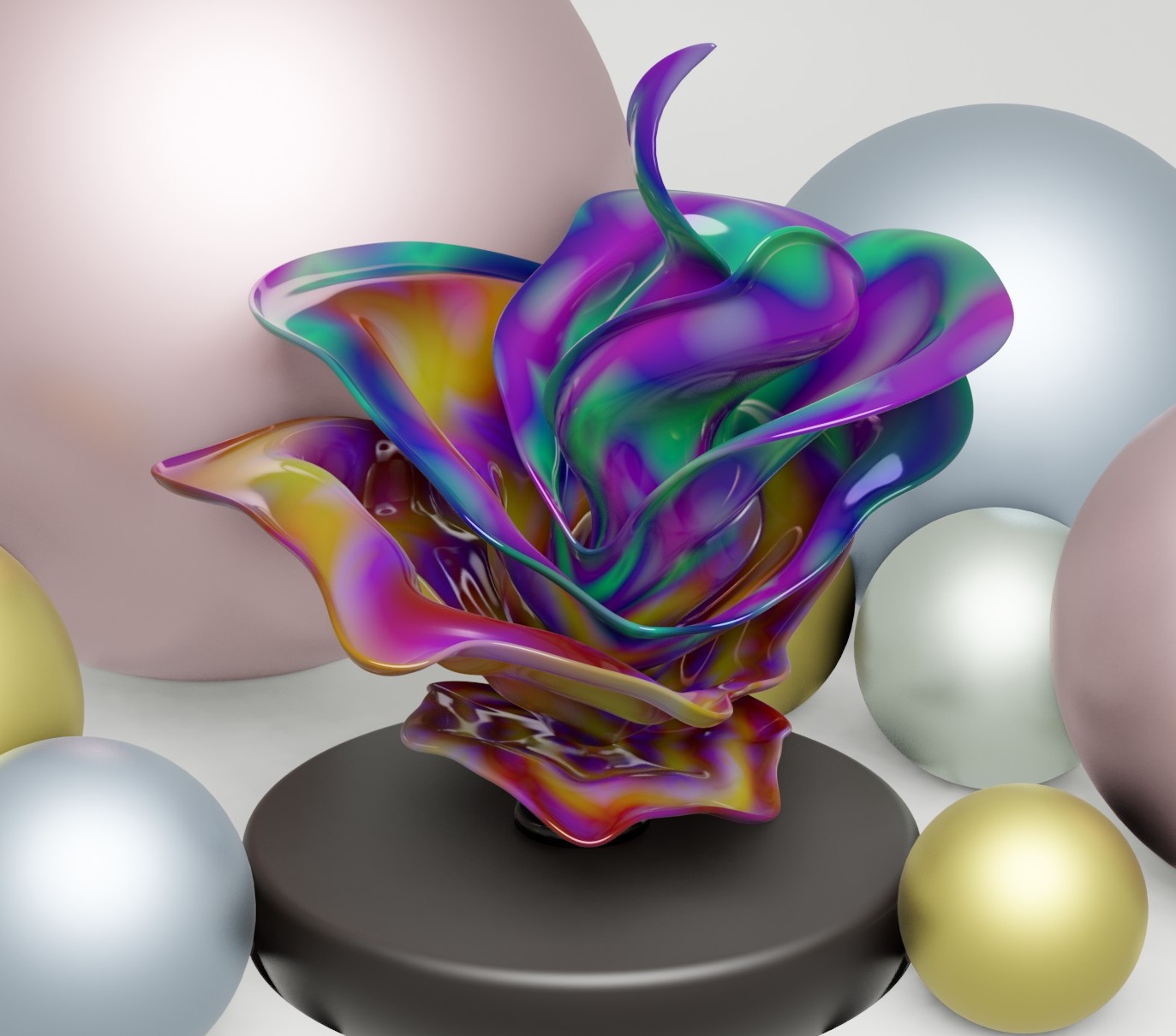
Juan Andrés Hurtado Baeza (JAHB) is a technologist, researcher, and generative artist. His determination to understand the algorithm of beauty led him to found REIVGEN, a pioneering art studio where users can shape unique physical sculptures by exploring their aesthetic intuition with a single button.
At present, his exclusive pieces can only be obtained by commission through the official website https://reivgen.com. In conversation with ArtDependence, JAHB revisits the genesis and vicissitudes of the transformative journey that culminated in one of the most groundbreaking formulas for conceiving personalised art.
ArtDependence (AD): You are a technologist, an engineer… how did the idea of becoming an artist arise?
JAHB: There was no cathartic event that triggered the change. It was rather the convergence of knowledge, means and, of course, inspiration. Looking back, I believe I have always been an artist—one who was fascinated by mathematics. Ever since I learned to programme computers in my teens, whenever a shape or colour pattern impacts me deeply, a mechanism of aesthetic resonance is activated that compels me to imagine what algorithm could reproduce that geometry and those colours that moved me so intensely. That impulse has fuelled my motivation ever since.
AD: Was that decision understood in your personal environment?
JAHB: Yes, in general it was well received. Although, alongside admiration for the
originality of the project, I also noticed a certain strangeness. In reality, I never
abandoned engineering for art: both disciplines complement each other naturally and
fruitfully in creative production. But in an era in which art can be notable, applauded and highly valued without requiring the slightest technical skill in its execution, I am not surprised that some perceive a conflict.
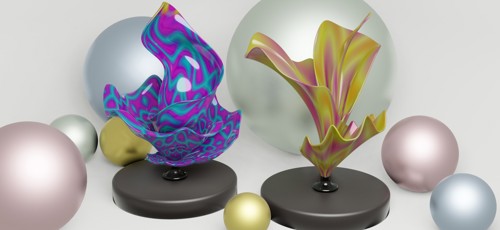
Customised 3D-printed sculptures, algorithm REEF, courtesy of REIVGEN Studio
AD: What was the greatest obstacle you had to overcome at the beginning?
JAHB: Without doubt, the most difficult part was the decision to start the project at
all. REIVGEN is not just another studio selling generative art. I could not rely on a
WordPress template or open an Etsy profile to showcase my works. Offering the
possibility of customising evolutionary algorithms in real time, accessible from a
web browser, required developing a highly sophisticated bespoke software tool that
worked flawlessly. It was a challenge within my reach, as I had experience both in
engineering and in managing complex projects—none of that intimidated me. But the
magnitude of the effort required did overwhelm me, and I needed months to convince
myself that I truly wanted to undertake it.
AD: And once you began, did you face any existential dilemma?
JAHB: There was another particularly difficult decision. Some close to me advised
producing pieces with more economical materials and organising exhibitions in conventional art galleries. It sounded rational, and I was tempted, but the idea made
me uncomfortable. An inner voice told me I would regret it. In the end, I had the courage not to give in, not to follow what seemed logical. The essence of REIVGEN is to be truly different, genuinely innovative, outside the conventional.
Had I accepted the standard path at the beginning, I would have betrayed that identity—an incoherence I would not have forgiven myself. And after the colossal effort and time invested in being disruptive, it would have been contradictory to materialise my works as trinkets, undermining the exquisiteness, uniqueness and excellence I have cared for in every detail of the project. A conventional roadmap is valid and has its opportunities, but I am saving it for the future.
AD: Has that rigid directive of being genuine cost you any painful criticism?
JAHB: The closest thing to what you ask is the warning that radical innovation could
be counterproductive. There is some truth in that, and I accept the consequences. I do not recall malicious criticism, although most were not very useful—not because they were subjective, but because they did not form a trend from which to infer a criterion, or because they were objectively mistaken. For example, on several occasions I have had to clarify that REIVGEN’s technology has nothing to do with generative AI.
I have sometimes been told that my work “lacks a political stance”. These criticisms are irrelevant. But there have been opinions that marked me: some made me change, others reaffirmed me.

Customised 3D-printed sculptures, algorithm REEF, courtesy of REIVGEN Studio
AD: Which criticism reaffirmed you?
JAHB: Very early on, when others’ opinions carried weight, I took part in an event for innovative entrepreneurs. A public official responsible for promoting innovation was evaluating the projects presented. After seeing REIVGEN’s customisation tool in action, he said he found it a bit confusing. I immediately replied, as tactfully as I could, that innovation professionals like him should be prepared in case one day they encountered it head-on.
The term “innovation” is used lightly everywhere, to the point of being unrecognisable when it truly appears. The official’s opinion, which could have been interpreted as a worrying sign, confirmed to me that what I had created was not only new, but unlike anything that existed. And that was how it had to be: that was the essence of REIVGEN.
AD: And which opinion made you change course?
JAHB: This anecdote involves a digital marketing expert who analysed the REIVGEN
website. At that time, the site was a sober gallery whose only images showed the sculptures, except for one exception: a beautiful and playful image that appeared when pressing the shopping cart button if it was empty. This expert told me that what he liked most about the entire website was precisely that image. His surprising opinion gave me much to think about. Anyone curious to know what effect that criticism had can visit the website and see what is in that image: it is still the same one.
AD: What future plans do you have for REIVGEN?
JAHB: I would love to work with translucent materials and precious metals; additive
manufacturing allows for impressive results. I also want to create large-format
sculptures, although maintaining the current quality won’t be easy. But what seduces
me most is designing new generative algorithms. However, that is precisely the most
challenging part. Implementing a good algorithm is already costly in itself, and
ensuring it can be customised in real time while always preserving manufacturability
conditions adds an extraordinary level of complexity. The obstacle is not a lack of
ideas, but the magnitude of the work required to execute them. I like to think that,
as an artist, the drive for technical and creative improvement will continue to spur
me on in the coming years.
For more information about REIVGEN, visit the official website https://reivgen.com.
Main Image: Customised 3D-printed sculptures, algorithm REEF, courtesy of REIVGEN Studio