
Princess Diana's Legendary Revenge Dress Returns to Auction After 30 Years
On the warm summer evening of June 29, 1994, Diana, Princess of Wales, made a showstopping arrival at Serpentine, one of London’s most famous art galleries, for a fundraising dinner hosted by Vanity Fair.
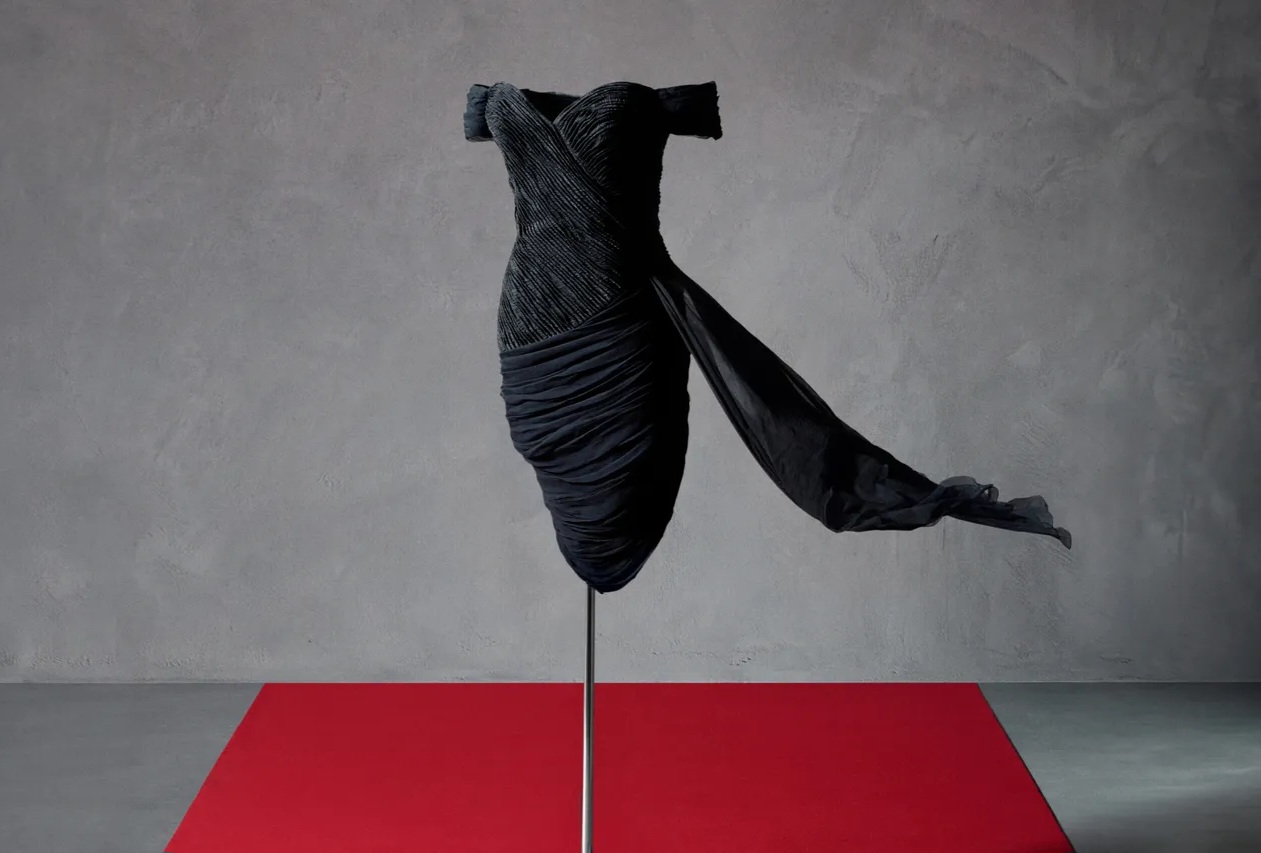
As she stepped out of her car into a blaze of camera flashes from a crowd of photographers, she was wearing a striking figure-hugging, strapless black silk evening dress by Greek designer Christina Stambolian accessorised with a royal jewel, a black clutch and black pumps. Beamed to the world within minutes, the look would become one of the most enduring fashion statements of the 20th century. Now, more than three decades later, that very dress returns to the spotlight.
Estimated at $150,000–300,000 (£110,000-220,000), Princess Diana’s iconic Stambolian dress will be sold this December during Sotheby’s Luxury Week. The dress will be offered at auction for the first time since June 1997 when the late princess sold 79 of her dresses at auction to raise funds to benefit cancer and AIDS charities. A rare copy of the original catalogue, numbered and signed by the princess and the designer of the dress, crediting Prince William with the idea of the sale will be sold with the dress. Part of the proceeds from the sale will be donated to NHS Lothian Charity on behalf of the Royal Edinburgh Hospital.
The “Revenge Dress” will embark on a global exhibition tour, making its first public appearance at Sotheby’s London from 18 September, during London Fashion Week, to 24 September. The dress will then go to Hong Kong and Geneva, before travelling to New York for the auction. There it will last be on public view at Sotheby’s Breuer Building from 2 December ahead of the live sale on 9 December.
The Stambolian designed dress is one of very few garments that have transcended fashion to become part of the collective cultural imagination. Known today as Princess Diana’s “Revenge Dress,” a moniker coined virtually overnight by the media, the dress became a powerful visual expression of confidence at a moment when the princess was under unprecedented public scrutiny. That same evening, Prince Charles (as he was then), from whom she had been separated for nearly two years, was due to admit on national television that he had been unfaithful to her. The revelations had been leaked a few days before so Princess Diana knew that whatever she chose to do that evening, as the programme was aired to millions, would inevitably carry meaning and interpreted as a response.
She did attend the fundraising dinner at Serpentine she could have easily cancelled, but made a last-minute wardrobe change, setting aside a more traditional Valentino gown in favour of the now-iconic black silk off-the-shoulder dress, featuring an asymmetric hemline and a dramatic chiffon train. The princess had long considered the dress too daring to wear in public, and it had remained unworn in her wardrobe for three years – but on that historic day, she decided the time was right for it. According to her stylist at the time, Anna Harvey, who had helped her prepare for the event, Diana simply "wanted to look a million dollars”.
Ultimately, Princess Diana’s choice of that dress was not only intentional but also inspired. The Stambolian design is a version of the LBD (little black dress), itself a revolutionary fashion statement, first conceived by Coco Chanel in 1926. Chanel intended to free women from the fashion constraints of earlier eras and reimagined black as a colour that could translate chic sophistication, not solely mourning. The little black dress quickly became a symbol of female empowerment, emancipation and self-possession. Accessorised with black heels, red nail polish, a clutch bag and a statement choker, created from an antique diamond and sapphire brooch given to her as a wedding gift by the Queen Mother, Princess Diana was sending her response to the world.
Yet the significance of the “Revenge Dress” extends far beyond the circumstances that first brought it to worldwide attention. Over the decades, it has come to symbolise something more universal: the power to define one’s own image, project confidence and assert a sense of self in the face of adversity. This idea is not new. For centuries, women in particular, have used fashion to create and communicate meaning, including within royal courts, where kings, queens and their entourages have long conveyed power, status and circumstance through dress. But in that singular moment in history, Princess Diana elevated the notion of fashion as a form of communication to a dazzling level that resonated around the world almost instantly, a power it retains to this day.
Christina Stambolian later likened Princess Diana’s choice of that black dress to Odile’s, the black swan in Tchaikovsky’s Swan Lake, a conscious departure from the normative behavior and innocence traditionally associated with white. Her design gave the princess a silhouette that was elegant yet edgy, dramatic and unmistakably her own.
The influence of the Revenge Dress has shaped fashion and popular culture for decades. Images of Princess Diana in the dress have been endlessly referenced and reimagined, while the term “revenge dressing” entered the modern fashion lexicon as shorthand for clothing chosen to project confidence, transformation and independence. It has been recreated many times for screen and exhibition, but the Revenge Dress itself has not been seen publicly in nearly thirty years.
Following the sale the dress was used for charity fundraising events around Scotland, including an evening at the House for an Art Lover in Glasgow where Christina Stambolian attended and graciously provided a Chinese silk coat to be raffled to one of the attendees. Its final time on display was at Paisley Museum, after which it disappeared from public view for nearly three decades.
All Images Courtesy Sotheby's