
Portugal returns Archaeological Artifacts to Mexico
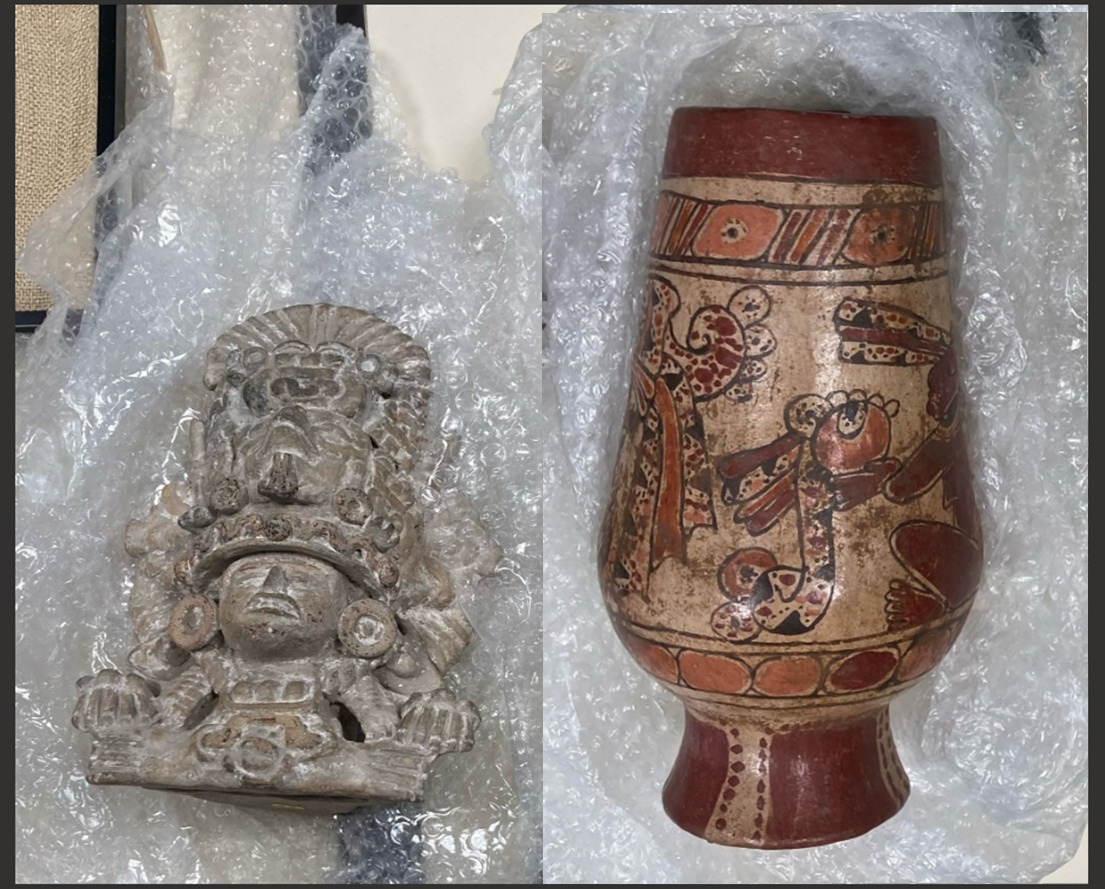
The Mexican embassy in Lisbon received three archaeological artifacts from Portuguese authorities, representing different periods and pre-Hispanic cultures and unlawfully taken from Mexico. They will be repatriated in the coming weeks via diplomatic pouch.
The restitution of the archaeological heritage took place at the embassy on February 12, 2026. It marks the first time Portugal has returned artifacts to Mexico and reflects institutional cooperation and a shared commitment to combating the illicit trafficking of cultural property.
Mexican Secretary of Culture Claudia Curiel de Icaza noted that this first restitution by Portugal enhances institutional cooperation and reinforces a sustained public policy focused on the protection of heritage.
“This return confirms that international cooperation protects who we are. Each restitution restores memory and identity to Mexico and reaffirms the shared commitment to combating the trafficking of cultural property.”
Following notification by the embassy in Portugal, specialists from the National Institute of Anthropology and History (INAH), an agency of the Ministry of Culture, conducted a preliminary review of the three artifacts. Based on images provided by local authorities, they determined that the pieces form part of Mexico’s archaeological heritage. The objects were recovered by Portugal’s Judicial Police and the Camões Institute for Cooperation and Language.
According to the INAH, one of the pieces—announced at auction in 2024—is a modeled clay female figure measuring 43 centimeters in height, with a burnished surface, applied decorative elements, and incised details. The figure is seated on her knees, bare-chested, wearing a skirt and a conical headdress, with scarification marks on the shoulders.
The piece is in the Tala-Tonalá style of the Shaft Tomb cultural tradition and comes from what is now the state of Jalisco. Associated with fertility and maternity rituals, it was produced between 300 and 600 CE. The case was investigated by the Lisbon Public Prosecutor’s Office.
Also returned was a Maya polychrome vessel from the Classic period (600–900 CE), decorated with scenes of elite figures and glyphs. It may have been used for the ritual consumption of beverages such as cacao. It was seized by the Public Prosecutor’s Office of the province of Guimarães and most likely originates in southeastern Mexico.
A Zapotec funerary urn from the Central Valleys of Oaxaca was likewise returned. The urn depicts Cocijo, the Zapotec deity of rain and thunder, and dates from 600 to 1200 CE. It was seized by the Public Prosecutor’s Office of Évora-Estremoz.
In 2025, Mexican archaeologist Aline Lara Galicia, a member of the Atlas (HUM694) research group at the University of Seville, was assigned to conduct an in situ examination of the three artifacts at the request of the Portuguese authorities and in coordination with Mexican institutions. Her review confirmed their authenticity and their significant symbolic role in the social, political, and ritual contexts of the Mesoamerican cultures to which they belong.
Participants in the handover included Mexico’s Ambassador to Portugal, Bruno Figueroa Fischer; the National Director of Portugal’s Judicial Police, Luís Neves; the President of the Camões Institute, Florbela Paraíba; the head of the Lisbon and Tagus Valley Directorate of the Judicial Police, João Oliveira; and, remotely, archaeologist Aline Lara.
Mexico continues to pursue legal measures and strategies to secure the restitution of the country’s cultural heritage unlawfully located abroad, through the joint efforts of the Ministries of Foreign Affairs and Culture.