
Munich Museum returns Nazi-Looted Art to the Heirs of Ernst Magnus
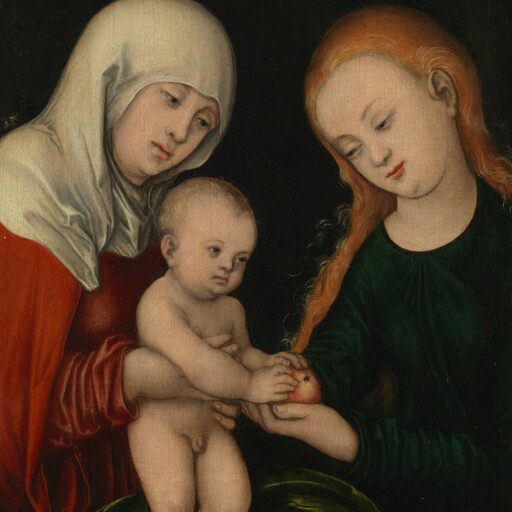
The Bayerische Staatsgemäldesammlungen are returning the painting ‘The Virgin and Child with Saint Anne’, c. 1522–1525, attributed to an artist from the circle of Lucas Cranach the Elder to the legal heirs of Ernst Magnus, formerly of Hannover.
The small-format painting was consigned to the Fischer Galerie auction house in Lucerne by Ernst Magnus in 1940 and sold to Hermann Göring in 1941 through the art dealer Walter Andreas Hofer. After the Second World War, the work was recovered by the American Allies, processed at the Central Collecting Point and initially entrusted to the Minister-President of the Free State of Bavaria. In 1961, it was transferred to the Bayerische Staatsgemäldesammlungen as state property relocated from former Nazi holdings.
The descendants of Ernst Magnus submitted a restitution claim in 2009, which - following review in 2010 - was rejected on the basis of the guidelines in force at the time. After a renewed examination under the new assessment framework of the Arbitration Board for Nazi-Looted Property, which guides the review and decision-making process for cultural property seized because of Nazi persecution, the decision was revised, and restitution has now been approved.
Ernst Magnus (1871–1942) and his wife Ida were originally from Hesse and lived in Hannover for many years. Magnus was director of the Commerz- und Disconto-Bank Hannover, a member of the board of the stock exchange and, from 1914 to 1933, served on the supervisory board of Continental Gummi-Werke AG. Advised by an assistant of the eminent art historian Wilhelm von Bode, Magnus and his wife amassed a substantial art collection. With the rise of the Nazi regime, members of the Magnus family were increasingly stripped of their rights as citizens. Bank accounts were frozen, divested property was sold below market value, and they were forced to pay the Jewish Property Levy and the Reich Flight Tax. In 1935, Ernst Magnus escaped Nazi persecution by emigrating to Lausanne, taking parts of his collection and valuable furnishings with him. However, to fund the family’s escape and pay for the visa application for Cuba, Magnus was forced to sell further works of art, among them ‘The Virgin and Child with Saint Anne’. In 1941, as Swiss asylum regulations tightened, the family managed to leave Switzerland via Seville for Havana, where Ernst Magnus died on 12 February 1942, just a few months after his arrival. His wife and daughter were subsequently able to make their way to the United States.
The investigation into the paintings’ provenance highlights the challenges involved in assessing what is known as Fluchtgut (flight assets). Art sales in Switzerland during the Nazi era are often difficult to classify although, they formally took place under free-market conditions, many were nevertheless prompted by the existential pressures of a racial persecution just across the German border. The new assessment criteria adopted in 2024 allow for a more nuanced evaluation. They play greater emphasis on the economic hardships faced by emigrants as a result of persecution and acknowledge that forced sales could also occur outside the territory of the German Reich. For the Bayerische Staatsgemäldesammlungen and the researchers at the newly established Department of Provenance Research at the Bavarian Museum Agency, this means re-evaluating cases such as that of Ernst Magnus after more than a decade later, and critically reassessing decisions taken many years ago. At the same time, it obliges us to expand our provenance research efforts, allocate the necessary resources, and communicate our findings with complete transparency. The restitution of the painting ‘The Virgin and Child with Saint Anne’ is thus also a sign that the Bayerische Staatsgemäldesammlungen are taking responsibility, and that we are committed to the ongoing effort to address historical injustices and the restitution of cultural property confiscated by the Nazis or sold under duress.
Main Image: Lucas Cranach the Elder (anonymous pupil), The Virgin and Child with Saint Anne, c. 1522–1525 Beech wood (Fagus sp.), patching rebate softwood
32 x 25 cm Photo: Bayerische Staatsgemäldesammlungen, Sibylle Forster