
Minneapolis Institute of Art receives 2026 TEFAF Museum Restoration Fund Grant
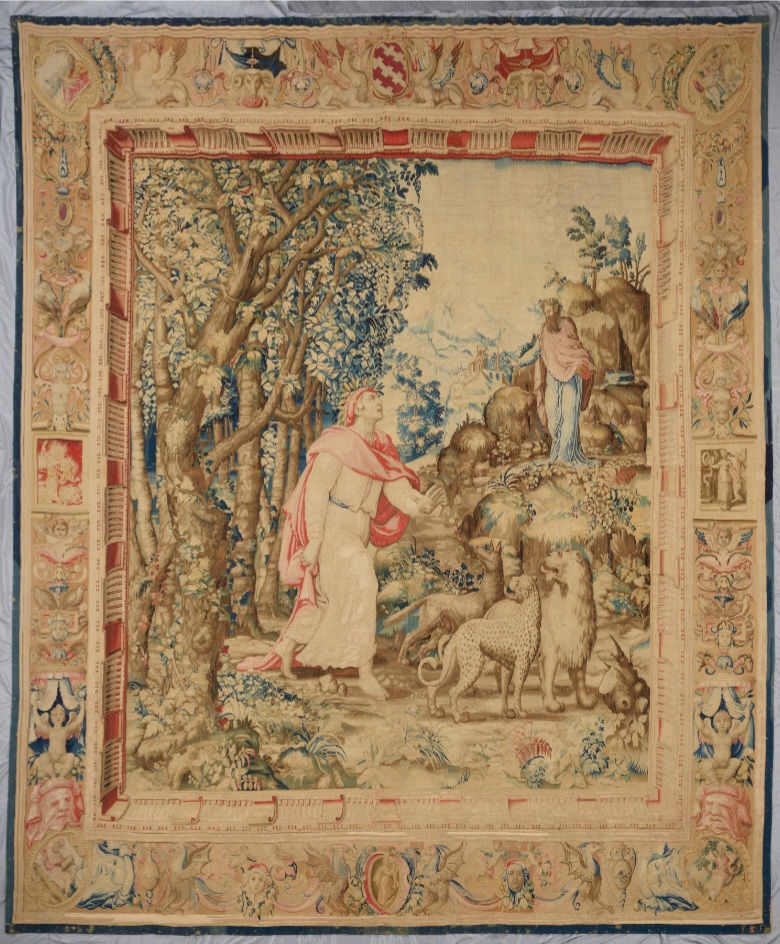
The European Fine Art Foundation (TEFAF) together with TEFAF New York Lead Partner Bank of America, announced the Minneapolis Institute of Art (Mia) as a recipient of the 2026 TEFAF Museum Restoration Fund (TMRF).
Joint support from the TMRF and the Bank of America Art Conservation Project™ will enable the conservation of The Meeting of Dante and Virgil, a monumental 16th-century Italian tapestry of exceptional rarity and importance, and the only early Medicean tapestry in a public collection outside Italy.
Established in 2012, the TEFAF Museum Restoration Fund supports the conservation and related scholarly research of significant works held in public collections. This year marks the first time the fund has supported the treatment of a tapestry.
Home to a world-renowned collection spanning 5,000 years of history, Mia holds one of the most distinguished tapestry collections in the United States, with 41 works. The Meeting of Dante and Virgil is among the most significant Renaissance works in Mia’s collection and is considered the most important Italian Renaissance tapestry in the United States. The tapestry measures 5.3 meters, which is equivalent to 17.4 feet.
The Florentine workshop that produced the tapestry was founded in 1545 by Duke Cosimo I de’Medici, who sought to rival the celebrated weaving centers of Brussels. He recruited Jan Rost, a master weaver from Brussels, to establish and oversee production. The tapestry’s design and cartoons were created by the painter Francesco Salviati (1510–1563) between 1546 and 1548, and the work was woven between 1547 and 1549 during the formative years of Medici tapestry production.
Due to structural weaknesses, losses, and fragile silk areas, the tapestry has not been on view recently. Conservation will be undertaken by the Midwest Art Conservation Center and will include wet cleaning, stabilization, selective reweaving, and the installation of a new support system to allow safe display. Following treatment, the tapestry is expected to return to public view in summer 2026. As part of its upcoming exhibition project, the museum has designed and built a modular frame that will allow the tapestry to be safely loaned to other institutions in the future.
“The combined support of TMRF and Bank of America makes this ambitious project possible,” said Max Bryant, James Ford Bell Associate Curator of European Decorative Arts and Sculpture at Mia. “Returning a work of this scale and significance to public view is an important moment for the museum and for all audiences interested in Renaissance art.”