
Mauritshuis wins Legal Battle over 25 Rembrandt-Era Masterpieces
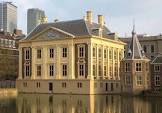
The Mauritshuis does not have to return 25 artworks claimed by the heirs of art historian and former museum director Abraham Bredius.
That is the ruling of the court in The Hague. The heirs wanted the masterpieces back because, in their view, the museum exhibits the valuable paintings too infrequently.
Bredius (1855-1946) was director of the Mauritshuis from 1889 to 1909. He stipulated in his will that the art museum in The Hague could keep 25 of his seventeenth-century paintings after his death; the museum already had them on loan. Bredius did, however, set two conditions: they were not to be lent out and they had to be on permanent display.
The collection includes masterpieces such as Saul and David and Two African Men by Rembrandt van Rijn, as well as works by Salomon van Ruysdael, Jan Steen, and Jan van Goyen.
However, the Mauritshuis stores most of the artworks in the museum's depot. Currently, ten paintings are on display; in the past, there were even fewer. Bredius's heirs believe that the museum is violating the agreements and that they are therefore entitled to reclaim the works. The Mauritshuis disagrees.
The case essentially revolves around the translation of a single sentence in Bredius's French-language will. When he drew up his will, he was living in Monaco. There, he wrote that the paintings "devront rester exposés exclusivement dans said Musée".
According to the surviving relatives, it states here that the artworks must be permanently exhibited. The Mauritshuis, however, interprets it differently. According to the museum, it states that if they are exhibited, it must be in the Mauritshuis. The lawyers for the two parties were also unable to agree on how the words 'rester exposés' should be interpreted, even though they had both studied in Paris.
The court has now provided clarity on this matter. It acknowledges that there is "some room for uncertainty" regarding the translation of Bredius's will, but also states that no "absolute obligation to exhibit" was demanded by Bredius. Therefore, the museum may keep the paintings.
One of the heirs, Otto Kronig, calls the ruling concerning. "The court did not base its decision on what Bredius wrote down, but on what museums consider practical nowadays." The heirs' lawyer has announced that they will appeal.
Bredius' heirs are, incidentally, not direct relatives. They are related to Joseph Kronig (1887-1984), a housemate and an important protégé of the childless and unmarried Bredius. Joseph was his only heir.