
Masterpieces of Islamic Art from the Louvre come to the Smithsonian
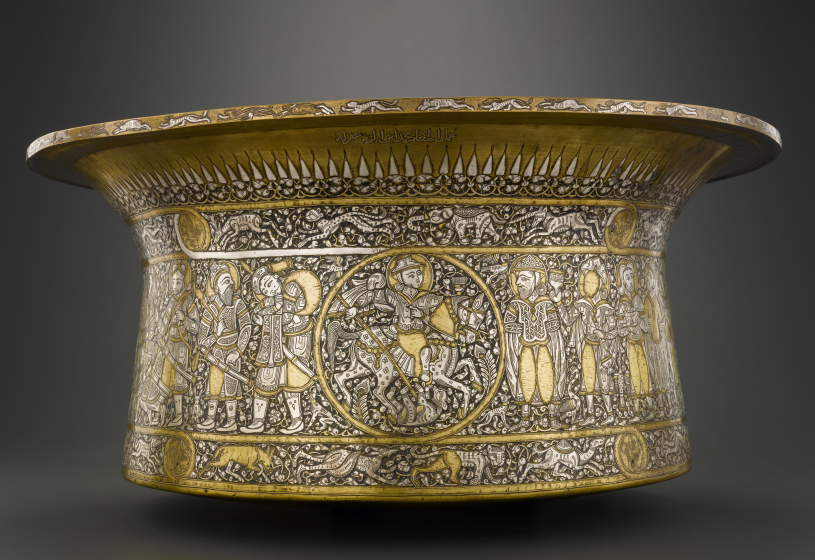
National Museum of Asian Art Exhibition Explores the Concept of a Masterpiece Through Iconic Islamic Artworks From the Musée du Louvre.
On view for the first time in the U.S., and at its only stop, “From the Louvre: Masterpieces of Islamic Art” presents a selection of 26 artworks from the Musée du Louvre that represent the depth, technical excellence and global reach of the arts of the Islamic world. The exhibition at the Smithsonian’s National Museum of Asian Art will be open Saturday, Sept. 26, through Monday, Jan. 18, 2027, featuring artworks from the seventh to 19th centuries created in Islamic regions spanning modern-day Spain to India. The exhibition tells the stories of the objects’ long and often complex journeys from their places of origin to the Louvre, as they gained recognition as “masterpieces.”
“From the Louvre” invites visitors to consider how artworks become masterpieces over time, highlighting not only artistic mastery but also histories of use and exchange. Frequently gifted to secure and strengthen alliances, these works were invested with new power and meaning as they moved from the possession of sultans, princes and nobles to the hands of artists, archaeologists and collectors.
“Desired for their spectacular artistry and distinct craftsmanship, these objects of the Islamic world were enjoyed by a select few until they entered the Louvre,” said Chase F. Robinson, director of the National Museum of Asian Art. “Now, these once-exclusive objects are accessible to all as masterpieces. Through this exhibition, we examine how masterpieces are shaped not only by their makers, but also by the public that celebrates them.”
Galleries will display paintings, metalwork, jade, ceramics, glass and architectural elements that represent different artistic traditions from the Islamic world. These artworks acquired new significance over centuries, as they moved across borders and changed ownership.
The exhibition also highlights long-standing ties between the Louvre and the National Museum of Asian Art. In the early 20th century, museum founder Charles Lang Freer developed an artist and collector network, which included Louvre curator Gaston Migeon and French collector and art historian Raymond Koechlin, who frequently corresponded with Freer. An object from Koechlin’s collection—a blue and turquoise plate with a peacock from the 16th-century Ottoman Empire—is now at the Louvre and included in this exhibition.
The exhibition is co-curated by Souraya Noujaim, director of the Islamic art department at the Musée du Louvre, and Simon Rettig, associate curator for the arts of the Islamic world at the National Museum of Asian Art.
“For decades, the Musée du Louvre has acquired works that demonstrate the incredible diversity of Islamic art,” Noujaim said. “Through this collaboration with the National Museum of Asian Art, we continue the spirit of cultural exchange and cross-cultural conversations that these masterpieces have inspired for centuries.”
“Works of art rarely begin their lives as masterpieces,” Rettig said. “Some become so only over time. As they continue to dazzle and mesmerize the public, we also share the little-known story of their captivating journeys in this once-in-a-lifetime exhibition.”
Main Image: Basin known as the Baptistery of Saint Louis, Egypt or Syria, Mamluk period, ca. 1325–40. Copper alloy with engraving and inlay of silver, gold and black paste. Copyright Musée du Louvre, Dist. GrandPalaisRmn / HughesDubois