
Maria Gvardeitseva on Rediscovering Art and Building a Practice Around Memory
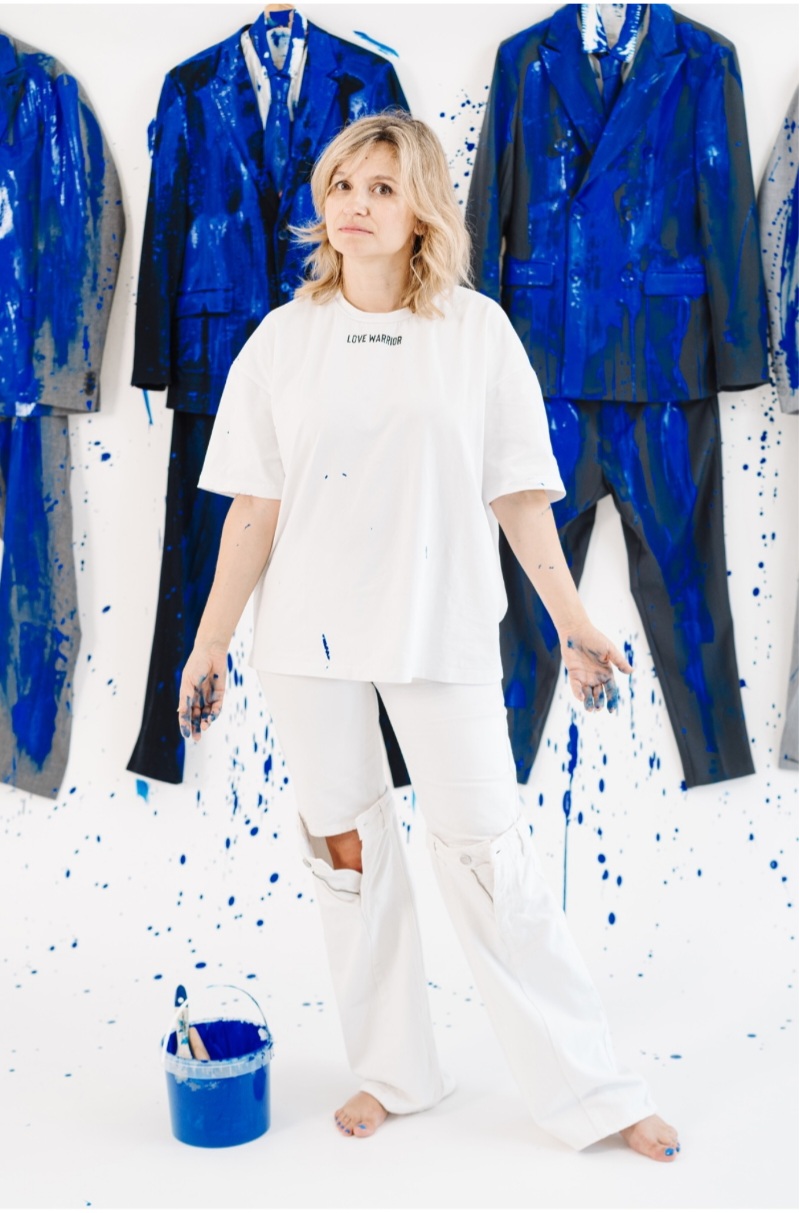
Maria Gvardeitseva is a Belarusian-born visual artist. She spent sixteen years working in communications before turning to art on a full-time basis. Her installations focus on the exploration of memory, the body, intimacy, ritual and loss.
On 13 November, Maria will present La Petite Mort, a new exhibition at CUT ART Gallery in Riga, inspired by her book 5-Minute Bedtime Stories. Ahead of the opening, we spoke with her about her art journey, the ideas behind her practice, and her upcoming project.
Your background is quite diverse: from PR and marketing to becoming a full- time visual artist. What motivated you to make that transition?
If I had to give a short answer, it would be passion. A passion for art that I had somehow forgotten about for a while, and then rediscovered. Then, eight or nine years ago, I went to the Venice Biennale, and something changed. I remember this incredibly strong feeling of coming home. I didn’t need anything explained to me. Everything somehow made sense. I had this very clear sense: I belong here. And the only question for myself was: why have I spent so many years doing something other than art?
You already had an established professional background before studying Arts and Politics at Goldsmiths. What made you decide to return to university at that stage of your career, and how did it change your practice?
I felt that I needed to understand intellectually what I had already been doing intuitively. I didn’t feel that technique was the question I needed to answer. I needed a theory. Goldsmiths changed much more than the way I make individual works. It changed
my mindset.
Memory runs through much of your work, but you often move between very personal experiences and much larger histories. What makes a memory interesting to you as artistic material, and how do you decide when something personal can become an artwork?
What interests me most are the gaps in memory. They can be gaps in my own memory or in collective memory. I’m interested in why these absences appear, why certain experiences remain incredibly charged while others seem to vanish, and why some memories become ritualised while others are almost deliberately left without a
language or a ritual. I think that is when something becomes an artwork for me: when a very private question suddenly reveals that it isn’t private at all.
Several of your projects (from Migrant’s Altar and Anatomy of Citizenship to 5-Minute Bedtime Stories) begin with major experiences from your own life: migration, citizenship, separation. Is there a line between your personal life and your work, or do the two naturally exist together?
Personal experience is often a starting point for me, but it is rarely the subject itself. I use my life as material, but I’m not particularly interested in telling my life story. Relics of a Woman is a good example. The project began with my research into the relics of female saints, but one of the works that emerged from it was The Cradle of Failed Prayers. I made a porcelain replica of a nineteenth-century Flemish cradle and filled it with tiny porcelain figures approximately the size of a three-month-old foetus. The work is about pregnancies that did not result in a child — including miscarriages and abortions, but also pregnancies that were longed for and never happened. I have never experienced pregnancy loss myself. So the work clearly isn’t an illustration of my biography.
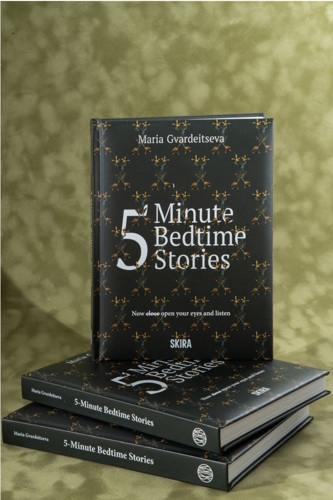
5 Minute Bedtime Stories
DRYGVA began with a childhood memory and eventually developed into an immersive exploration of Belarusian identity. Why did the swamp become the landscape through which you wanted to tell that story, and how has the meaning of the project changed for you since you first made it?
Actually, DRYGVA didn’t begin with a childhood memory. I conceived it in 2021 for the competition for the Belarusian Pavilion at the 59th Venice Biennale. I started thinking about what could represent something primordial — something deeply rooted in Belarusian identity. I kept coming back to swamps.
But perhaps the most important idea for me was presence. When you walk through a swamp, you cannot really think about the past or the future. You have to concentrate
entirely on where you place your next footstep, because the ground beneath you is
unstable. You are forced into the here and now. Swamps are an essential part of the
Belarusian landscape and cultural imagination, and carry a mythology of their own. Some works keep changing for me over time; DRYGVA somehow arrived already whole.
Your recent works, including Ex Contactu and Relics of a Woman, seem to move closer to the themes of body, intimacy and physical materials such as wax, porcelain, salt, water. Do you see this as a new chapter in your practice, and what exactly is driving that shift?
I wouldn’t call it a new chapter so much as an evolution of my practice. I change as a
person, and inevitably I change as an artist. I’m increasingly drawn to materials that feel close to human nature. Wax, latex and porcelain are fragile; they crack, age, soften, harden, react to heat and preserve traces. In a way, they break as we break.
What’s next for you? Is there a medium or format you haven’t worked in yet that you’re curious about?
The most immediate thing is La Petite Mort, a new exhibition based on my book 5- Minute Bedtime Stories, opening at CUT ART Gallery in Riga on 13 November. For that show, I’m also experimenting with something completely new for me: AI- generated film and animation. I’m turning one of the fairy tales from the book into an animated work.
Beyond that, I already have two larger research-based projects underway. One is Man’s Cookbook. It begins with a simple contradiction: a traditional recipe promises that if you repeat the same actions precisely, you will produce the same result. Human relationships never work that way.
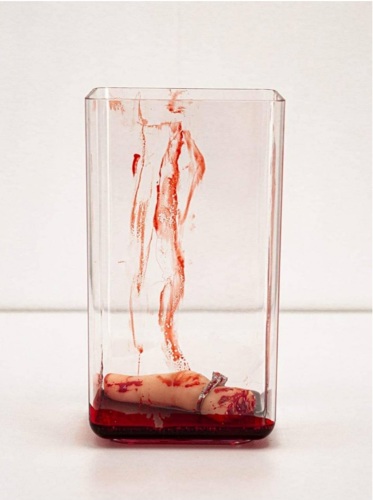
La Petite Mort
This article was authored by Sofiia Barysheva