
Lucim 111: The Polish Village that became a Work of Art
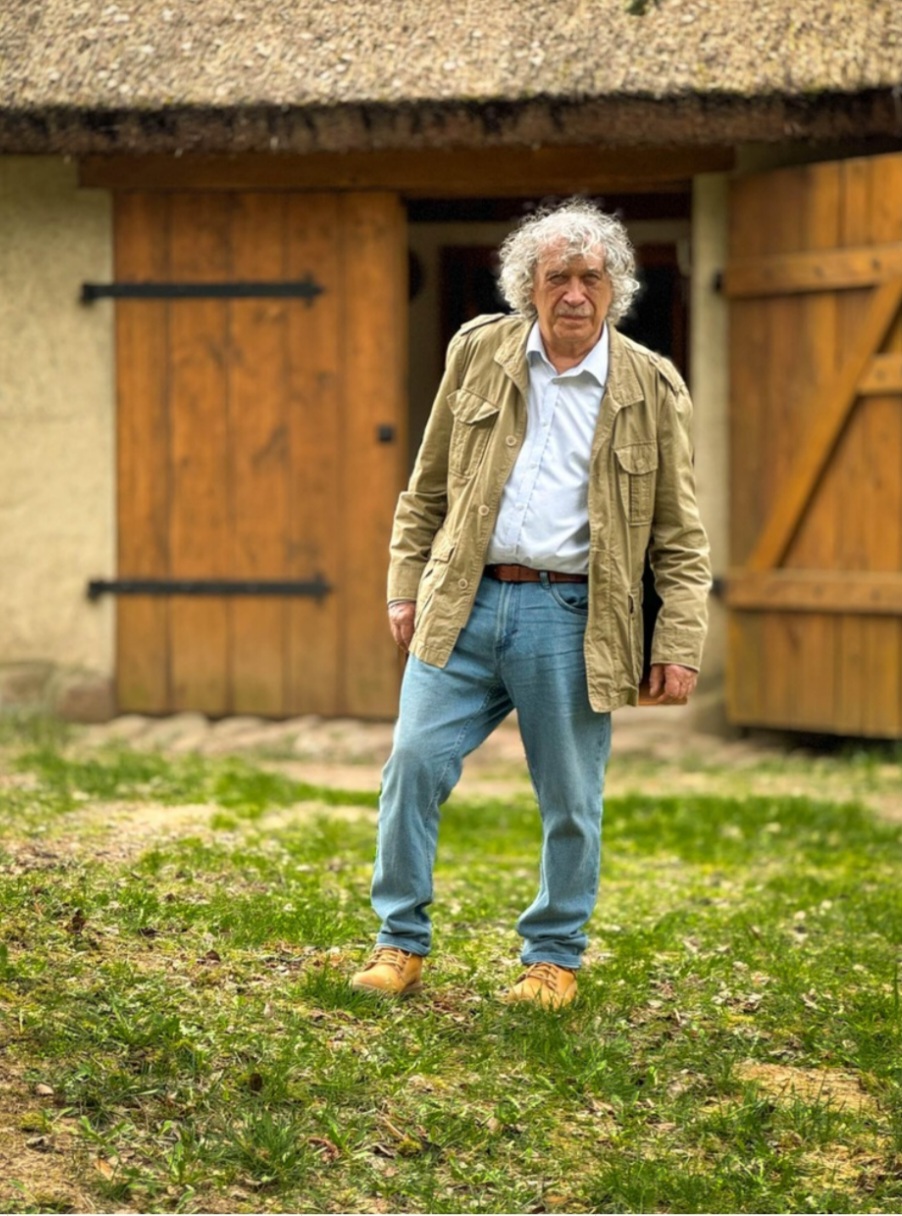
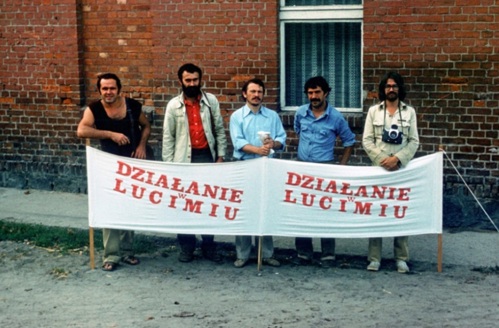
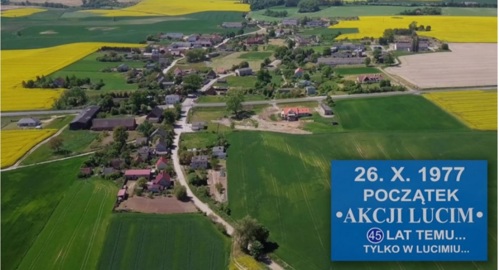
In 1977, in the small village of Lucim in north-central Poland, a group of artists began an
experiment that today deserves to be read not as a regional curiosity, but as one of the most original European examples of socially engaged, site-specific and community-
based art.
At its centre was Bogdan Chmielewski, working alongside Witold Chmielewski, Wiesław Smużny and, in the early phase, Andrzej Maziec and Stanisław Wasilewski.
What began as “Akcja Lucim” (Lucim Action) soon became a long-term artistic practice in which the village itself — its inhabitants, landscape, customs, memory, seasonal rhythms and everyday gestures — became both the subject and the medium of art.
Lucim is important because it challenges the dominant geography of contemporary art.
The village was not used as a picturesque background, an ethnographic object or a
temporary site for artistic intervention. It became a living field of artistic, social and
symbolic work. The artists did not simply arrive, exhibit and leave.
They entered into relationships, repeated actions over years, built trust, developed rituals and created a distinctive form of “social art” rooted in place. In 1980, the group formulated the programme “Social Art as an Idea” — a remarkably early articulation of a practice that would later resonate with international debates around socially engaged art, social sculpture, relational aesthetics, community art and ecological art.
Bogdan Chmielewski’s role within Lucim was crucial. Trained at the Faculty of Fine Arts
of Nicolaus Copernicus University in Toruń, he developed an interdisciplinary practice
spanning actions, visual interventions, para-theatrical events, happenings, performance, installations, drawings, live images and text compositions. Over decades, his work in Lucim moved between the intimate and the communal, the conceptual and the ritual, the domestic and the cosmic. He treated the village not as a passive location, but as an “oikos” — a home, a symbolic centre, a space of return, contemplation and transformation.
What makes Lucim internationally compelling is its timing. In the 1990s, Nicolas
Bourriaud’s term “relational aesthetics” would describe art based on human relations
and social contexts. Yet in Lucim, a comparable understanding of art as relationship,
encounter and social process had been developing since the late 1970s, outside the
global art-market system and outside the metropolitan gallery. Similarly, while Joseph
Beuys’s idea of “social sculpture” proposed that society itself could be shaped as an
artwork, Lucim o`ered a quieter, rural and long-term version of that idea: not a heroic
manifesto centred on the artist, but a lived practice built with a community.
Lucim also complicates the history of land art. Unlike the monumental gestures of
American earthworks, Lucim’s art of place was modest, cyclical and socially embedded.
Fields, houses, roads, seasons, light, fire, seeds, straw, candles, memory and local
rituals became materials of artistic thought. This was not land art as conquest of
landscape, but land art as belonging, listening and repeated return.
For international readers, Lucim 111 o`ers a missing chapter in the history of
contemporary art: a Central and Eastern European model of rural social practice that
anticipated many concerns now central to global culture — community, ecology,
memory, participation, decentralisation and the crisis of institutions. It asks a question
that feels urgent today: can art still create places of shared meaning?
Lucim suggests that it can. But only if art is allowed to leave the gallery, enter the
rhythms of everyday life and remain long enough to become part of a community’s
memory.
This article is authored by Village Art Foundation