
Looted Nazi Painting in Argentina is by Giacomo Ceruti
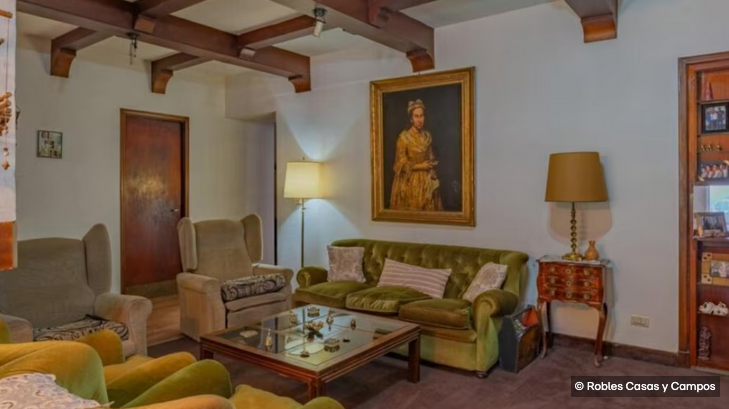
Art historians working for Argentina’s judiciary confirmed that the 18th-century painting looted by the Nazis and recovered in Mar del Plata is not by Giuseppe Ghislandi, the Italian painter to whom it was originally attributed.
They believe it is by Giacomo Ceruti, another Northern Italian artist working in the same period. They also valued the work, “Portrait of a Lady,” at up to 250,000 euros (USD291,000). It could help set the conditions for a possible out-of-court settlement in which the couple who were in possession of the painting admit responsibility, according to a judicial source.
The painting was owned by Jacques Goudstikker, a Jewish art dealer based in Amsterdam, and looted by Nazis. For decades, its last known whereabouts had been in Switzerland in 1946, in the hands of high-ranking Nazi financier Friedrich Kadgien. Then, it resurfaced in August 2025 when Dutch journalist Peter Schouten, who was investigating the fate of the painting, spotted it on a real estate listing in Argentina.
The house in the listing belonged to Kadgien’s daughter, Patricia.
The investigation into the painting is expected to finish in March. Investigators are currently going through the family’s social media accounts, phone records, and other documentation to determine whether they knew of the artwork’s origin and how long it had been in their possession.
Goudstikker’s sole heir, his daughter-in-law Marei von Saher, originally filed a complaint with the FBI. She is now a plaintiff in the Mar del Plata case.
National Academy of Fine Arts specialists Ángel Miguel Navarro and Alejo Gabriel Lo Russo believe the painting is by Giacomo Antonio Melchiorre Ceruti (1698-1767), known as “Il Pitocchetto,” and not to the Giuseppe Ghislandi (1655-1743), as was initially believed.
Although Goudstikker’s inventory documents attributed it to Ghislandi, the report determined that, over time, the painting was alternately considered to be the work of Ghislandi and Ceruti.
The art historians said that the painting was in a style known as “Lombard naturalism.” They reached their conclusion based on “the careful descriptive treatment of the clothing, which recalls works such as the “Portrait of Marchioness Laura Vitali Aliprandi,” in which dress takes on a fundamental narrative and social value,” according to a statement by the public prosecutor’s office.
“This approach reveals a conception of painting centered on direct observation and on the dignification of non-idealized models, a distinctive trait of Ceruti’s work.”
Technical analysis verified the authenticity of the work, and that it was stolen from Goudstikker. The experts were able to identify it thanks to the analysis of documents and historical records, including the photographic archive of the Dutch Institute for Art History.
In September, Patricia and her husband, Juan Carlos Cortegoso, were charged with aggravated concealment. After the media reported the work’s location and before a police search, the couple took down the “For Sale” sign that led journalists to discover the work, and replaced the portrait with a tapestry. The defendants also attempted to file a civil action claiming the painting was theirs.
They handed it over only after they were placed under house arrest and faced several police raids.