
Legendary Gallerist Marian Goodman dies at 97
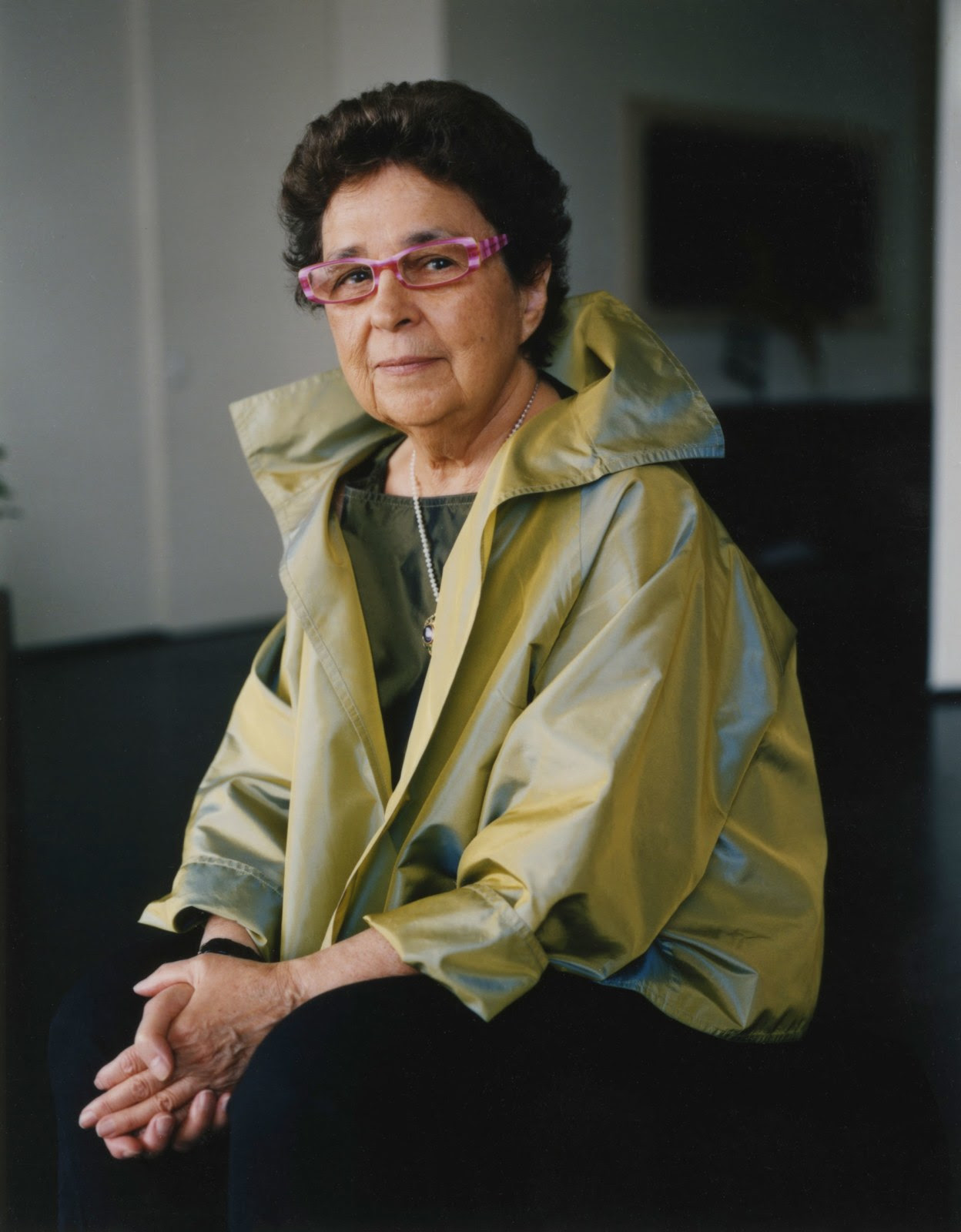
Legendary art dealer Marian Goodman died on Thursday in a hospital in Los Angeles. She was 97.
An ardent advocate for her artists, Marian was distinguished by her exceptional eye for talent and unwavering commitment to championing significant and challenging work. She revolutionized the art world by introducing major European artists—representing the avant-garde of their time—to American audiences, paving the way for later generations of artists to advance practices that were both conceptually driven and socially engaged. Most of all, Marian had a deep understanding of a gallerist’s responsibility; driven by a curiosity and a pluralistic view of art, designating its vast potential over market trends, she forged long-standing relationships with her artists and supported their practices within nonprofit and institutional realms.
In speaking about her artistic affinities, Marian once noted, “It is among the artists whose work I like that I have found the qualities I value from my own experience: a humanistic concern, a culture-critical sense of our way of life, a dialectical approach to reality, and an artistic vision about civic life.”
Marian launched her eponymous gallery in New York City in late 1977, at a time when few women led in the art world. Building on her work at Multiples, Inc., an art publishing company she co-founded in the 1960s, the Gallery’s establishment was driven, in part, by a desire to introduce an innovative transatlantic program that brought American and European artists into dialogue. Synchronous with this mission, Marian was inevitably drawn to Europe, establishing a Paris location in the Marais district in 1995. Since opening the Gallery, Marian has advanced the work of artists who have become leading voices of their generation. Ever progressive in her vision, Marian established and appointed a partnership team with Rose Lord, Junette Teng, Emily-Jane Kirwan and Leslie Nolen.
Having worked alongside Marian for decades, the Partners have advanced the value system that has defined the Gallery’s program since inception and have spearheaded its continued development, including the move of its New York City headquarters to the historic Grosvenor building in Tribeca in October 2024 and the 2023 launch of its Los Angeles gallery.
Marian is survived by her daughter, Amy Goodman-Kiefer, and her husband, Joseph Kiefer, as well as her son, Michael Goodman, and his wife, Gwen Goodman.
Among the most respected and influential dealers of contemporary art, Marian Goodman helped shape the contemporary art world for six decades. One of the first women to enter the art world in the 1960s, Goodman was among the first gallerists to champion the work of seminal European artists to American audiences. Under her leadership, Marian Goodman Gallery has forged a program distinguished by its caliber and rigor and by its deep and longstanding dedication to its artists.
Goodman has been recognized for her significant contributions to civic and cultural life in Paris and New York City, respectively, where Marian Goodman Gallery has long had a presence, through numerous honors and awards, including being awarded the rank of Commander of the Order of Arts and Letters in 2023, the Légion of Honor by the French government in 2013, and an honorary doctorate in humane letters from The City University of New York in 2012.
Goodman’s introduction to art began at an early age through her father, who had a passion for modern art and collected the work of Milton Avery. Goodman and her father would frequent museums, study art history, and even mount exhibition posters for their home in New York City. “Perhaps because my background was deeply marked by my father’s ability to ‘look’ at art, I grew up understanding the power of art to profoundly touch one’s being,” Goodman said.
Goodman attended Emerson College, receiving an undergraduate degree in history in 1949. She became civically engaged as a young mother and was among a group of women in 1956 who challenged Robert Moses as he tried expanding the parking lot at Tavern on the Green, forcing him to build a playground instead. In the early 1960s, she organized a book of prints of New York paintings to raise funds for the Walden School, where her children were students.
In 1963, she decided to attend graduate school in art history at Columbia University, where she was the only woman in her class. “A teacher told me that I wasn’t the kind of person that museums and universities were looking for,” Goodman once recalled. Undeterred, she completed graduate school and embarked on her first venture: the art publishing company Multiples, Inc.
Founded by Goodman and four partners in 1965, Multiples, Inc., published limited-edition prints, artist books, portfolios, banners, and three-dimensional works over the span of nearly three decades, with Goodman playing the lead role in artist relations. Located on Madison Avenue and 74th Street in New York City, Multiples, Inc., also exhibited its own editions as well as those of other U.S. and European publishers.
Looking back on the inspiration for Multiples, Inc., Goodman said, “I had a strong belief that original prints were of great value to people who loved artists’ work but could not afford to buy a painting or sculpture. I wanted to make art available to all, at the highest level.”
In its first decade, Multiples, Inc., placed an emphasis on three-dimensional editions by artists who were the avant-garde of their time. Multiples, Inc., worked with historical figures such as Arman, Richard Artschwager, Marisol, and Man Ray; produced the first multiples of Sol LeWitt, Fred Sandback, and Robert Smithson; and supported emerging Pop artists Robert Indiana, Roy Lichtenstein, Claes Oldenburg, and Andy Warhol, as well as European artists including Joseph Beuys, Marcel Broodthaers, Jan Dibbets, and Richard Hamilton.
In the 1970s, Multiples, Inc., published numerous editions in collaboration with Castelli Graphics, including portfolio prints with Dan Flavin, Donald Judd, Robert Rauschenberg, James Rosenquist, and Tom Wesselmann. Goodman also developed close ties with the California art scene, with artists such as John Baldessari, Larry Bell, and Ed Ruscha, and for a brief period, Multiples, Inc. maintained a branch in Los Angeles. In 1974, Goodman assumed sole ownership over Multiples, Inc., just three years before she would open Marian Goodman Gallery.
Even with the inauguration of the new gallery in 1977, the publication of editions under the Multiples, Inc., imprint continued, and the company kept producing prints in the 1980s. Lawrence Weiner—who had a keen interest in multiplied art—signed the last edition released by Multiples, Inc., in 1992, informally drawing the last chapter of the art publishing company to a close.
Goodman’s impetus for opening her own art gallery was Marcel Broodthaers, whose epochal importance she recognized immediately. Unable to find representation for Broodthaers in New York, Goodman opened the Marian Goodman Gallery on East 57th Street in 1977 to showcase his work alongside that of other European artists, with the goal of initiating a dialogue between American and European artists. In 1984, she moved the Gallery to 24 West 57th Street, where it remained for more than 40 years. In 1995, she expanded the Gallery’s footprint to Paris, opening its present French quarters at rue du Temple in the Marais district in 1999 and subsequently launching a bookstore and project space there in 2017-2025. From 2014 until 2022, the Gallery operated an exhibition space in London. Under the leadership of the Gallery Partners, Marian Goodman Gallery inaugurated a new permanent space in Los Angeles in September 2023, and moved its New York City headquarters to the historic Grosvenor building in Tribeca in October 2024.
Since its inception, Marian Goodman Gallery has exhibited artists who are leaders of their generation. Goodman worked tirelessly to build the institutional and public profiles of her artists and engaged rigorously in academic discourse. In conjunction with the Gallery’s 30th anniversary, Goodman stated, “It has truly been a privilege to work with such an extraordinary group [of artists], representing five generations of diverse thought and practice. They have, with great generosity and imagination, given voice to their reflections on time, life, art, and the making of the work itself. A gallery is, of course, a living organism, and this one has been greatly enriched by the collaborations and friendships bestowed on me and my staff over all these years of nourishing discourse and generous, good spirits.”
The leadership structure of the gallery is now Partner-led under Rose Lord, Junette Teng, Emily-Jane Kirwan and Leslie Nolen. whose extensive tenure with the gallery and its distinguished roster of artists began under Founder Marian Goodman. Goodman noted these appointments as a natural progression: “My partners will carry forward the mission that I have worked so hard to achieve. The artists have put trust in me for over 40 years, and I have chosen a team that experiences the same intellectual and emotional response to the artists that I do.”
Today, the Gallery continues to present an ambitious exhibition program, representing over fifty artists and estates working in the U.S. and internationally: Eija-Liisa Ahtila, Chantal Akerman, Giovanni Anselmo, Leonor Antunes, Nairy Baghramian, Lothar Baumgarten, Dara Birnbaum, Christian Boltanski, Daniel Boyd, Marcel Broodthaers, Maurizio Cattelan, James Coleman, Tony Cragg, Richard Deacon, Tacita Dean, Edith Dekyndt, Rineke Dijkstra, Cerith Wyn Evans, Andrea Fraser, Bernard Frize, Dan Graham, Pierre Huyghe, Amar Kanwar, Agnieszka Kurant, An-My Lê, Steve MᶜQueen, Julie Mehretu, Ana Mendieta, Annette Messager, Delcy Morelos, Sabine Moritz, Maria Nordman, Gabriel Orozco, Giulio Paolini, Giuseppe Penone, Edi Rama, Anri Sala, Matt Saunders, Tino Sehgal, Paul Sietsema, Robert Smithson, Ettore Spalletti, Tavares Strachan, Thomas Struth, Niele Toroni, Álvaro Urbano, Adrián Villar Rojas, Danh Vo, Lawrence Weiner, James Welling, Yang Fudong and Jongsuk Yoon.