
Kader Attia Reveals Curatorial Vision for Seventh Kochi-Muziris Biennale
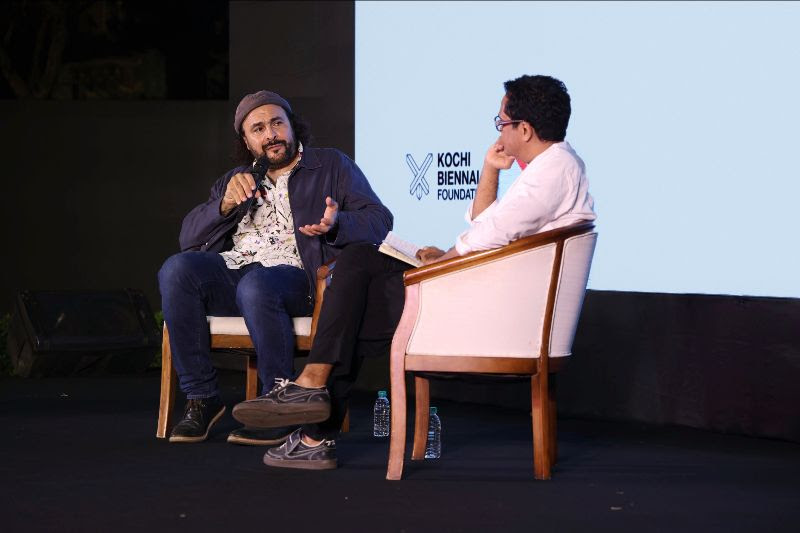
Kader Attia, curator of the upcoming seventh edition of the Kochi–Muziris Biennale (KMB), has revealed the curatorial proposition shaping the exhibition that will unfold across venues in the historic port city of Kochi, Kerala from 12 December 2027 to 31 March 2028.
The seventh edition will place the relationship between dreams, memory and repair at its centre. Attia describes art and dreams as spaces of unpredictability, setting them against the increasingly predictive logic of artificial intelligence, which he sees as eroding our sovereignty over the sources of our dreams. The Biennale will bring together artistic experiences that seek to reclaim that sovereignty and allow artworks to enter the viewer’s inner life in unexpected ways that open up possibilities of repair.
Attia’s curatorial vision is grounded in dreams and the memory traces from which they emerge. These traces shape both the inner individual and the external social structures that surround us and are central to the reciprocal exchange that makes us porous beings. Tracing the history of this exchange, humanity’s evolution appears not only biological. To survive the wildness of nature, human beings, a physically weaker species, began to gather and share memories culturally, materially and intellectually, in the form of technology. But as technology becomes more powerful, the less control humanity has over it. Amidst the tensions of the present, with algorithmic learning machines and artificial intelligence harvesting our memory traces for the attention economy, Attia contends that we are losing sovereignty over the sources of our dreams.
Grounding these ideas in Kerala’s history, Attia draws on Kochi’s harbour, a bridge to many destinations across the Indian Ocean, which brought to the local shores many layers of exchange, invasion and colonialism that in turn shaped the creolity, or hybrid identity, of the region. Citing Gabonese sociologist Joseph Tonda’s Afrodystopia: Life in Someone Else’s Dream, Attia suggests that descendants of colonised subjects live in the ‘dream of the empire’. But recalling Rokeya Sakhawat Hossain’s essay Sultana’s Dream, in which patriarchy is reversed through the medium of dream, Attia suggests it is possible to reclaim selfhood and individuality from this colonial dream.
Kader Attia said: “Ever since I visited Kochi for the first time, I have dreamed of coming back and building connections between the many intertwined influences that are at the core of this culturally multi-layered city.
The art world is one of the last spaces where society co-individuates itself. Our subjectivity is fragmented, like the internet, an intensely fragmented landscape, yet there we are tracked by the algorithm. Exhibitions are important because they produce emotions, activating new traces in our minds. That is how we produce traces for the future. In the same way we are the traces of our ancestors and of the millions of anonymous subjects who preceded us.
I do not think we belong to ourselves. We do not belong to anyone. We are part of a system that interacts constantly with other subjects. As an artist, and even more as a curator, I care a lot about questioning political aspects with poetry: how a political work can have poetry, and the other way around.
Dreams repair us, like art... and the Biennale, as well as Kerala, will give us the space-time to reclaim our sovereignty over our dreams.”
Jitish Kallat, President of the Kochi-Muziris Biennale, said: "Kader Attia brings an inquiry into dreams, memory and repair to the centre of the Biennale. He asks who owns our dreams, now that so much of our inner life is being captured, simulated and predicted. Kochi, a port shaped by centuries of crossings, gives that question a particular inflection.”