
Joint Statement by ICOM Spain and CIMAM on the Situation of the Centro Galego de Arte Contemporánea (CGAC)
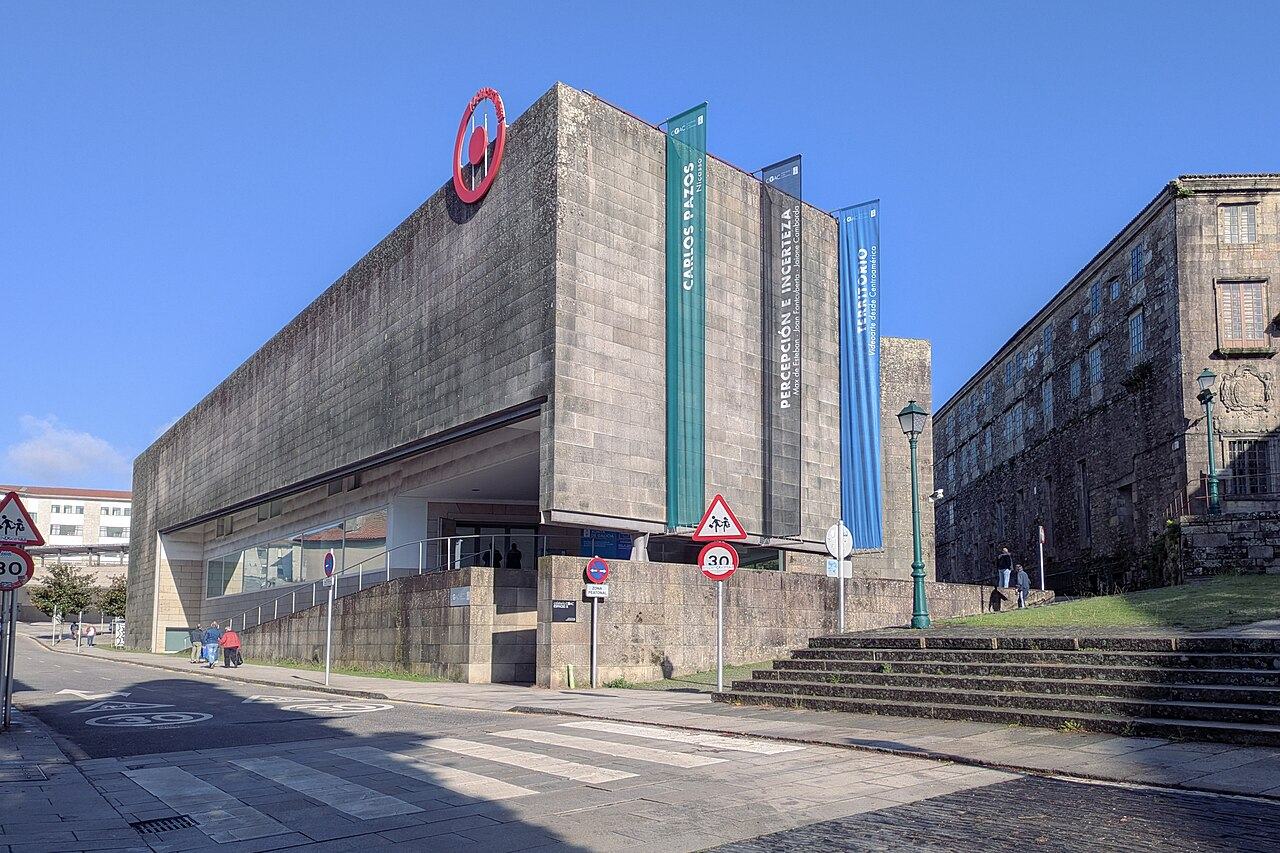
The Spanish Committee of the International Council of Museums (ICOM Spain) and the International Committee for Museums and Collections of Modern Art (CIMAM), an organization affiliated with the International Council of Museums (ICOM), express their deep concern regarding the selection process for the director of the Centro Galego de Arte Contemporánea (CGAC), Santiago de Compostela, Spain.
The current situation compromises essential principles of contemporary museology and puts at risk the institutional integrity of a museum that has been key to the development of contemporary art in Galicia and in the international context.
ICOM’s international definition of a museum is an institution in the service of society and its development that researches, collects, preserves, interprets, and exhibits tangible and intangible heritage. This mission requires that a museum’s leadership be entrusted to professionals with proven competence, curatorial experience, research capacity, and a deep knowledge of the museum ecosystem.
The directorship of a museum is not merely an administrative post: it is a scientific, cultural, and public responsibility that guarantees the institution’s scholarly integrity, the coherence of its programming, the preservation of its collection, and its integration into national and international networks. The appointment of a director whose profile is unrelated to curatorial practice, artistic research, and the management of cultural institutions constitutes a serious breach of the professional standards that govern contemporary museums.
ICOM Spain and CIMAM are resolute that professionalization is a non‑negotiable principle to ensure the quality, autonomy, and public mission of museums.
In this regard, ICOM Spain and CIMAM wish to underline the following points:
- Defense of the museum as a scientific and cultural institution.
Appointing profiles unrelated to museology, artistic research, and the management of cultural institutions entails a denaturing of the museum. A museum without specialized leadership loses its capacity to generate knowledge, to sustain a critical discourse, and to fulfill its public function. De-professionalization is not a corporate matter: it is a direct threat to the democratic quality of cultural institutions.
- Non‑compliance with international standards and the Good Practices Document.
Principle 1.12 of the ICOM Code of Ethics for Museums states, regarding the appointment of the person who holds the museum’s directorship, that this is a key post and therefore, when appointing the relevant person, the governing body must take into account the qualifications and knowledge required to perform the role effectively.
The Good Practices in Museums and Art Centers document, agreed upon by the Spanish cultural sector and aligned with ICOM’s principles, establishes that directorships, including those that must be filled by civil servants, should be filled through public, open, and transparent competitions evaluated by independent juries. The procedure applied by the Xunta de Galicia departs from these principles and places the CGAC in an exceptionally negative position with respect to peer institutions. The loss of transparency and scholarly rigor directly affects the museum’s credibility and its capacity to attract talent, projects, and international collaborations.
- Defense of the CGAC as cultural heritage and as essential public infrastructure.
For more than thirty years, the CGAC has been a space for critical thought, a driving force for contemporary creation, and a benchmark for the Galician, Spanish, and international artistic community. Its weakening does not affect only the professional sector: it affects citizens, access to culture, and the right to public institutions managed according to criteria of excellence. ICOM Spain and CIMAM are adamant that museums must remain guarantors of cultural rights, not instruments of political expediency. Their scholarly autonomy is a non‑negotiable value, as expressed by ICOM in its Declaration on the Independence of Museums (2018 and 2020), which is grounded in Principle 1.10 of the ICOM Code of Ethics for Museums.
- Endorsement of the sector’s position.
We join the concerns expressed by the Galician and national artistic community; by the Mesa Sectorial del Arte Contemporáneo (ADACE, IAC, MAV, among others); by associations (Vegliota, A Colectiva, Asociación Galega de Profesionais da Xestión Cultural, among others); by the Faculty of Fine Arts of the University of Vigo; and by the Department of Art History of the University of Santiago de Compostela. The defense of the CGAC is a shared responsibility.
ICOM Spain and CIMAM deem it essential that the Xunta de Galicia restore the principles of professionalization, transparency, and excellence that must govern the leadership of a public museum. Preserving the CGAC as a scientific, cultural, and heritage institution requires an unequivocal commitment to the international standards of contemporary museology.
Main Image: Centro Galego de Arte Contemporánea (CGAC), Santiago de Compostela, Spain