
James McNeill Whistler: Largest European Retrospective in 30 Years
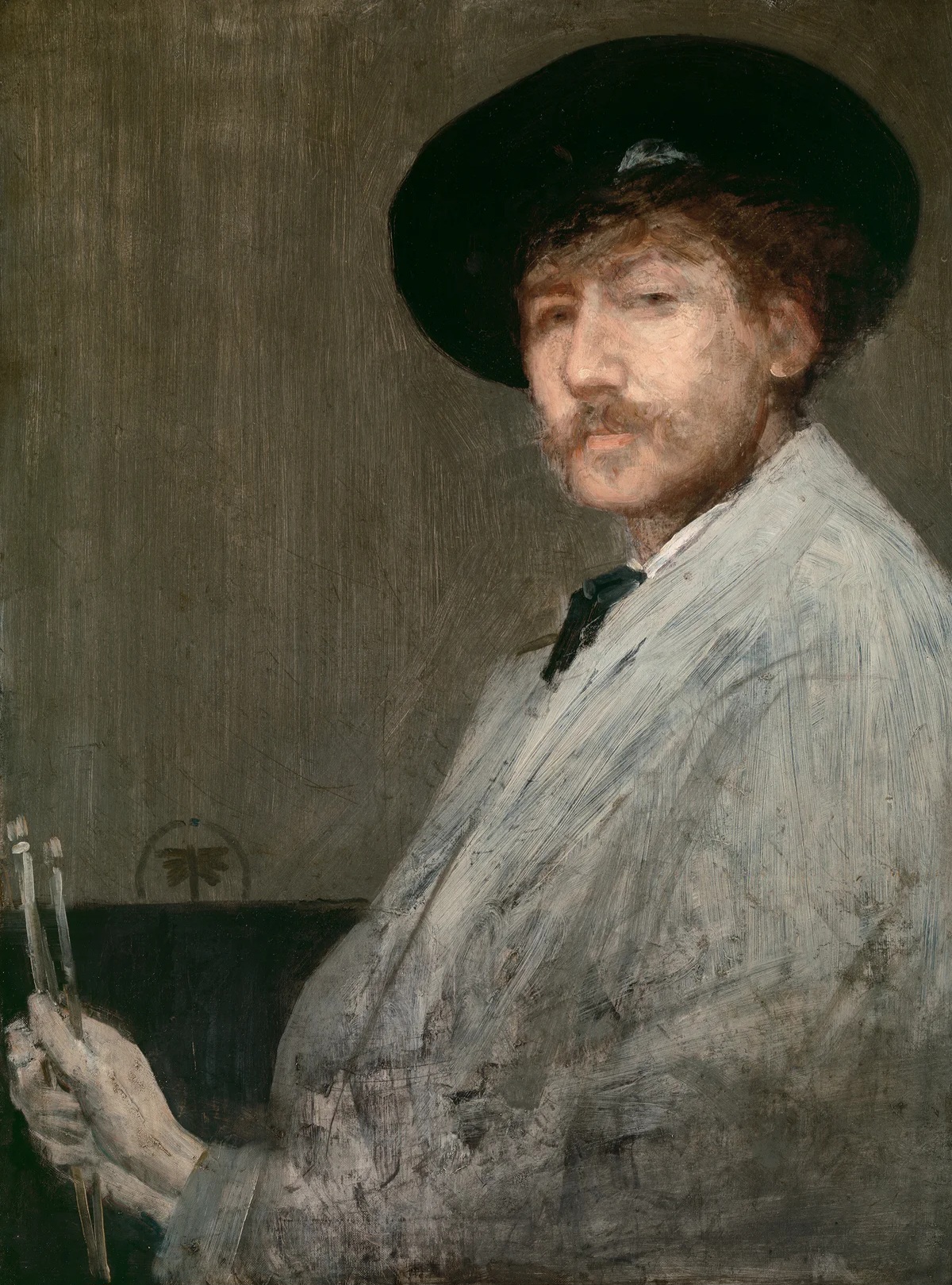
The Van Gogh Museum and The Mesdag Collection present the largest European retrospective of work by James McNeill Whistler (1834–1903) in thirty years – and the first ever to be held in the Netherlands.
The project was developed in collaboration with Tate Britain. Whistler was one of the most influential and controversial artists of the nineteenth century. He was also a fervent advocate of the idea that art need not serve a moral, social or political purpose, but exists purely for its own beauty.
Born in the United States, Whistler moved to Paris aged twenty-one and divided his time between Paris and London for nearly fifty years, moving in the circles of Dante Gabriel Rossetti, Gustave Courbet, Edouard Manet and Oscar Wilde. He was a master of self-promotion and an outspoken dandy with exquisite taste, acutely aware of his striking presence, and notoriously quarrelsome. He fiercely defended his artistic vision, even at the cost of bankruptcy. When the critic John Ruskin described his work as like flinging a pot of paint in the public’s face, Whistler sued him for libel – a watershed in art history. He published an account of his many disputes under the revealing title The Gentle Art of Making Enemies. The influential English art critic Roger Fry aptly summarised his attitude: ‘He seemed to be always inaugurating a revolution, leading intransigent youth against the strongholds of tradition and academic complacence.’
In the exhibition Whistler. Dandy and Disruptor, the Van Gogh Museum presents a major retrospective of some 100 works, including one of his most famous paintings: Arrangement in Grey and Black: Portrait of the Painter’s Mother. The exhibition also includes dreamlike nocturnes of the Thames, works from the series White Girls and life-sized society portraits.
In the exhibition Whistler. Loving the Netherlands, The Mesdag Collection focuses on Whistler’s special relationship with the country: the art he produced there – including the famous series of Amsterdam etchings – and his influence on Dutch artists such as Willem Witsen and George Hendrik Breitner. Whistler had frequent contact with Hendrik Willem Mesdag and visited The Mesdag Collection on his last day in the Netherlands, making The Hague the ideal location for this focus exhibition.
Whistler felt a close connection with the Netherlands. Rembrandt was his great inspiration, he valued old Dutch paper for the warm glow it gave his etchings, and spent time with Dutch artists. ‘Holland is the country for artists. It has atmosphere’, he wrote. Whistler visited the country at least eleven times between 1863 and 1902.
His Amsterdam Set of etchings from 1889 – made from a boat on Amsterdam’s canals – shows the city transformed into a composition of light, shadow and texture, with the famous gables deliberately excluded from the composition. Whistler himself called this his best work to date.
Whistler. Dandy and Disruptor is on view at the Van Gogh Museum from 16 October 2026 to 10 January 2027.
Whistler. Loving the Netherlands will be on view concurrently at The Mesdag Collection in The Hague.
The exhibition was organised in collaboration with Tate Britain in London, where James McNeill Whistler will be on view from 21 May to 27 September 2026.
Main Image: James Abbott McNeill Whistler, Arrangement in Grey: Portrait of the Painter, 1872, Oil paint on canvas, 74.9 x 53.3 cm, Detroit Institute of Art, Bequest of Henry Glover Stevens in memory of Ellen P. Stevens and Mary M. Stevens, Photocredit: © Detroit Institute of Art / Bridgeman Images