
Jak Bryö: Turning Culture into Economic Infrastructure
In a world where everything has been flattened into a mass market, a counterforce has emerged: projects – and people – who still dare to build masterpieces through urban culture.
Not “content.” Not decoration. Not advertising. But Art.
Jak Bryö and his unique project Collab art + tech is one of those rare characters. He operates where urbanism, media architecture, and contemporary art collide — and he conducts those dimensions like an orchestra. Investors, architects, engineers, curators, city teams: different languages, different incentives, one score. And what comes out isn’t just a development with art added on — it’s a unique urban composition, a living piece that reshapes how modern art is perceived in the city, while making the asset smarter, sharper, and more valuable.
Converting Culture into Investment Logic
He translates technological art and media architecture into the language decision-makers respect: urban strategy, investment logic, unit economics, and operational KPIs — turning square meters into a cultural asset with measurable ROI.
Most art projects are evaluated by how they look.
Jak Bryö’s projects are evaluated by what they change.
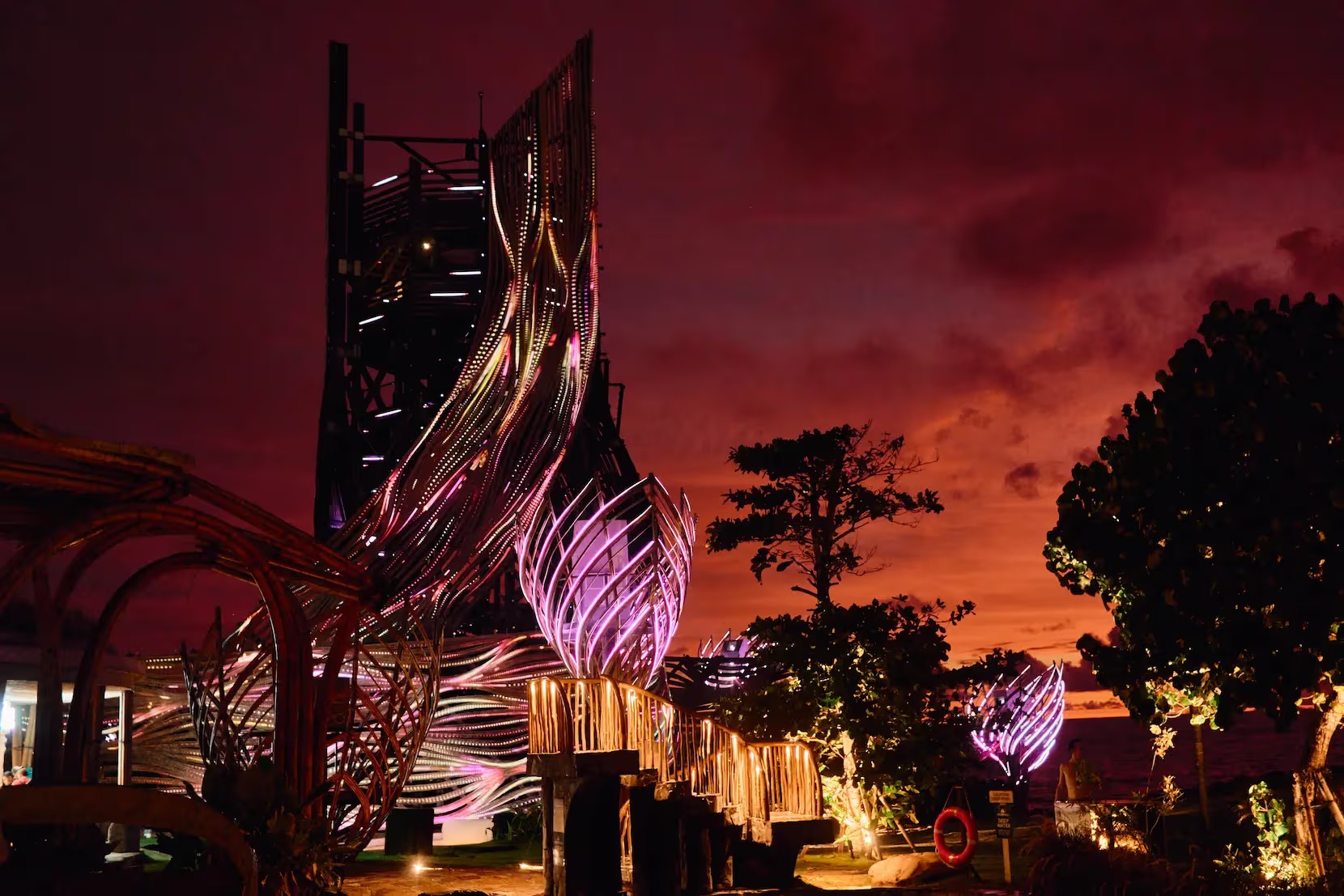
His work includes large-scale public installations such as THK Tower and Earth Sentinels in Nuanu, Bali, which attract significant public attention and admiration. Yet his mission goes far beyond what is merely instagrammable, restoring “attractive” to its literal meaning: the ability to bring more people. It is focused on transforming spaces into viral destinations and redefining property value through experience. This is done without performative experimentation, but with a measurable impact on revenue, asset value, and long-term relevance.
In a contemporary world saturated with marketing, it can be difficult to come to terms with the economic dimension of culture. Yet developers, hospitality operators, and cities do not act as patrons. Their investments are directed toward occupancy, revenue stability, and asset appreciation. Jak Bryö’s work begins from this reality, assessing culture by its ability to generate efficient and long-term results.
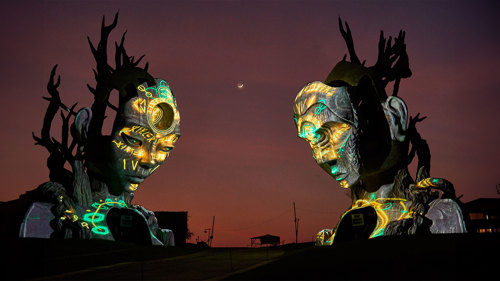
Earth Sentinels in Nuanu, Bali
Experience at the Intersection of Metrics, Behavior, and Scale
Translating from the language of development is, once again, Jak’s role: turning dry metrics into intangible dimensions and back again – how people move through space, how long they stay, how they feel, and whether they want to return. This is where every Jak Bryö’s project begins. Creative decisions follow the system, not the other way around. As a result, clients perceive these projects not as «creative art objects», but as functioning operational tools.
In many projects, art remains a visual layer. In the work of Jak Bryö, it becomes behavioral. His teams create ecosystems in which experience is composed across multiple sensory levels: light, sound, tactility, temperature, and interpersonal distance. Taken together, these elements determine how space is lived rather than merely observed. This enables sustainable relevance rather than short-lived attention.
Jak Bryö is the founder and Chief Creative Officer of the global collective collab art+tech, working on large-scale projects across the United States, the Middle East, and Asia. Over recent years, he has led more than 150 installations and 12 international flagship projects, engaging millions of visitors. A particularly significant chapter of his work was his role as Head of Multimedia, Arts and Technology at Nuanu in Bali, a project of exceptional scale involving the creation of a complete urban cultural ecosystem across 44 hectares. This was not an art district, but a fully functioning city, where culture, technology, and economic sustainability operate as a single system.
Cultural Renaissance as an Urban Strategy
Once the operational framework is established, it becomes possible to work precisely with aesthetics and cultural mission. This dimension, too, can be entrusted to Jak, a specialist in both numbers and senses. With formal education from an Academy of Arts and experience working with institutions across regions and continents, Jak Bryö has observed the same patterns repeatedly: what endures, what fails, and why most cultural projects do not withstand time. This experience shapes his approach as an enthusiast of the cultural renaissance. For urban planners and developers, it signals a new role for culture within urban infrastructure. For people, it offers a response to digital noise and the gradual dehumanisation brought about by technology. Jak restores a sense of lived presence through spaces where technology does not reduce people to users, but amplifies sensitivity, attention, and meaning. The city can once again be experienced not as a backdrop for movement and scrolling, but as an emotional landscape where one wants to stop, observe, feel, and reflect.
Culture, as interpreted by Jak, carries operational and economic responsibility. His work is grounded in a simple but consequential premise: culture and technology can function as structural components of spatial value, influencing perception, behavior, and the long-term relevance of places.
Main Image: THK Tower