
Islamic Arts Biennale Announces Curators for 2027
Sunday, September 20, 2026
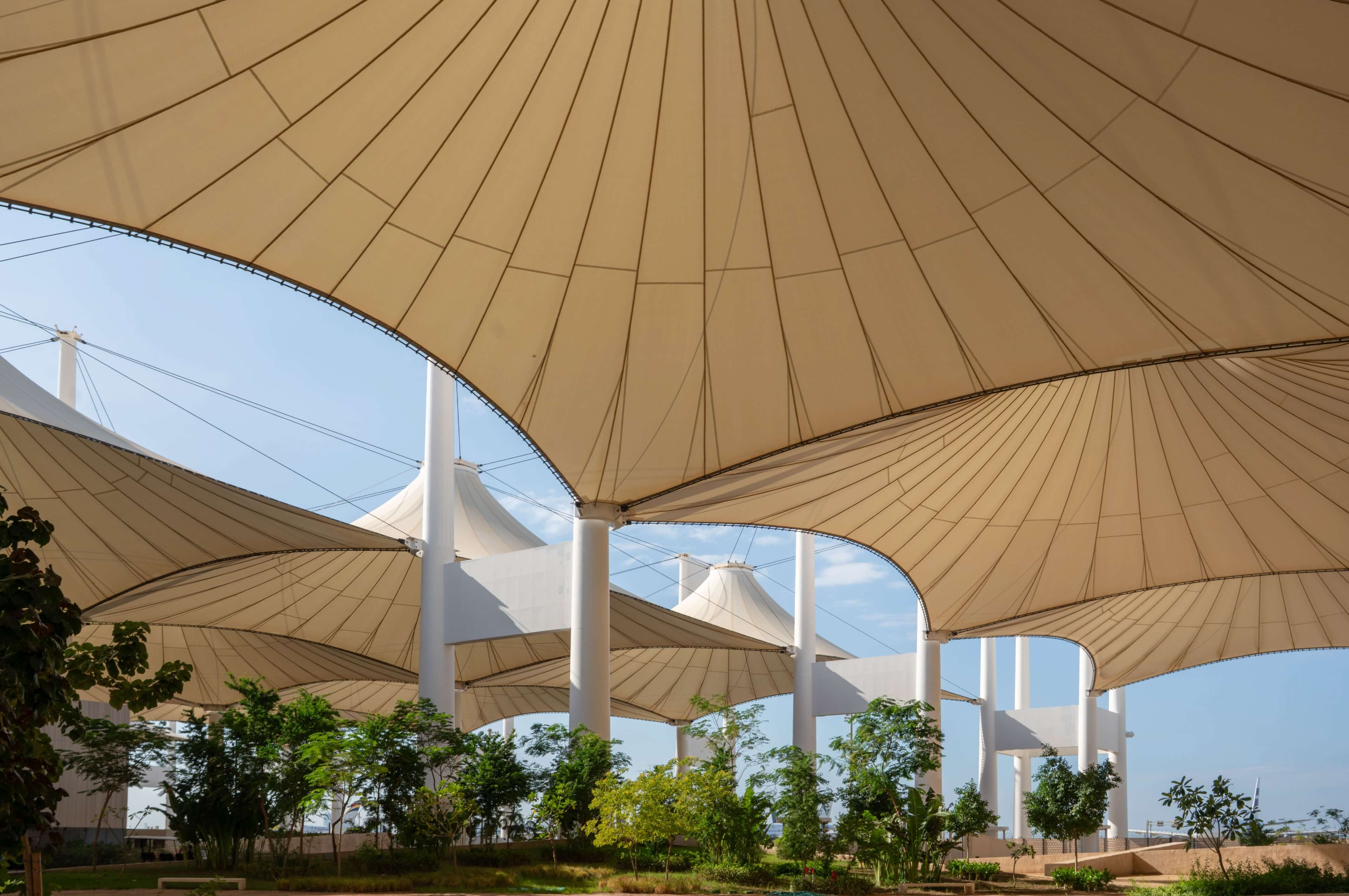
The third edition of the Islamic Arts Biennale will be led by an international curatorial team whose expertise spans Islamic arts, contemporary art, architecture, and transcultural histories.
The Diriyah Biennale Foundation (DBF) today announces the Lead Curators for the third edition of the Islamic Arts Biennale, returning with an expanded ambition and opening on November 1, 2027, at the Aga Khan Award–winning Western Hajj Terminal at King Abdulaziz International Airport in Jeddah, Saudi Arabia.
Conceived and launched by the Diriyah Biennale Foundation, the Islamic Arts Biennale is the first biennale in the world dedicated exclusively to presenting diverse curatorial narratives on Islamic art and culture, past and present. The Biennale’s unique subject matter brings important historical works into dialogue with contemporary commissions, highlighting questions and perspectives that resonate profoundly with the lives of people around the world today. Through this innovative model, the Foundation has established a new global platform for the preservation, interpretation, and public presentation of living Islamic heritage.
The Islamic Arts Biennale 2027 will be led by Nada Raza, Director of the Alserkal Arts Foundation; William Robinson, formerly head of the Islamic Art department at Christie’s and a renowned expert in the field; Alain Fouad George, I. M. Pei Professor of Islamic Art and Architecture at the University of Oxford and Director of the Lusail Institute in Doha; and Idries Trevathan, former Chief Curator of the King Abdulaziz Center for World Culture (Ithra) in Dhahran. The selection of Lead Curators reflects the Biennale’s commitment to presenting the arts of Islamic societies as a dynamic and evolving field shaped by movement and encounters, and to exploring this field through scholarship and contemporary culture. The Lead Curators will present distinct exhibitions, each bringing their unique creative lens to the third edition of the biennale, which will delve more deeply into intangible heritage and celebrate resilience and community while continuing to bring together unique masterpieces from Islamic art collections around the world.
The Biennale will continue to broaden its institutional outreach through AlMadar ("the Orbit"). Conceived by the Foundation, this collaborative platform convenes Saudi and international institutions, museums, and individuals that represent Islamic culture and art. In 2027, AlMadar will grow to include a digitized archival platform and expanded programs in Saudi Arabia and at partner institutions worldwide, fostering a sustained global network dedicated to deepening and sharing knowledge of Islamic arts.
New contemporary artworks, commissioned by the Diriyah Biennale Foundation, will feature prominently throughout the Biennale. The outdoor area will showcase the winning design from the second edition of the AlMusalla Prize, which reimagines the future of spaces of worship. Situated beneath the Hajj Terminal’s iconic canopies, the installation will weave together contemporary artworks and curated public programs for visitors.
H.E. Rakan Altouq, Vice Chairman of the Diriyah Biennale Foundation’s Board of Trustees: “The Islamic Arts Biennale rests on a simple conviction: that the arts of Islamic civilization are not a closed chapter to be admired from a distance, but a living field—still evolving, still creating meaning. In Nada Raza, William Robinson, Alain Fouad George, and Idries Trevathan, we have four curators whose scholarship spans auction houses, universities, museums and art institutions, as well as the Islamic Arts Biennale itself. The breadth and diversity of their experience will deliver a unique and memorable third edition that continues to celebrate and advance the depth and diversity of Islamic culture—and through AlMadar, carry that conversation to institutions across the world.”
Aya Al-Bakree, CEO of the Diriyah Biennale Foundation, said: “The curatorial team’s breadth of experience is a wonderful demonstration of the richness, diversity, historical depth, and contemporary relevance of the Islamic arts. It gives me great pleasure to see this edition of the Biennale taking shape under their sensitive and sophisticated stewardship. I can’t wait for members of the public from near and far to experience this exhibition.”
The Islamic Arts Biennale is organized by the Diriyah Biennale Foundation, a public institution established in 2020 dedicated to nurturing creative expression and fostering appreciation for culture and the arts in Saudi Arabia. The Foundation also stages the Diriyah Contemporary Art Biennale, with the two biennales presented in alternating years, and oversees the activation of JAX, a creative district with industrial heritage in Diriyah, Riyadh.
The Islamic Arts Biennale is a platform for a new discourse about the arts of Islamic societies from around the world and a constantly shifting constellation of institutions and objects, both historical and contemporary. Organized by the Diriyah Biennale Foundation, it takes place at the Western Hajj Terminal at King Abdulaziz International Airport in Jeddah, a site that has strong connections to faith and cultural heritage through its role as a port of entry for millions of pilgrims on their journey to Makkah and Madinah. The Islamic Arts Biennale includes presentations of AlMadar (“The Orbit”), an ongoing initiative that promotes collaboration and dialogue between institutions with collections that speak to the arts of Islam. The result is a temporary collection that emphasizes different historical and contemporary contours with each edition of the Biennale, acknowledging the global histories of collecting and the movement of people and ideas that has always characterized Islamic societies. The Biennale also coincides with the AlMusalla Prize, a biannual international architecture competition for designing adaptable, flexible spaces for prayer and contemplation that are open to all visitors. Organized by the Diriyah Biennale Foundation and launched in 2024, the prize reimagines the futures of spaces of worship while honoring Islamic cultural traditions.
Inspired by the changes taking place in Saudi Arabia and the heritage site of Diriyah, and chaired by H.H. Prince Badr bin Abdullah bin Farhan Al Saud, the Diriyah Biennale Foundation (DBF) assumes a critical role in nurturing creative expression and instilling an appreciation for culture and the arts and their transformative potential. The Foundation aspires to be a catalyst for lifelong learning and serves Saudi Arabia’s communities by offering opportunities to engage with the burgeoning local art scene. Central to the Foundation’s mandate is to stage two recurring world-class Biennales of contemporary and Islamic arts, year-round interactive educational programs, and overseeing the activation of JAX, a creative district with industrial heritage in Diriyah. At this historic moment of evolution and growth in Saudi Arabia, DBF’s Biennales showcase some of the world’s leading artists, drive cultural exchange between the Kingdom and international communities, promote dialog and understanding, and further establish Saudi Arabia as an important cultural center.
BIOGRAPHIES
Nada Raza, Lead Curator, Islamic Arts Biennale
Nada Raza is a curator and researcher whose work explores transcultural connections across the Indian Ocean, particularly between the Arabian Peninsula and South Asia.
She is Director of the Alserkal Arts Foundation, and her recent exhibitions have included curated group shows which respond to urbanism and migration in South and West Asia, and solo presentations of artists such as Nalini Malani and Imran Qureshi at Concrete in Alserkal Avenue. Raza’s practice is rooted in contextual approaches, overseeing site-specific public art commissions, an interdisciplinary residency program and research grant awards, and public programs including live art and performance which privilege peer-led learning and experimentation. Raza has previously held leadership roles as Artistic Director of the Ishara Art Foundation in Dubai, following curatorial positions at Tate Modern and the Tate Research Centre: Transnational in London, where she contributed to the development of Tate’s international collections with a focus on South Asia.
Within the new geographical paradigm of the Indian Ocean and the revival of cosmopolitan histories of trade and exchange, she is curious about lacunae in pre-colonial and early modern historiography even as nation-states reimagine themselves through heritage production and cultural patrimony. Having recently completed her PhD at the Courtauld Institute of Art, she examines the transhistorical circulation of visual material from syncretic religious iconography to contemporary and site-specific works of art produced in an emergent biennial context.
William Robinson, Lead Curator, Islamic Arts Biennale
William Robinson is an expert in Islamic art with over forty years of experience, primarily at Christie’s. For three decades, he headed the Islamic Art and Carpet Departments, later heading the World Art group of departments on an international basis. Robinson played a key role in bringing major works to market, including discovering and researching previously unknown masterpieces, and achieving world-record prices. He remains fascinated by the practical ethics of a legitimate art market and over the years has worked closely with many private collectors and museums.
Since leaving Christie’s in 2022, he has worked as an independent consultant, focusing on academic research and advice. He is finishing the catalogue of Islamic metalwork in the Furusiyya Collection and has contributed to international conferences, written articles, and received the Joseph V. McMullan Award for carpet studies. Robinson is a member of the advisory board of the Museum of Islamic Art, Berlin. He was Curator of the Homage section of the Islamic Arts Biennale 2025 in Jeddah.
Alain Fouad George, Lead Curator, Islamic Arts Biennale
Alain Fouad George is I. M. Pei Professor of Islamic Art and Architecture at the University of Oxford, Director of Lusail Institute in Doha, and a Fellow of the British Academy. His main research interests are the art and architecture of the Umayyad era (seventh–eighth centuries), early manuscripts of the Qur’an (seventh–tenth centuries), and the history of Arabic calligraphy (seventh–twentieth centuries). His work combines detailed analysis of material and textual evidence in an attempt to unearth distant worlds that sometimes resonate surprisingly with ours. He is the author of The Umayyad Mosque of Damascus: Art, Faith and Empire in Early Islam (Haus, 2021), Midad: The Public and Intimate Lives of Arabic Calligraphy (Dar El-Nimer for Arts and Culture, 2017), and The Rise of Islamic Calligraphy (Saqi, 2010), as well as numerous academic articles. In 2011, he was awarded a Philip Leverhulme Prize for his research.
Lusail Institute, of which he is the founding director, is a new flagship project by Qatar Museums. It is being developed in collaboration with Georgetown University in Qatar, where he is currently a Distinguished Scholar-in-Residence. The Institute, which will form part of the future Lusail Museum, fosters advanced research and public debate on the history of art and material culture with a focus on issues of power, cultural exchange, and transformation between the Middle East, Europe, and the Indian Ocean.
Alain Fouad George received his BSc in International Relations from the London School of Economics in 1999. After a brief stint in journalism, he went on to study Islamic art at the University of Oxford, where he completed his master’s degree in 2001 and doctorate in 2007. He also taught for a decade in Edinburgh and two years in Beirut, and was director of the Khalili Research Centre at Oxford.
Idries Trevathan, Lead Curator, Islamic Arts Biennale
For more than two decades, Idries Trevathan has been active in Europe and the Muslim world, primarily focused on the revival and presentation of Islamic art as a living tradition. His work involves large-scale cultural projects encompassing exhibitions, conferences, and the production of documentary films.
For more than two decades, Idries Trevathan has been active in Europe and the Muslim world, primarily focused on the revival and presentation of Islamic art as a living tradition. His work involves large-scale cultural projects encompassing exhibitions, conferences, and the production of documentary films.
As the former Chief Curator at Ithra in Dhahran, he was instrumental in establishing its Museum as a prominent hub for Islamic arts and culture through building its collection from scratch, curating major exhibitions, and organizing international collaborations and conferences. During his tenure, he also curated significant award-winning exhibitions, most notably Hijrah: In the Footsteps of the Prophet (2022) and In Praise of the Artisan (2024).
He completed his undergraduate degree in art conservation studies at the City & Guilds of London Art School in 2006. Later, he obtained his MPhil (2013) and PhD (2018) in Islamic art from the King’s Foundation School of Traditional Arts in London.
Trevathan has written and edited several books, most notably Colour, Light and Wonder in Islamic Art (Saqi Books, 2020), Hijrah; In the Footsteps of the Prophet (Hirmer, 2022), Mosque: Approaches to Art and Architecture (Routledge, 2024), and In Praise of the Artisan: The Enduring Legacy of Islamic Crafts (Medina Publishing, 2025).