
Independent Investigation into Objects with a Colonial Background in the Royal Collections of the Netherlands now Complete
In 2022, the board of the House of Orange-Nassau Historic Collections Trust (SHVON) appointed a committee to oversee an independent provenance research into the legality and ethical dimension of the presence of objects of colonial origin belonging to the Royal Collections.
The board, comprising Queen Máxima (chair), Peter Schoon and Laetitia Griffith, is deeply grateful to the committee. Queen Máxima said, ‘We are grateful for the thorough, independent research conducted by the committee chaired by Prof. Ekkart. We endorse its conclusions and are pleased to adopt all its recommendations. A careful approach to the colonial items within the Royal Collections is of vital importance. A solid foundation has now been laid for this. In the coming months and years, building on the committee’s recommendations, we will continue to work on enhancing the accessibility of available information on objects acquired in colonial contexts. Transparency is a prerequisite for an open dialogue with stakeholders from the countries of origin.’
The investigation is intended to make a meaningful contribution to the responsible handling of colonial collections and the redress of historical injustices. His Majesty the King and Her Majesty Queen Máxima feel a strong sense of responsibility for the lawful and ethical management of objects within the Royal Collections and attach great importance to independent research.
Although the SHVON collection is a private collection, not a national one, efforts have been made to ensure that the recommendations align with national policy regarding colonial collections.
Virtually the entire collection of colonial objects consists of gifts. For the vast majority of these gifts, although they were given in a context of unequal colonial relations, no direct indicators were found in the course of the research that they were presented under duress. In the case of a small number of the gifts, there is a possibility that their presence in the SHVON collection is illegitimate and/or unjust. These are objects that were taken by the donors as loot or are otherwise linked to military actions. Serious doubts exist as to whether the donation of the following objects was voluntary:
- A blunderbuss (historical firearm) belonging to Raden Intan, ruler of Keratuan Darah Putih (a kingdom in the province of Lampung), who was killed there by Dutch soldiers in 1856, after which this weapon was presented to King Willem III;
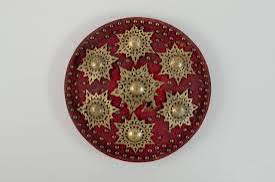
- A round shield (Puerise awi) belonging to a military commander from Aceh, presumably captured in 1877 during the expedition to Samalanga and presented to King Willem III;
- A gold amulet necklace (Simplah), presented in 1909 by the district chiefs of Pidie and Meureudu (Aceh) to mark the birth of Princess Juliana, not long after hostilities.
The SHVON board shares the committee’s view that the question of the legitimacy and ethics of the presence of colonial objects in the Royal Collections cannot be answered unilaterally, but only in consultation with representatives of the former colonies. On the committee’s recommendation, SHVON will therefore make information from the investigation available digitally as soon as possible in order to achieve maximum transparency. To this end, the board has set aside funds and appointed a researcher. On the basis of shared knowledge of the collection, discussions can then be held with stakeholders from the countries of origin regarding the future of objects about which serious questions have arisen.
To ensure that these potential discussions proceed smoothly, SHVON will seek expert advice. With the completion of the research, a new phase has now begun with respect to the handling of colonial objects within the Royal Collections.
The investigation focused on objects of colonial origin still present in the collections, including items on loan, in some cases long-term loan, to museums. It thus covered over a thousand objects, mainly from Indonesia, Suriname and the Caribbean islands, as well as a few objects from former colonies of other powers. Almost all the objects still present were acquired through donation. In the case of the former Dutch East Indies, these were gifts from local rulers, private individuals and civic groups, as well as from colonial administrative officials and military personnel.
Main Image: Shield from Aceh, Indonesia – Collection Dutch Royal Family