
How Digital Art Platforms Transform Collectors’ Journey Today
For quite a long time, the practice of art collecting was entirely connected to the physical world. It has typically required white-cube galleries, an auction room, and the permanent finality of hanging a canvas on a wall. However, with time, the process of how people experience, interact and acquire art started to change.
According to the latest Art Basel and UBS Survey of Global Collecting, high-net-worth collectors have significantly increased their digital footprints, with the average share of digital art in collections increasing from a mere 3% to 13% over the last two years.
This behavioral pattern evolution has actually marked the ongoing transformation into the art sector happening because of digital platforms such as CIFRA, Niio, and Art Blocks. Today they are functioning as an additional layer of the cultural infrastructure and completely reimagining how art is discovered, acquired, displayed, and preserved as well.
CIFRA: curation and the immersive streaming portal
CIFRA, a UAE-based platform dedicated to media art, transforms the digital art experience from a traditional online marketplace into a lifestyle-driven ecosystem. At the core of the platform is a streaming model that fundamentally redefines how audiences engage with art. Similar to streaming such as Spotify, CIFRA enables users to discover artworks through personalized playlists tailored to their interests and preferences.
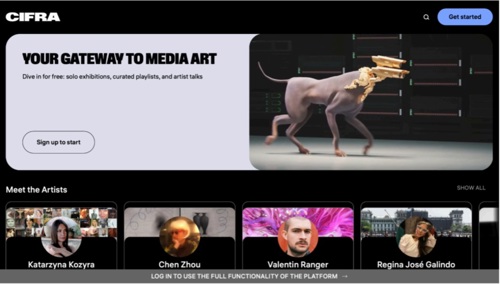
Through applications developed across iPhone, iPad, and Apple TV (tvOS), high-resolution artworks by artists from around the world can be accessed on multiple devices and screen formats. By integrating art into smartphones, tablets, and televisions, CIFRA makes contemporary art a constant presence in everyday life rather than an experience limited to galleries, museums, or fairs.
Beyond just building a digital archive, CIFRA makes a strong emphasis on curatorial narrative and cultural context referring to the artists and artworks. It is also reflected in the recent creation of the Artistic Vision Council - an international advisory body, the goal of which is shaping the platform’s long-term artistic direction, research agenda, and institutional positioning. Chaired by Olga Shishko, the Council brings together leading figures in new media art, including Lev Manovich, Dominique Moulon, Daniela Arriado, David Elliott, and other internationally established media art curators.
Reflecting the collaborative nature of contemporary media art, the platform tracks and displays co-authorship on complex digital works, acknowledging the contributions of artists, programmers, designers, and other creative collaborators. Through its CIFRA Club subscription model, every like, share, and stream contributes directly to an artist royalties fund, allowing collectors to act as digital patrons.
While rooted in a digital-first format, CIFRA is equally committed to building its physical presence. In addition to organising exhibitions, the platform increases its visibility through participation in major international events and art fairs, including Ars Electronica, Art Basel, Art Dubai, Positions Art Fair Berlin and others.
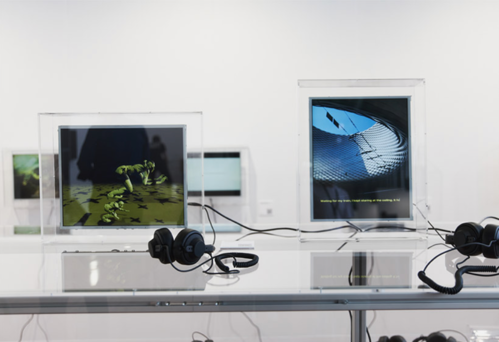
Left James Bloom (UK) – Half Cheetah, Right Ivona Tau (Lithuania) – [Summer Diary] | image courtesy of CIFRA
Art Blocks: generative ownership and provenance
While CIFRA focuses on a streaming-based model for discovering and experiencing media art, another platform - Art Blocks is centered on the architecture of generation, ownership, and provenance.
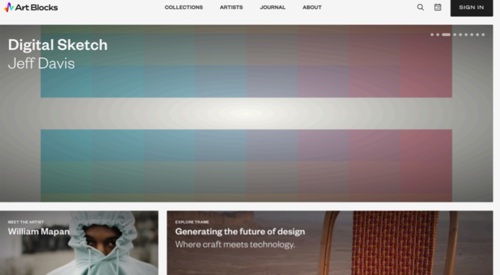
Launched on the Ethereum blockchain, Art Blocks has changed the process of how digital art is acquired and valued by introducing the concept of on-demand generative art.
On Art Blocks, collectors do not purchase a finished, static JPEG or video file. Instead, they acquire an artist-created algorithm that is permanently stored on the blockchain.
How does it happen? First of all, when buying the artwork - the collector initiates a "mint" transaction. After passing to the execution stage, the platform feeds a randomized, unique numeric string (the transaction hash) directly into the artist's code. And as a result, the algorithm executes in real time, generating a completely unique, unrepeatable variation of the artwork on the spot.
By functioning as an automated platform for creative code, Art Blocks merges creation, discovery, and acquisition into a single event. It proves the value through algorithmic transparency and provenance, changing the collector's role from passive buyer to active participant in the artistic process, which is mostly all the time inaccessible.
Beyond the on-demand generative art creation, Art Blocks also develops the platform's storytelling. Through its Journal section, it publishes industry news, project reviews, and latest events. Here, the editorial layer creates a broader narrative framework that helps both experienced collectors and newcomers to navigate the world of generative art, which can often seem to be complex.
Niio: robust infrastructure and logistics
While the acquisition of physical artworks has been always accompanied by the complexities of shipping, storage, installation, and insurance, Niio approaches the challenge of collecting digital art from a different angle. Rather than focusing on the marketplace mechanics, the platform is building the infrastructure that enables digital art to be easily displayed in real-world environments.
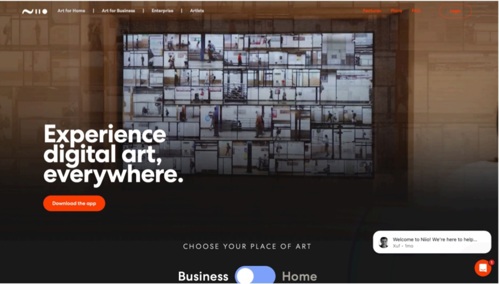
Functioning as an operating system for digital art, Niio is fighting with the technical and logistical challenges, working not only with cultural institutions and galleries, but also with hospitality clients, corporate real estate projects and private clients as well.
At the core of the platform is a secure cloud-based ecosystem, which is connecting artists, galleries, collectors, and institutions. For collectors, Niio functions as a centralised platform for managing and displaying digital assets across multiple their locations and devices.
Through its remote-control application and proprietary streaming technology, users can schedule, even curate, and broadcast digital artworks and NFTs in ultra-high definition, including 4K and 8K formats, across professional displays, architectural screens, and home installations. By eliminating technical barriers, Niio transforms digital art into an organic component of apartment interiors and public spaces.
To sum up, it is important to mention that such platforms as CIFRA, Art Blocks, and Niio mark a serious transformation taking place across the art sector now. They are fully redefining the existing collector's journey.
While traditional collecting was built on acquisition and ownership management, digital platforms make a strong emphasis on discovery, participation, and engagement. Collectors are no longer limited to just purchasing and displaying their artworks. They are capable of influencing artistic ecosystems through subscriptions, participate in the process of creation of generative artworks, curate their own digital environments, and even support artists through new forms of digital patronage.
This article was authored by Sofiia Barysheva