
Hosts at the Louvre. Kader Attia and Elizabeth Peyton
For two years, they inhabited the spaces – both physical and imaginary – of the Louvre. Each had a studio on the premises, where they created, conversed with museum personnel, and engaged with the public.
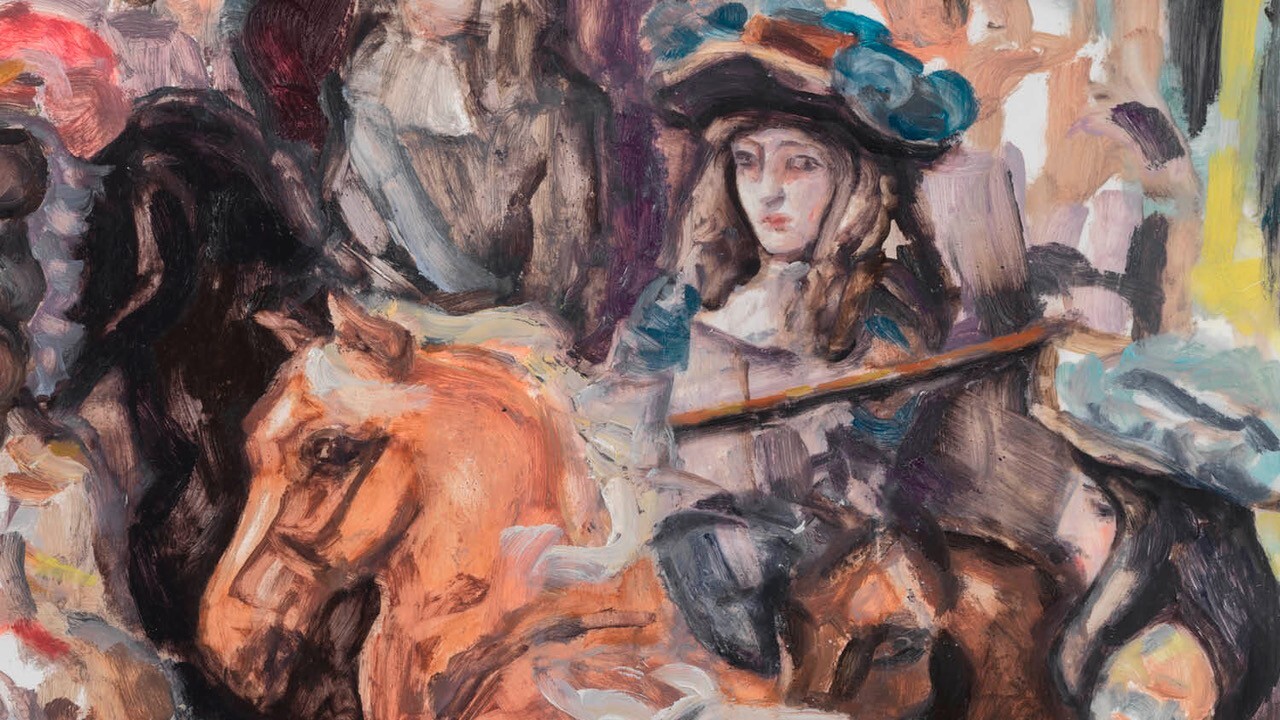
After two years spent working in neighbouring studios, they now share the Salle de la Chapelle exhibition space where they invite us to discover their path into the museum. The film and installation by Kader Attia are inspired by his own intimate experience of the institution of the Louvre and contemplate the shifting nature of historical periods, memories and perspectives, turning the gaze itself into an object. Elizabeth Peyton's paintings and drawings bring together reinterpretations of works from the Louvre, which she has been creating since her early years as an artist, in parallel to depictions of subjects across history and present day painted in her studio in the museum.
Their intersecting interpretations of the Louvre demonstrate the resources provided by the museum and the works it houses, which serve as a source of inspiration to artists and visitors alike.
Kader Attia has conceived a multifaceted body of work that combines sculpture, film and installation art with critical reflection, curating and theoretical writings. During his time at the Louvre, he led a guided tour for the public, organised a research seminar with the museum's teams, and gave the 2025 'Artists' Lessons at the Louvre' lectures. To mark the end of his two-year term as a 'Host at the Louvre', he has created a film and sculpture that explore his own personal and political relationship with the Louvre, as well as a set of mirrors that form a dialogue with the history of painting.
At the age of 21, Elizabeth Peyton (born in the U.S. in 1965; currently lives and works in New York and Paris) had an epiphany whilst reading Vincent Cronin's biography of Napoleon. She realised that a single person, through ideas and sheer will, could change the world for better or for worse, and that portraiture offered a means of capturing both the person depicted and a part of history.
Antoine-Jean Baron Gros's portrait of Napoleon Bonaparte, Bonaparte at Arcole Bridge from the Louvre's collection, was on the cover of the biography. Peyton reproduced this work and was inspired to continue painting portraits.
Forty years later, while having a studio for two years in the Louvre, she was able to wander the museum's galleries, alone and mingling with visitors. Her frequent visits and her deep interest in the works on display in the galleries led her to spend many hours sketching and painting there. She created an engraving for the Louvre Chalcography, and worked alongside young artists from Paris's École des Beaux-Arts in the museum: together, they copied works from the collection. This led to an exhibition at the Centre Pompidou-Metz; all the while, she also continued to paint figures who inspire her in her studio. Her works explore the timeless themes of love and nature, echo the museum's collection. In creating these works, she erases the boundaries between her own time and the many historical periods embodied by the Louvre.