
German Artist Georg Baselitz dies aged 88
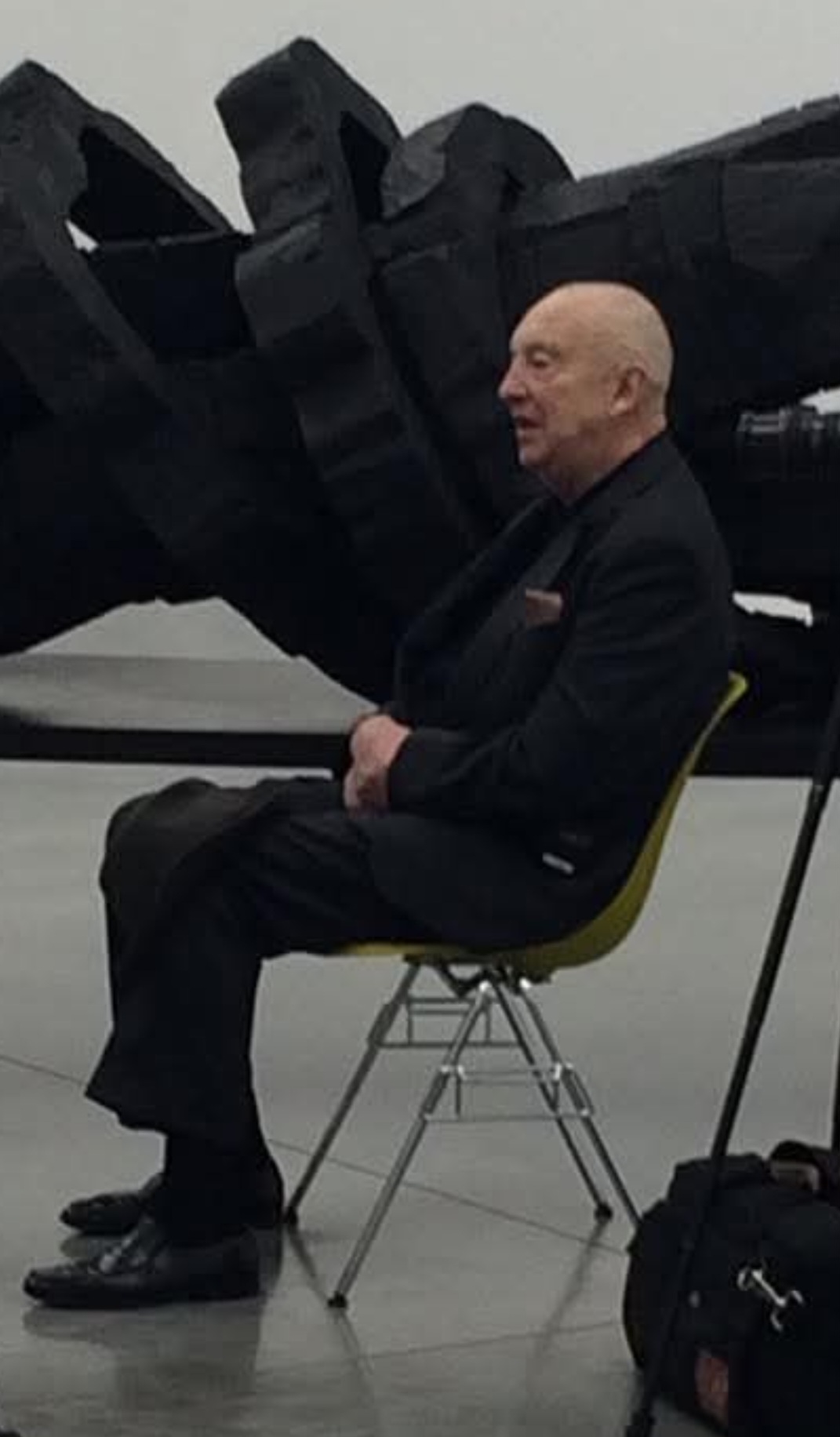
German artist Georg Baselitz, a painter, sculptor, and printmaker, who was known for his methods of painting subjects upside down, has died at age 88
Baselitz is recognized as one of the founders of the Neo-Expressionist movement that swept over Europe in the 1970s and is famed for his unique method of inverting representational direction so that the viewer could focus on his expressive mark-making rather than the figure portrayed.
Hans-Georg Bruno Kern, better known as Georg Baselitz, was born on January 23, 1938, in the Saxon town of Deutschbaselitz. His father, a schoolteacher and member of the Nazi Party, registered Hans-Georg's birth in his diary. Inexplicably, he did not register the birth of any of his other four children, as reported by the newspaper Sächsische Zeitung in 2018. After the war, his father was disqualified from teaching. Baselitz's mother took over his duties at the school.
Baselitz spent his childhood under the relentless discipline of Nazi Germany, and his adolescence amidst the ruins and ideological re-education of the Soviet occupation zone. "I was born into a destroyed order, a destroyed landscape, a destroyed town, a destroyed society —he would later recall—. And I didn't want to re-establish any order: I had seen enough of this supposed order. I was forced to question everything, to be naive, to start over."
After being expelled from the East Berlin academy, he moved to West Berlin, where he completed his studies and assimilated modernism in a way that, according to him, was like a sudden intake of oxygen. He recalled the impact of seeing works by Jackson Pollock and other abstract expressionists for the first time —proof, he said, that the United States had a serious culture despite what he had been taught. But instead of imitating an American style, Baselitz returned to German sources, drawing on expressionism, folk traditions, and iconography often considered by critics as ugly or even "degenerate."
At a 1963 solo show in Berlin, authorities seized two of his paintings - The Big Night Down the Drain and The Naked Man - on obscenity grounds. In both crudely made works, "erections emerge from abject bodies," as The Art Newspaper put it. The episode made Baselitz famous.
The early pictures, marked by raw bodies, stunted masculinity and abrasive humour, were widely seen as provocation. Supporters and museum curators have also framed them as a blunt report on postwar German life: damaged, compromised and struggling to find a new footing.
That sensibility carried into his mid-1960s Heroes paintings, which presented hulking, battered figures that looked less like victors than survivors stumbling out of a defeated national myth. But Baselitz's most recognisable works came in 1969, when he began painting motifs upside down.
After earlier experiments that fractured or partially inverted figures, he produced fully inverted works including The Wood on Its Head and The Man by the Tree.
He did not simply flip finished images, he composed and painted them inverted from the start. That approach altered how viewers read his works.
By disrupting recognition, it forced attention onto the mechanics of painting - its colour, balance and composition. "An object painted upside down is suitable for painting because it is unsuitable as an object," Baselitz said.
The inversions made Baselitz an international figure in the 1970s and 1980s, as the market and institutions that once treated him as scandalous increasingly positioned him as a pillar of European postwar art.
Baselitz later painted huge canvases from his wheelchair and moved his brushes and paints in a rolling cart. "The sensible thing, in my situation, would naturally be to say: 'I stick to small formats'," he told El Pais at age 87.
"But of course I don't do what's sensible. What's right for me is the nonsensical."
Main Image: Copyright ArtDependence