
Franco-Lebanese Artist Ali Cherri and FIDH file a Complaint in France for War Crimes
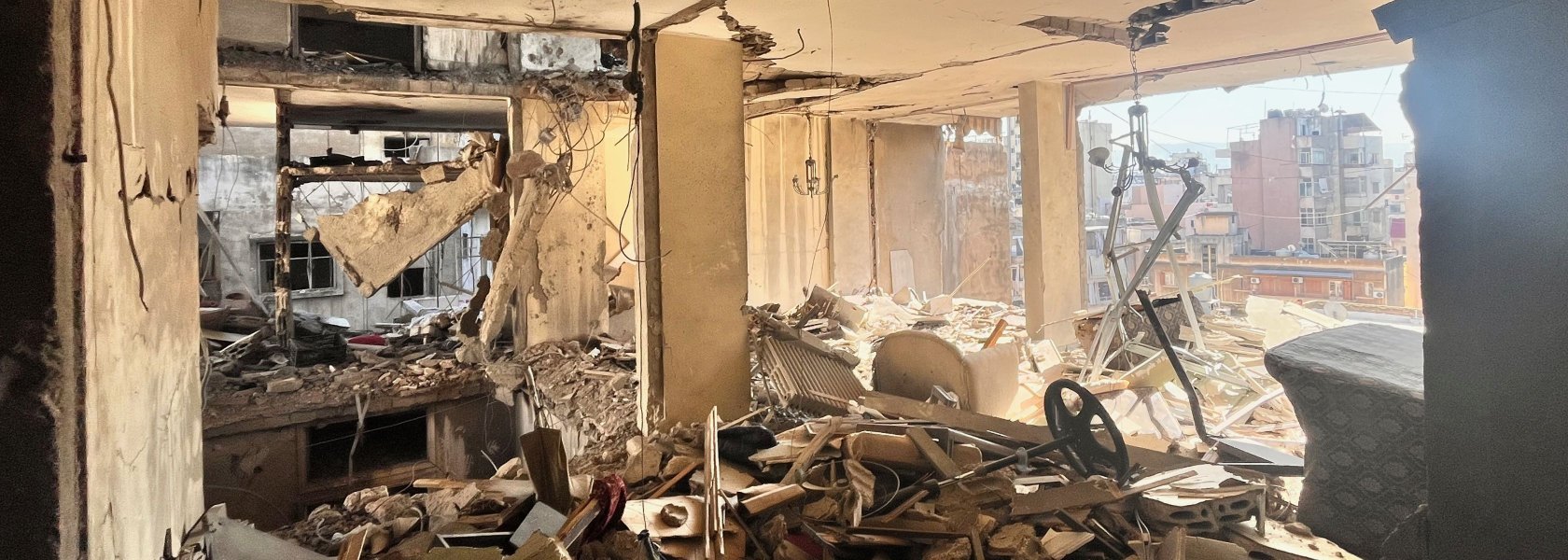
Franco-Lebanese artist and filmmaker Ali Cherri, alongside the International Federation for Human Rights (FIDH), filed a civil party complaint with the French War Crimes Unit.
This complaint, filed against unknown perpetrators, denounces the Israeli army’s bombing of a civilian object, which could constitute a war crime under French criminal law and international humanitarian law.
On 26 November 2024, at 5:30 p.m., just a few hours before the ceasefire agreement between Israel and Hezbollah was due to come into effect, Ali Cherri’s apartment was targeted by an Israeli military bombing. Among the victims were his parents, Mahmoud Naim Cherri and Nadira Hayek, as well as a domestic worker employed by the couple, Birki Negesa.
Located in the residential neighborhood of Noueiri in Beirut (Lebanon), the building targeted by the strikes housed Ali Cherri’s apartment on the 9th floor, where his parents lived. The bombing completely destroyed this apartment, as well as those on the 7th and 8th floors of the building.
Based on, in particular, the digital reconstruction work carried out by the organisation Forensic Architecture, as well as on documentation from Amnesty International, the complaint highlights the targeted nature of the attack and demonstrates the Israeli army’s responsibility in it.
"As a son, a citizen, and a victim, it is my duty to ensure that this war crime committed by the Israeli army is recognised for what it is, so that it may be brought to justice—for my parents and for all the civilians killed that day. Justice cannot undo death, but seeking justice means refusing to let impunity lead to the destruction of other lives," says Ali Cherri.
The attack on 26 November 2024 is part of the broader context of the military operation conducted by Israel in Lebanon since October 2023.
This military operation has had devastating consequences for the civilian population and objects, and has resulted in the deaths of more than 4,300 Lebanese. It has been characterised, notably, by repeated strikes on civilian residential areas, purportedly justified by Israeli authorities in the name of the fight against Hezbollah.
Wadih Al-Asmar, co-founder and president of the Lebanese Center for Human Rights (CLDH), stated: "In a context marked by persistent impunity, this complaint constitutes the first initiative to bring before judicial authorities the crimes committed by the Israeli army on Lebanese territory, of which civilians were the primary victims."
"These attacks constitute a clear and repeated violation of international humanitarian law, which imposes an obligation to distinguish between military objectives and civilian objects and populations," said Clémence Bectarte, lawyer and coordinator of the FIDH Litigation Action Group. "The French justice system must ensure that these crimes do not go unpunished, and that those responsible are prosecuted, particularly when its own citizens are the victims."
Although French courts do not have jurisdiction over the killings of Mahmoud Naim Cherri and Nadira Hayek, Ali Cherri’s dual French-Lebanese nationality gives French judicial authorities jurisdiction to investigate the bombing of the apartment he owned.
On March 11, 2026, Mohamad Shehab, a cameraman who had recorded footage of Ali Cherri’s parents’ apartment as part of his work for Forensic Architecture, was killed along with his three-year-old daughter during an Israeli strike that targeted their home. His wife is currently in critical condition. This attack, which occurred under circumstances similar to those surrounding the strike on the Cherri family’s building, illustrates the persistence and intensification of Israeli military operations in Lebanon, including those targeting civilians.
Main Image: Courtesy Ali Cherri