
First Absolute Dating of Palaeolithic Paintings in the Dordogne, France
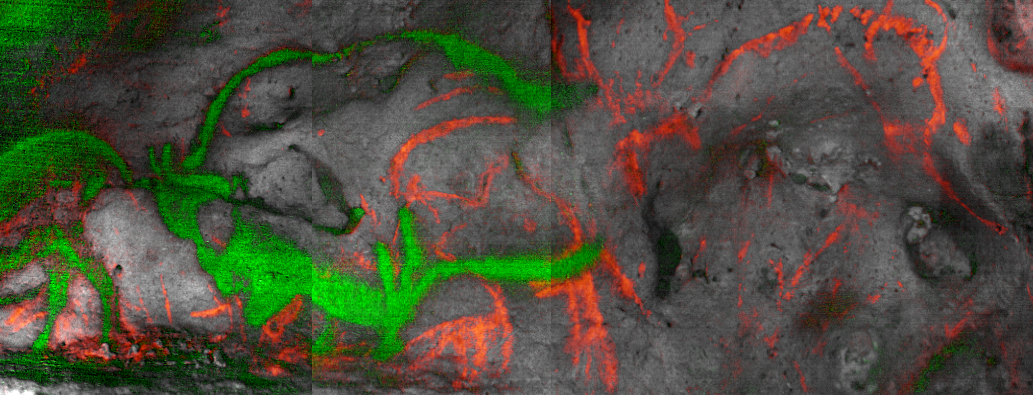
A research team led by a CNRS researcher has for the first time accurately determined the age of the cave paintings at Font-de-Gaume (Les Eyzies) in Dordogne (southwestern France), according to work published in PNAS.
It had previously been impossible to precisely date the Palaeolithic cave art in the region, including that in Lascaux, using radiocarbon dating, as the paintings were believed to contain only iron and manganese oxides. However, no study had ever confirmed the absence of carbon.
To carry out this verification, the scientists examined the chemical composition of two black drawings, depicting a bison and a mask, using Raman microspectrometry and hyperspectral imaging. These non-invasive methods revealed traces of charcoal in the black pigments. The uniform presence of charcoal throughout the black lines in the figures ruled out the possibility of contamination from graffiti or tourist activity in the cave. Collecting micro-samples was authorised on an exceptional basis for carbon 14 dating. Although this dating is challenging given the tiny amount of material, analyses confirmed a date in the Upper Palaeolithic, slightly more recent than previously estimated: the bison was painted between 13,461 and 13,162 calBP (calibrated years before present) while different parts of the mask were painted between 8,993 and 8,590 calBP, 15,981 and 15,121 calBP, and between 15,297 and 14,246 calBP.
Thanks to this new analytical methodology, the scientists hope to obtain accurate dating for other Palaeolithic figures, paving the way for a better understanding of cave art and the populations who created it.
Main Image: Image hyperspectrale obtenue par reflectance imaging spectroscopy (RIS) du panneau du Carrefour indiquant un contraste visuel entre les représentations réalisées avec le noir de carbone (en rouge, Cervidé HB14 et Bison HB15) et celles réalisées avec les oxydes de manganèse noirs (en vert, Bison HB14). © TU Delft, Matthias Alfeld.