
Famous Paintings Everyone Recognizes But May Not Know
You've probably seen the Mona Lisa's mysterious smile, Van Gogh's swirling night sky, or the dramatic figures in The Scream more times than you can count. The images appear on posters, books, advertisements, clothing, home decor, and social media, making them
recognizable outside of museums and art classrooms.
Identifying a painting does not necessarily mean that you know the subject matter. Many of the world's most popular works of art contain fascinating facts about the subject, the
technique, the historical context, or the artist.
Some made a splash as soon as they hit the canvas, and others gained instant fame after the paint was up. Just take a closer look, and these old faces look surprisingly fresh. Here are iconic paintings known not just for their appearance but for reasons that make them stand out.
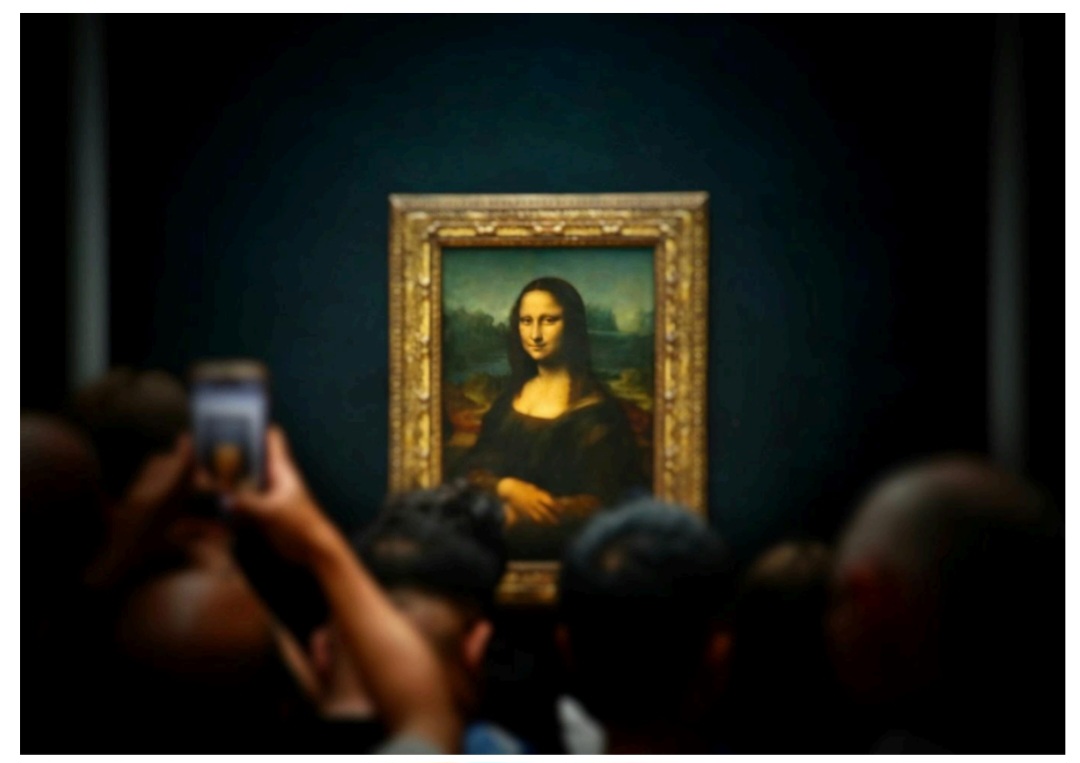
1. Mona Lisa Has a Story Behind the Famous Smile
Leonardo da Vinci's Mona Lisa might be one of the first images that come to mind when
people talk about famous paintings of famous painters, yet its reputation can overshadow the work itself. Leonardo painted this portrait during the Renaissance, and it is often linked to Lisa Gherardini, a Florentine woman.
Who she was and what her expression means have fascinated viewers for centuries. The
National Gallery points to Leonardo's keen interest in facial expression and his knack for
using gesture and appearance to hint at a person's inner state.
One detail deserves a closer look: Leonardo's subtle handling of light and shadow. He blends gradual transitions instead of hard outlines, which gives the face a soft, almost shifting quality.
That technique, usually associated with sfumato, heightens the uncertainty around her
expression. So the painting's fame doesn't rest on the smile alone. It also shows how
Leonardo approached observation, atmosphere, and human expression.
2. The Starry Night Turns a Simple View into Something Extraordinary
The swirling lines, the bright stars, the dark cypress tree, and the bold sky are all hallmarks that will immediately make you recognize the painting by Vincent van Gogh, The Starry Night. Van Gogh painted it in 1889 at the Saint-Paul-de-Mausole asylum in Saint-Rémy, transforming a night landscape into a much more expressive one.
Van Gogh takes the sky itself as the centerpiece rather than a backdrop. The movement
ripples outwards with the strokes curving across the canvas, while the village below remains calm and orderly. This contrast adds great dynamism to the painting.
The work is also one of the most reproduced images of the present day. It is easy to identify in the smallest size, due to its unique style. It is a strength that is no wonder it continues to appear in reproductions and creative projects, such as paint by numbers of renowned artworks.
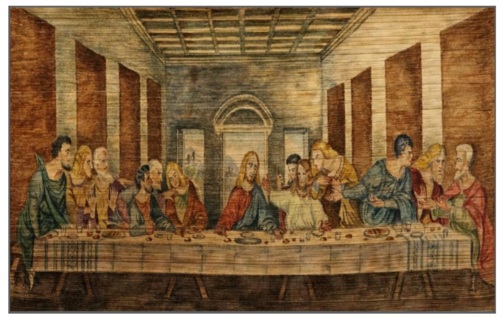
3. The Last Supper Captures a Dramatic Moment
The Last Supper is also one of the most famous paintings in Western art by Leonardo da
Vinci. It is a painting he created for the refectory of Santa Maria delle Grazie in Milan, a
church where he is depicted as announcing that one of the disciples will betray him.
What sticks with this art is Leonardo's arrangement of the figures around Christ. The
disciples' gestures and expressions vary, creating the impression of movement despite the
setting being an immovable wall.
Leonardo was interested in how to express what he called the movements of the mind
through body language and facial expressions. That is certainly evident here. Instead of
arranging his 12 identical figures in a line, he provides each group and each individual with a reaction to the news they can see.
4. The Scream Turns Emotion into an Image
You can't mistake Edvard Munch's The Scream for anything else. A figure stands on a bridge with hands pressed to the sides of its head, while the landscape around it seems to bend and ripple.
The image has turned into visual shorthand for fear, anxiety, and emotional distress. Even
so, Munch's work runs deeper than the familiar emoji-style version that pops up in popular
culture. The warped landscape, intense colors, and sweeping lines come together to build
an unsettled mood.
There's also an important distinction between the versions of The Scream. Munch made
several versions of the composition in different media and at different dates. So the image
most people recognize belongs to a larger body of work rather than standing as a single
isolated experiment.
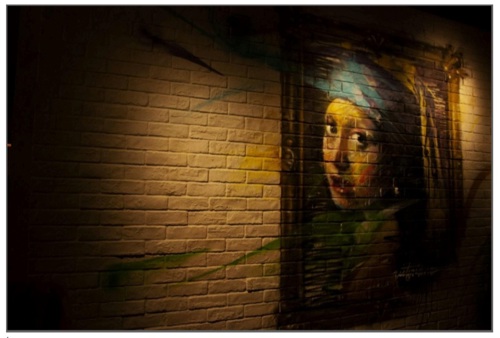
5. Girl with a Pearl Earring Is More Mysterious Than It Looks
Johannes Vermeer is typically identified by the girl's direct gaze, the dark background, and
the large pearl. However, no one is certain which young woman it was.
The painting was not intended as a commissioned portrait, but rather as a study of a
character or expression, called a tronie. The way Vermeer uses light is effective. The girl's
face, lips, eye, and earring are lit with a small amount of light while the rest of the
background remains dark.
That simplicity is one reason that the painting has an appeal. There is hardly anything to
distract your attention, and it naturally falls on the girl's face and the glittery earring. This
has made it one of the most widely known images associated with Dutch Golden Age
painting.
Final Thoughts
The most obvious paintings are the ones that will make you want to look at them again.
These works span different eras, contexts, and art movements, yet they have all found their place in popular memory. They're not just hot because of their pretty pictures.
Every work is accompanied by a narrative, a process, a historical context, or a concept that adds dimension to the common image. With those details in mind, the next time you view the painting, it may seem different. At first glance, it may appear to be a familiar scene, but it can reveal a window into the artist's time, options, and perceptions of the world.