
Egypt discovers Old Kingdom tombs in Aswan
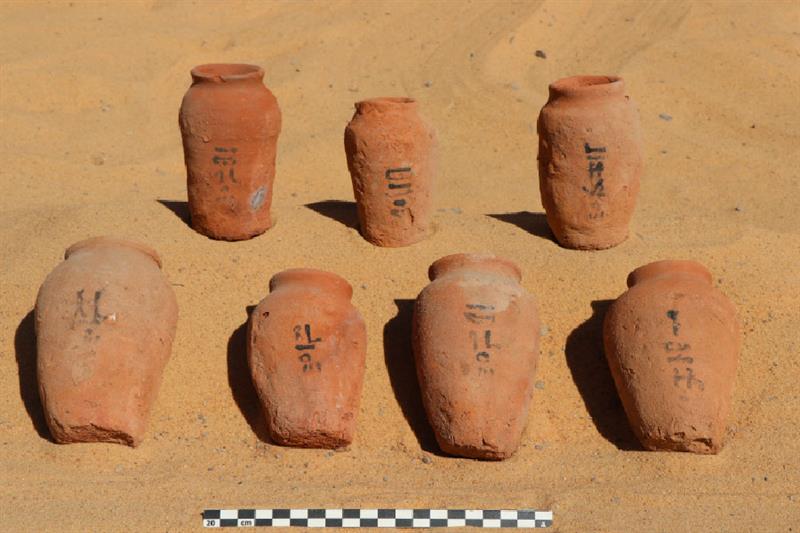
An Egyptian mission from the Supreme Council of Antiquities (SCA) has uncovered a group of rock-cut tombs dating back to the Old Kingdom at the Qubbet Al-Hawa site in Aswan.
The discovery, made during the current excavation season, includes tombs featuring burial shafts and chambers, offering new insights into the funerary practices of one of ancient Egypt’s earliest periods.
Archaeologists also found evidence that these tombs were reused during later eras, including the First Intermediate Period and the Middle Kingdom, highlighting the site’s continued significance across centuries.
SCA Secretary General Hisham El-Leithy said the discovery enhances the historical importance of Qubbet Al-Hawa and contributes to a deeper understanding of its development over time.
He added that documentation and scientific recording of the findings are set to continue as part of the council’s academic mission.
Among the most notable finds are two burial chambers containing around 160 pottery vessels of various shapes and sizes, many of which remain in good condition. The vessels bear inscriptions in hieratic script and are believed to have been used for storing liquids and grains.
In addition, archaeologists uncovered a collection of artefacts in the tombs’ outer courtyard, including bronze mirrors, alabaster kohl containers, colourful bead necklaces, and a range of amulets dating to the Middle Kingdom.
Qubbet Al-Hawa is known for its extensive necropolis, which spans multiple historical periods from the Old Kingdom through the Greco-Roman era, making it one of Upper Egypt’s most significant archaeological sites.
Main Image: Courtesy Supreme Council of Antiquities Egypt