
Decorative Art Sculptures From Carvings to Art Glass
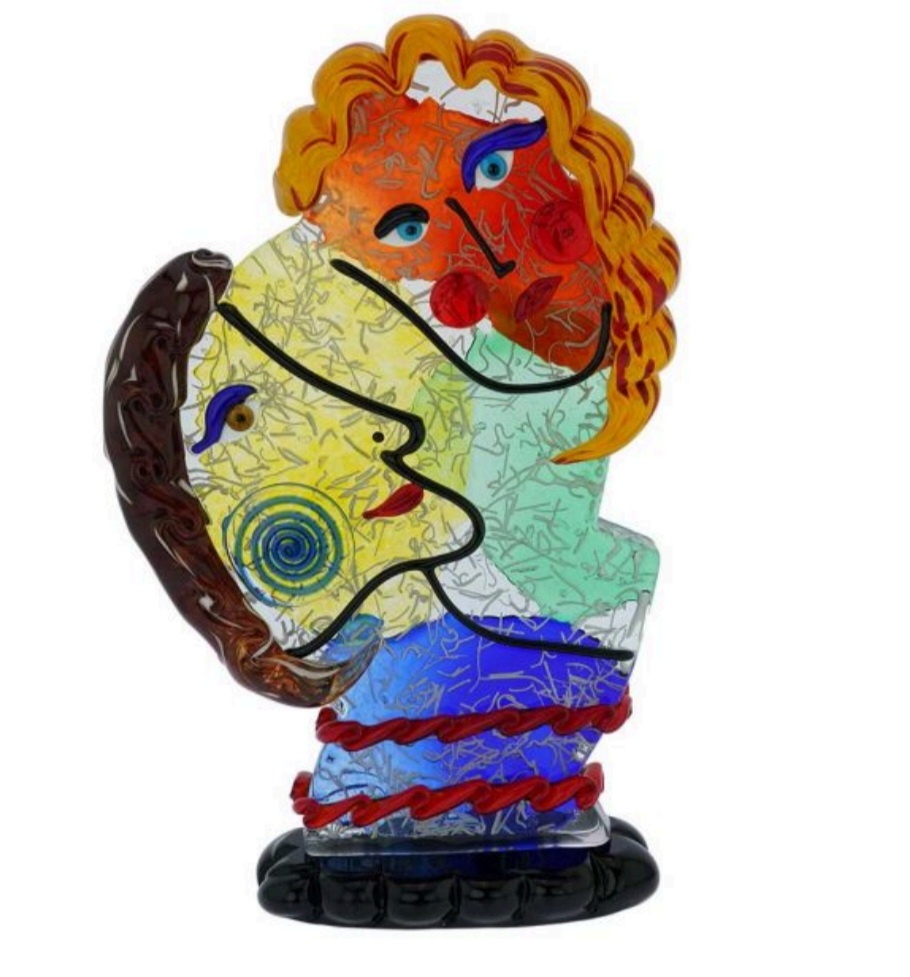
Decorative art sculptures have a long and interesting history, dating back to ancient times. Their evolution shows us how society has changed, whether it be in religious beliefs, people’s values, or advances in technology.
From the earliest carved stone to contemporary art glass sculptures, people experimented with creating three-dimensional forms to evoke deep emotions.
Sculptures speak to us on a different level than paintings because they have weight and depth. They change with the light, cast shadows, and look different from various angles. They can change how a room or gallery feels, giving us insight into what the artist wanted to portray. From early carved wood, stone, and bone to current glass sculptures, the journey is a fascinating trip through history.
The History of Decorative Art Sculptures
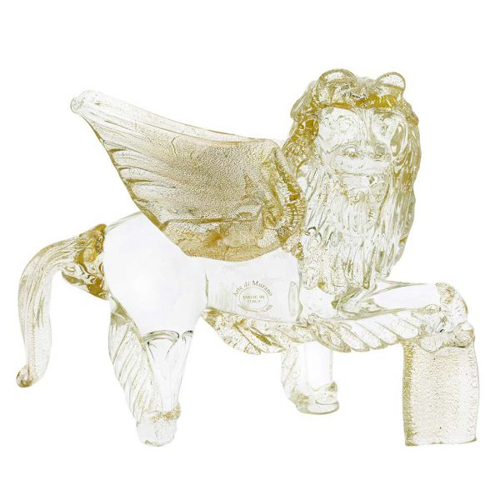
Ancient Sculptures
Sculptures have been found dating as far back as 28,000 - 25,000 B.C. At that time, they followed spiritual themes and depicted fertility.
In ancient Greece, statues, usually made from marble or bronze, showcased the beauty of the human form and were based on naturalism. The Romans were masters in portraiture, creating both busts and magnificent statues, their best being equestrian. The main materials used were, as in Greece, marble and bronze, and they mixed realism with current affairs.
Ancient Egyptian statues were generally carved out of stone, and some were truly spectacular, such as the Sphinx, situated by the great pyramids of Giza near Cairo. However, in general, statues were created to be included in the magnificent tombs of the pharaohs, as well as to be placed in temples. They often represented the gods the Egyptians worshipped.
In Mesopotamia, statues were mainly made out of alabaster and basalt. They represented royalty and were often religious, although the Assyrian Lamassu was a bull with a human head.
Terracotta was another material used to make statues in ancient times, the most famous being the Terracotta Army in China, which guarded the tomb of Emperor Qin Shi Huang, who died in 210 B.C.
The Middle Ages
After the Western Roman Empire fell in the 5th century A.D., statues became primarily religious. The Byzantines stopped making free-standing statues in the 7th century because of the fear of idolatry. Instead, they created reliefs and architectural sculpture.
During the Romanesque era of the 12th and 13th centuries, stone carvings on church facades and portals were common. A good example of this is the Cathedral of Santiago de Compostela in Spain.
Outside Europe, the Islamic culture prohibited sculptures depicting humans, but geometric and plant-based ornaments decorated buildings. Bronze statues were created in southern India, and temples were adorned with stone statues. The Benin Kingdom (modern-day Nigeria) created bronze busts and plaques using wax casting and depicting the power of the royalty, as well as their religious beliefs.
Gothic
The Gothic period lasted from the mid-12th century until 1500. Cathedral walls were adorned with statues, as were the magnificent entranceways. Carved panels surrounded the entrances, depicting scenes from the Bible. On the outside, gargoyles and grotesques decorated the walls. These were mythical or animal-like stone figures, often working as rain spouts.
Inside the churches and cathedrals, the tombs of royalty, nobility, and bishops were adorned with stone or bronze statues of the deceased. Sometimes, they were depicted in prayer; at others, at rest.
Statues at the beginning of the Gothic period looked stiff and unnatural, but as time went on, they became more realistic. They also changed from flat surfaces carved into walls to the three-dimensional figures at the end of the 14th century.
The Renaissance
The Renaissance, which occurred between the 15th and the 17th centuries, brought a revival of the canons of classical art, with its beauty found in nudity and classical forms. The first nude statue since ancient times was Donatello's “David”, created in the 1440s. Michelangelo's “David” is also naked and is a marvel of creativity, as it was carved from one large block of marble. As time went on, statues gained dramatic features and emotional depth, leading to the Baroque art period. In that time, many well known sculptural works portrayed dynamism and movement, such as Bernini's “The Ecstasy of Saint Teresa.”
Although decorative glass sculptures from Murano didn't gain prominence until the 20th century, they started to rise to prominence during the Renaissance. Wealthy people started to commission glass figurines, as well as larger sculptures. With the advent of the Baroque period, following the Renaissance, Murano glass artisans started to create more intricate animal and floral figurines.
The 19th Century
19th-century artisans moved away from religion and royalty towards realism and romanticism, as well as neoclassicism. In addition, some artisans, such as Auguste Rodin, broke away from strict academic rules and, instead, used rough surfaces, focused on light play, and created psychological intensity in his works, such as in ‘The Gates of Hell’.
Modern Sculptures
Experimentation was at the forefront in the 20th century. For example, Pablo Picasso co-founded the Cubism movement, which favored geometric shapes. Later, he became associated with surrealism.
Art glass sculptures gained popularity in the 20th century. In the early 1900s, Murano artisans embraced Art Nouveau, which was popular at the time. They created detailed animal and character figurines, including birds, fish, and clowns.
In the 1920s and 1930s, Art Deco, with its geometric forms, was welcomed. New techniques were created, such as the dense, bubble-infused glass called Pulegoso. This was invented by Napoleone Martinuzzi when he worked for Venini Glassworks.
After World War II, historic Murano families such as Venini, Seguso, and Barovier and Toso elevated decorative glass sculptures. They began to collaborate with independent designers and modern artists, merging traditional techniques with modern and bold designs. There was an explosion of light and color, and asymmetrical designs were typical. Murano glass, once again, became globally known and highly sought after.
Sculptures by Renowned Murano Maestros and Companies
Venini
Formed in 1921 by Paolo Venini and Giacomo Cappellin, the company produces lighting and art glass, including animal glass figurines. Several designers have worked for the company, including Fulvio Bianconi, who, in the 1950s, created figurines of playful characters, brightly colored animals, and exaggerated human figures.
Swedish Tyra Lundgren was the first woman to work for Venini. She was with the company from 1936 until the 1950s and created minimalist bird and animal figurines.
The renowned Carlo Scarpa worked for the company in the 1930s and 1940s. He was known for his great attention to detail and his ability to seamlessly combine the traditional with the modern. When it came to decorative glass sculptures, he created themed animal centerpieces for universities.
Archimede Seguso
Archimede Seguso, who was born in 1909, was inspired by the natural world. Many of his art glass sculptures have aquatic and organic themes, including fish, flowers, and abstract organic shapes. He had the great ability to infuse life and fluidity into his glass figures.
Seguso used different techniques to create his glass figurines, including Sommerso and Millefiori, and he used opaque Alabastro glass, which has the ability to diffuse light. Many of his figurines were also decorated with gold leaf.
Alfredo Barbini
Alfredo Barbini was made famous by his heavier glass figurines, which blend tradition with contemporary ideas. He used innovative methods such as hot-shaping acid-corroded surfaces. This involves coating the surface of the glass with gold or other metals so that they react with heat to create a textured, weathered look.
Barbini used the Sommerso technique to create blocks, encasing brightly colored, expressive, and stylized fish, turtles, seahorses, and other marine life. He was able to layer the glass so that each fused into the next without mixing, creating exciting color combinations and stunning reflections.
Another method Barbini refined was the Massello technique. With this, he was able to stretch and mold hot glass without blowing, and created virtually any shape he wanted.
Lino Tagliapietra
With a career spanning over 70 years, Lino Tagliapietra is considered one of the world's greatest glassblowers. Born in Murano, he became a maestro at the age of 21. Originally creating glass using Murano techniques, he eventually went to America to share these and then combined tradition with American Studio Glass experimentation.
Tagliapietra has created numerous decorative glass sculptures, many of which are especially large, in particular, his Dinosaur series. This series merges sea life forms with dinosaurs, featuring graceful and elongated lines. His works are abstract and brightly colored, and can be found in around 35 famous museums around the world, including the Corning Museum of Glass in New York and the Victoria and Albert Museum in London.
Tagliapietra's signature creation is ‘Angel Tear’. Each sculpture is shaped like a tear and has a narrow base, wide middle, and an elongated neck.
Other Makers of Art Glass Sculptures
Kosta Boda
Kosta Boda is a Swedish company dating back to 1742. It has produced many well-known collections of animal and human sculptures, such as the Zoo Collection, which contains such animals as hippos, giraffes, and lions.
Kosta Boda is known for creating glass both by mouth-blowing and by sand-casting. The sculptures are expressive, a mixture of mystic and abstract imagery, and are richly colored. They are solid, and the crystal glass interplays well with the light.
One of their artisans was Bertil Vallien, who became famous for his sand-cast boats, human heads, and subterranean landscapes. His wife, Ulrica Hydman-Vallien, created glass faces, snakes, flowers, and eyes, which she hand-painted in bright colors.
Moser
Moser is a Czech company founded in 1828. Its decorative glass sculptures are made from eco-friendly, lead-free crystal. They are intricately crafted by hand, and are known for their rich gemstone-like colors, created by mixing metal oxides with the molten glass rather than by hand painting. Some pieces even have 24-caret gold or platinum accents.
Each sculpture passes through a number of master glassmakers. The glass is precision-cut, featuring rounded shapes, and can be hand-engraved. Sculptures include figures, globes, crosses, and Art Nouveau-inspired motifs.
Swarovski
Swarovski was founded in 1895, but didn't start producing glass figurines until the 1970s. This started with a factory worker in the workshop in Wattens, Austria, gluing together leftover chandelier parts to make a crystal mouse. Mice figurines were then made to be given as gifts for the employees, but were soon sold publicly at the 1976 Winter Olympics in Innsbruck. They were a hit and a series of animal figurines were created. Now Swarovski has an even larger range, including Disney characters and Winnie the Pooh figurines. Since 2012, the crystal has been lead-free.
Decorative Art Sculptures Enduring Appeal
Decorative art sculptures have a long history spanning tens of thousands of years. Made from wood, stone, marble, bronze, and now, glass, they remain treasured pieces of decor. Modern interior designers and collectors alike are trending towards this three-dimensional art form, which can be perceived from many perspectives. They want sculptures and figurines that are hand-made, textured, and tactile. A decorative glass sculpture has the ability to change the way a room feels. It can reflect and refract light and, if placed strategically, can anchor a room.