
Creators Face Revenue Losses of up to 24% by 2028, New UNESCO Report shows
UNESCO has just launched the latest edition of its flagship report Re|Shaping Policies for Creativity, which analyses a rapidly evolving cultural landscape shaped by digital transformation, Artificial Intelligence (AI), shifting global trade dynamics, and mounting threats to artistic freedom.
A global monitoring report with data from over 120 countries, it points out the need for stronger policies to protect creators from widening inequalities.
The report underscores that while cultural and creative industries are increasingly recognized as drivers of economic growth, social cohesion and sustainable development, the systems supporting them remain fragile and uneven.
Although 85% of reporting countries include cultural and creative industries in national development plans, only 56% set specific cultural objectives — revealing a gap between general commitments and actions.
Global trade in cultural goods doubled to US$254 billion in 2023, with 46% of exports originating in developing countries. However, developing countries account for just over 20% of global trade in cultural services, reflecting growing disparities as markets shift toward digital formats.
Direct public funding for culture remains critically low at under 0.6% of GDP globally and continues to decline.
A persistent “visa wall” limits artistic mobility, with 96% of developed countries supporting outward mobility but only 38% facilitating inward mobility from developing nations.
While digital technologies have broadened access to creative tools and audiences, they have also intensified inequalities and economic precarity.
Digital revenues now represent 35% of creators’ income, up from 17% in 2018, marking a structural shift accompanied by income instability and increased exposure to intellectual property infringements.
By 2028, the impact of Generative AI outputs is projected to result in global revenue losses of 24% for music creators and 21% for audiovisual creators.
Essential digital skills are held by 67% of people in developed countries compared to just 28% in developing countries, reinforcing North–South divides.
Market concentration among a small number of streaming platforms and opaque content curation systems marginalize lesser-known creators.
Only 48% of countries are developing statistics to monitor digital cultural consumption, limiting effective policy responses.
The report highlights growing concerns over artistic freedom and the safety of creators:
-
Only 61% of countries maintain independent monitoring bodies for artistic freedom.
-
Political instability, conflict and displacement place cultural professionals at heightened risk, yet only 37% of countries report initiatives to protect them.
-
Support mechanisms for artists at risk remain fragmented and under-resourced, while digital surveillance and algorithmic bias pose new challenges.
Progress toward gender equality remains uneven. While women’s leadership of national cultural institutions has increased globally — from 31% in 2017 to 46% in 2024 — significant disparities persist: women represent 64% of leaders in developed countries but only 30% in developing countries. Policy frameworks often continue to position women primarily as cultural consumers rather than supporting them as creators and leaders within the cultural and creative sectors.
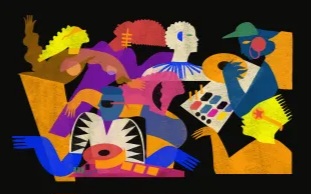
Main Image: Diana Ejaita