
Columbian Artist Beatriz González dies at 93
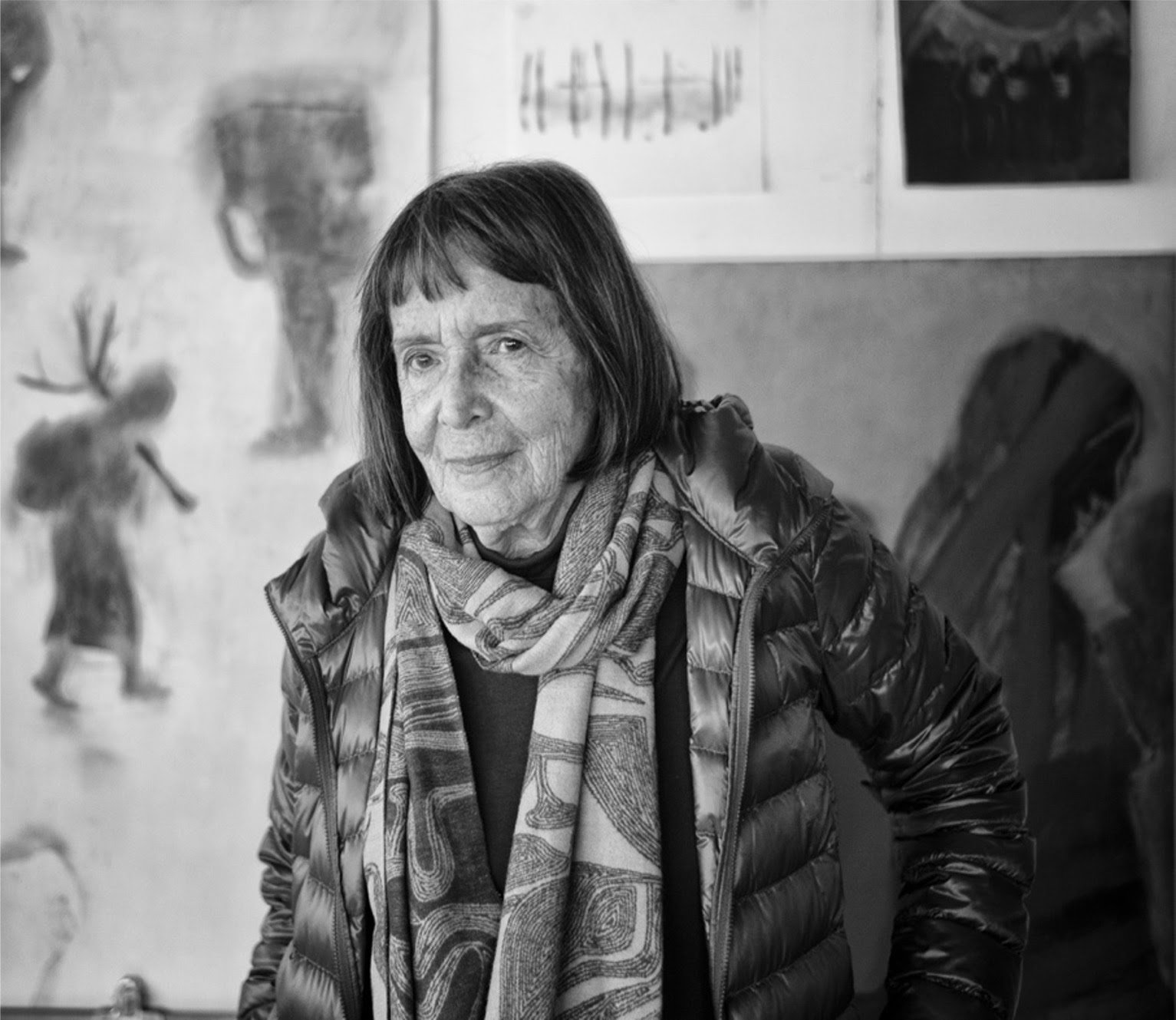
The Colombian artist Beatriz González passed away yesterday at the age of 93 after an illness in her hometown of Bogotá. Her family announced her death.
|
Beatriz González was widely known as “the painter of Colombia’s memory.” For more than six decades, her engaged artistic practice offered sharp and poignant commentary on Colombia’s violent realities. Through her powerful and often vividly colored paintings, she preserved the memory of events and victims that were frequently absent from official histories. |
|
González was a key cultural figure in Latin America and an inspiration to generations of artists. In addition to her work as an artist, she was active as a curator, researcher, and educator at universities and museums in Colombia. Her international recognition came relatively late, but her work is now held in major public collections, including the Museum of Modern Art in New York, Tate Britain in London, and the Museo Reina Sofía in Madrid. Over recent years, De Pont Museum has assembled a significant ensemble of her work, including key pieces such as Cargueros de Bucaramanga (2006) and Ceremonia de la Caja (2010). On October 5, 2024, her first solo exhibition in the Netherlands, War and Peace: A Poetics of Gesture, opened at De Pont Museum in Tilburg. The exhibition focused on the human gesture as a bearer of emotion and collective memory. Martijn van Nieuwenhuyzen, Director of De Pont Museum, said: “Beatriz González was an artist of exceptional significance, who with great clarity and empathy made Colombia’s collective memory visible. Her work connects personal emotion with political urgency and has continued to speak to new generations over the decades. That De Pont Museum was able to present her first Dutch solo exhibition and include her work in the collection is a great honor for us.” |
|
Beatriz González began her career in the early 1960s with paintings that reinterpreted Western masterpieces. She developed a distinctive visual language through her reworkings of iconic works by artists such as Vermeer and Velázquez. In her subsequent work, she drew inspiration from images found in mass-produced media such as newspapers and magazines, developing a painterly idiom characterized by graphic planes and vivid colors, often referencing Colombian folk art and popular culture. From the 1980s onward, González’s work took on an explicitly political dimension. The ongoing cycles of violence and social fragmentation in her country increasingly shaped the themes of her work, while her palette became more subdued. González grew up during La Violencia (1948–1958) and later witnessed the bloody civil conflict of the 1960s, followed by the drug wars, kidnappings, and countless civilian casualties. As a witness to this history, she used her art to ensure that anonymous victims would not be erased from collective memory. A major highlight of her oeuvre is the monumental intervention Auras Anónimas (2009), realized at a neglected cemetery in central Bogotá. For this project, González produced thousands of silkscreened plaques bearing silhouettes of cargueros (porters), which now cover the cleared graves of unidentified Colombians. With this powerful installation, she honored the anonymous dead of decades of violence. In November 2024, she received the International Award for Public Art 2024 for this work, awarded by the International Institute of Public Art at Shanghai University. In 1966, Beatriz González spent several months in the Netherlands with her husband, architect Urbano Ripoll (1934–2024). While Ripoll attended a training program at the Bouwcentrum in Rotterdam, González studied at the Rotterdam Academy of Fine Arts (now the Willem de Kooning Academy). During this period, she deepened her engagement with printmaking and studied the work of Dutch masters such as Vermeer and Rembrandt. In 2024, González returned to the Netherlands for the opening of War and Peace: A Poetics of Gesture at De Pont Museum. The presentation of her work, together with renewed visits to the Rijksmuseum, the Stedelijk Museum, and the Van Gogh Museum, marked a deeply meaningful moment in her life. “How extraordinary it is that I can experience this now, at over ninety,” she said in an interview with the Dutch daily NRC in September 2024. |