
Carel Visser in the Rijksmuseum Gardens
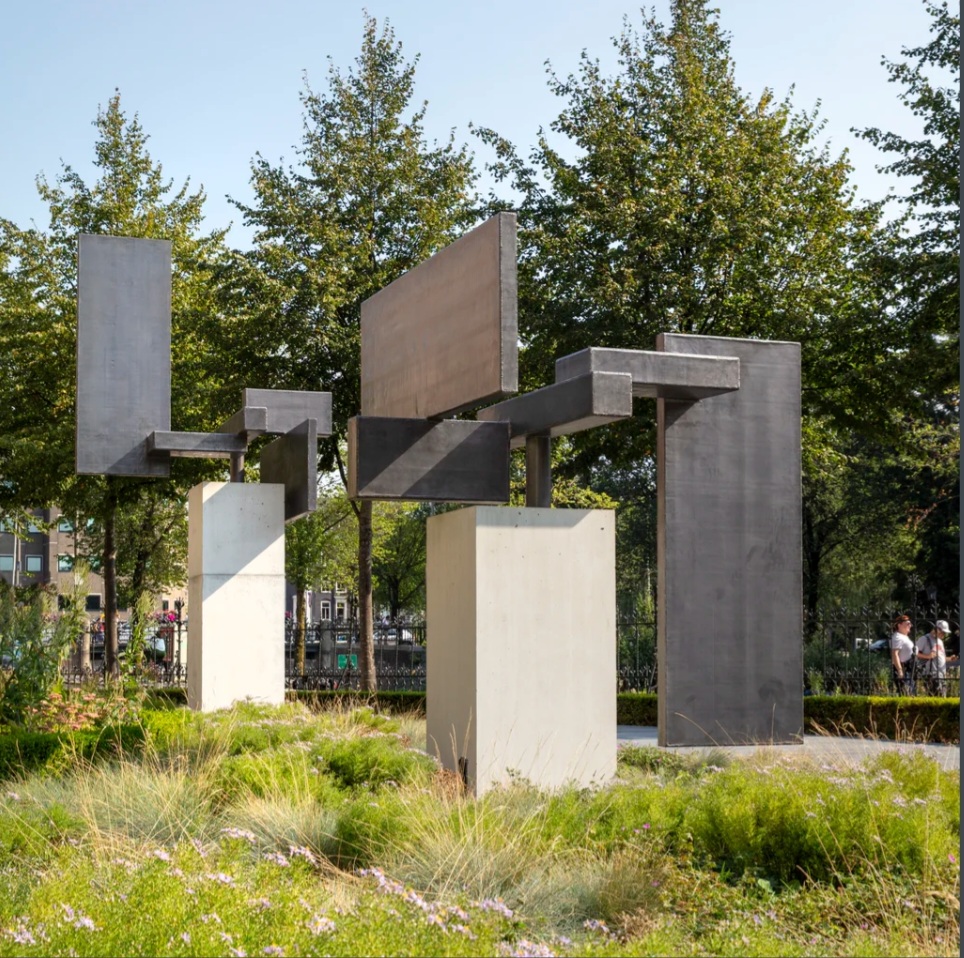
This summer’s retrospective exhibition of the sculptor Carel Visser in the Rijksmuseum Gardens features 13 monumental works.
It marks the first time the Rijksmuseum’s annual garden exhibition is dedicated to a Dutch artist. The most influential Dutch sculptor of the 20th century, Visser worked with industrial materials such as iron, steel and concrete. The sculptures on display, some of them up to eight metres tall or five metres long, come from various Dutch museums, private collections and public spaces. The exhibition will be open to everyone free of charge from 5 June to 25 October 2026.
Carel Visser had no interest in traditional sculpture in bronze, marble or wood – he preferred working with steel plates and iron structural elements, using a cutting torch and a welding machine. In his early work, Visser initially built on the pioneering efforts of artists such as Constantin Brâncuși and Alberto Giacometti, but over time his work developed a distinct personal signature through a gradual increase in the abstraction of natural forms. Through his geometric abstraction in the 1960s and 1970s, the artist increasingly aligned himself with Minimal Art and related movements.
The sculptor made extensive use of reflection in his work – not only in Signal 1 and 2, but also in other works in the outdoor exhibition, such as Double Form 4 (1957–1958) from the collection of the Kröller-Müller Museum in Otterlo; Two Birds (1954/1994) from the collection of the heirs of Carel Visser; and Big Four (1965) from the city of Amersfoort.
Works by Carel Visser were installed in many post-war developments in the 1960s, in Amsterdam, The Hague, Hengelo, Groningen, Emmeloord, Stadskanaal, Zeewolde and elsewhere.
Main Image: Signal 1 and 2 in the gardens of the Rijksmuseum. Photo: Rijksmuseum/Albertine Dijkema.