
Britain Places Export Ban on an Iconic Bust of Edward the Black Prince
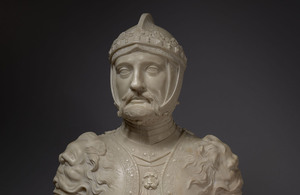
The UK Government has intervened to ensure a bust of Prince Edward of Woodstock (1330–1376), known as The Black Prince, is kept in the country in the hope that a UK gallery or institution can save it for the nation.
Renowned as an extraordinary medieval military commander during The Hundred Years War, Edward was the son of King Edward III of England. He won major victories, including the Battle of Poitiers (1356), and supposedly became known as The Black Prince because of the colour of his armour.
The bust was part of a series of eighteenth century depictions of Edward the Black Prince, which came to define how the image of him was subsequently presented. Since this bust was created nearly three hundred years ago, its iconic representation has been copied countless times and has become the accepted image of this important historical figure.
The government has placed a temporary export ban on the sculpture in the hope of keeping it accessible to the UK public. The deferral period gives time for museums and galleries to raise the funds needed to acquire the bust, for example through philanthropic support, or for a private individual to purchase it and donate it to the nation.
Created around 1735, the bust is the work of leading Flemish sculptor, Michael Rysbrack. Rysbrack did much of his most famous work in England, where he was renowned for portrait busts and architectural decorations.
The Minister’s decision follows the advice of the Reviewing Committee on the Export of Works of Art and Objects of Cultural Interest (RCEWA).
The Committee made its recommendation on the basis that the bust met the first and third Waverley criteria for its outstanding connection with our history and national life and its outstanding significance to the study of 18th-century British sculpture and its use in political propaganda, royal patronage and positioning.
The decision on the export licence application for the painting will be deferred for an initial period ending on 5 February 2027 inclusive in which we welcome expressions of interest from an appropriate purchaser to try and acquire the object. At the end of the first deferral period owners will have a consideration period of 15 Business Days to consider any offer(s) to purchase the painting at the recommended price of £496,044.51 (plus VAT of £9,920.89). The second deferral period will commence following the signing of an Option Agreement and will last for four months.