
Beyond Opening: Anna Semenova on What Happens After Exhibition Goes Live
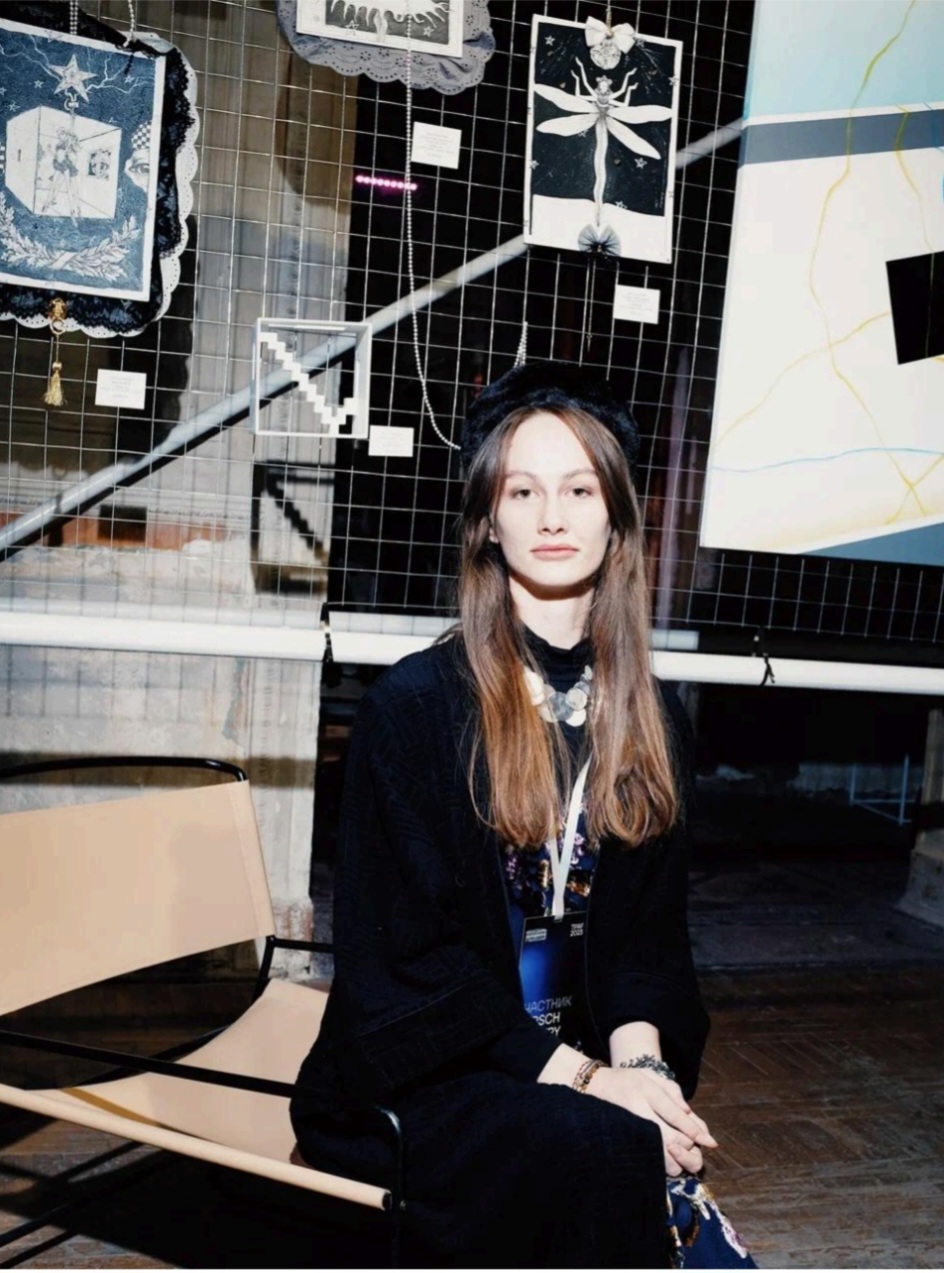
Anna Semenova is a curator based in Barcelona, working across institutional and independent contexts shaped by instability - post-industrial sites, geopolitical rupture, collective memory.
In her previous conversation with Art Jobs, she spoke about the invisible side of curating: the decisions and works that never made it into the final exhibition. ArtDependence picks up that thread from a different angle - what happens to a project, and to the curator, after the exhibition doors open and then close.
An opening is often treated as the finish line, even though for a curator it's closer to the midpoint. What changes for you personally once a show is live and the audience is inside it?
An exhibition doesn't really exist as a finished object until someone else's consciousness enters it. Before opening, it's a hypothesis, isolated in its own internal logic. Only the audience, through its presence, its unpredictable reading, its disagreement, turns it into something real, something capable of changing and arguing with itself. Professional criticism completes that process: they give the show a second life, a collective one, separate from the curator's original intention.
But behind that side sits a very practical one. Curatorial work rarely stops at producing meaning, it almost always carries a producing function too. And with the opening comes a demanding new phase: parallel programming, attracting the specific audience the project was built for, keeping the show alive so it doesn't end on opening night or exist only in the photos from that evening. Then comes the post-production of the event itself: the closing, the de-install, the archiving, everything that usually happens off-camera but requires no less precision than the concept itself.
Has the audience or critical reaction ever made you reconsider your own concept after the exhibition was already up?
Yes, and I think that's exactly how it should work. Criticism is a gift, not an attack, it's the only real stress test an idea gets once it leaves the safety of the studio or the office. Without it you're just guessing whether something holds up.
But reconsidering doesn't mean abandoning the concept at the first sign of resistance. It means holding two things at once: staying loyal to what you actually meant, and staying honest about whether reality is confirming it or quietly correcting it. The skill isn't in being unshakeable, and it isn't in folding either. It's in knowing which kind of feedback is asking you to sharpen the idea, and which is asking you to admit you got something wrong.
You move between institutional, independent, and collector-facing contexts at the same time. What keeps one logic from quietly overriding the others?
Institutional work teaches patience and process, how to build something that holds up under scrutiny and survives committees. Independent work teaches speed and resourcefulness, how to make something real with almost nothing. Collector-facing work teaches a kind of precision the art world doesn't always reward: you have to explain why something matters in language that holds up outside the theory bubble.
None of these contexts corrupts the others. If anything, moving between them keeps each one honest, a purely institutional curator can drift into abstraction, one working only with the market can drift into telling clients only what they want to hear. Operating across all three creates a kind of accountability that staying in one lane never produces.
You've said the profession doesn't take the audience seriously enough as a question. If you had to design a show where the viewer doesn't just decode meaning but actually co-authors it, where would you start?
In practice, I try to build a layer of real participation into every project, regardless of scale. Sometimes that means a single work that demands the viewer's actual involvement, not just their attention. Sometimes it's the venue itself, a space that places people inside a uniquely immersive environment by its very existence, so they're not assessing it from outside but living inside its logic for the duration of the visit. In more commercial contexts, that's often taken the shape of an auction or another live format that requires people to act, decide, commit, rather than just look and move on.
The common thread is that I'm not interested in participation as decoration on top of a show. I want the viewer's behaviour to actually change something, even slightly. It's a smaller ambition than "co-authorship" as a grand idea, but it scales: the same instinct works in a project with no budget and in a major institutional one, it just changes shape depending on what the space and the partners allow.
How do you tell the difference between a curator under-explaining something and an audience that simply isn't ready to hear it yet?
An audience that isn't ready yet still gives a response, even if it's a negative one. Irritation, resistance, argument, even boredom, these are all forms of reaction, and they usually mean the work touched something real. That's a normal, sometimes even healthy part of encountering serious art.
It's a different story when the audience simply doesn't understand why they should be looking at this at all. Then there's no response, only indifference, and that's on the curator: the form didn't work, the language never found its way in. I tend to tell these two situations apart by the presence or absence of a response, not by its tone.
You've worked in Spain, Russia, and other contexts with very different speeds of trust-building. Has that experience shaped how you think about identity more broadly?
I have a background in the rigorous study of cultural codes and how they shape daily life, habits, and the way people build business and personal relationships. This is a much deeper layer of identity than language or a passport, and it constantly surprises me how strongly these codes shape people who genuinely believe themselves to be free of any framework.
This subject keeps surfacing in the art field, through how artists handle memory, ritual, the body, hierarchy. An artist can build radically innovative work and still, without noticing, reproduce a structure of thought laid down long before they were born. I find this area especially interesting precisely because it's rarely named directly, even though it runs through almost everything happening in contemporary art.
What's a question about curating you wish a journalist would ask you - and no one has yet?
What's a skill you developed outside the art world that turned out to be essential inside it.
Negotiation, in the most unglamorous sense, is the kind you learn dealing with people who have nothing to do with culture and don't owe you politeness just because the conversation is about art. That skill turned out to be far more useful than anything I picked up from theory. Underneath the specific, the mechanics stay remarkably consistent, and that's been one of the most transferable things I've ever learned.