
Baroque Masterpiece Worth £9,000,000 at Risk of leaving the UK
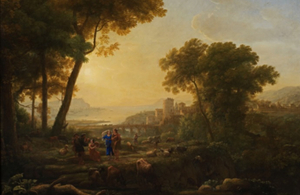
A temporary export bar has been placed on Claude Lorrain’s Landscape with Rural Dance.
Painted in Rome by Claude Lorrain, the seventeenth-century image depicts shepherds making music whilst tending to their flocks. It is thought to be nearly four hundred years old, having been painted around 1640.
Renowned as one of Claude Lorrain’s masterpieces, the scene draws on popular poetic themes of an idealised location removed from urban life, populated by shepherds and other rural figures. Measuring 118 x 148.5 cm, the painting was one of the artist’s largest works at the time of completion.
Thanks to its scale, grandeur, handling and quality, this work is considered to be one of the most ambitious pieces created by Claude Lorrain. The artist is well known for his ability to depict natural light on water, particularly from the morning or evening sun, with this painting being a prime example of the use of golden light over a coastal landscape.
Claude Lorrain, known after his birthplace in the Duchy of Lorraine, was born the son of a peasant. He travelled and studied in Germany and Italy, before settling in Rome where he completed Landscape with Rural Dance. The mastery demonstrated in his depiction of natural beauty has led to a valuation of £9,000,000.
Culture Minister, Baroness Twycross said: "This beautiful painting presents a stunning window into the pastoral idylls of the seventeenth century. Claude Lorrain’s work is remarkable to view, drawing you ever deeper into the scene with each exquisite detail. We are very fortunate to have had this incredible painting in the UK for over 250 years. I hope it can remain in the UK to be enjoyed by the public for many years longer."
Christopher Baker, Committee Member said: "Claude created a deeply seductive, escapist vision of the warmth of southern Europe through his bucolic and poetic landscape paintings. This serene example, from about 1640, shows him at the height of his powers. He worked for kings, cardinals and diplomats; however, it was first recorded in the collection of a Flemish merchant in Rome and was later displayed for many years at Woburn Abbey, Bedfordshire, as part of the splendid collection of the Dukes of Bedford. Because of its transcendent beauty and fascinating history, which warrants further research, as well as the profound influence of such paintings on British taste, every effort should be made to secure it for a public collection."