
Austrian Artist Arnulf Rainer dies at 96
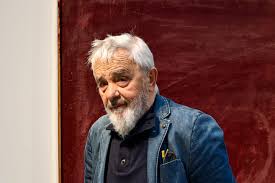
Arnulf Rainer established himself as one of the most influential artists of the post-war period.
Born in Baden, Austria in 1929, Arnulf Rainer ceaselessly searched for new means of expression throughout his lifetime.
Arnulf Rainer is regarded as a pioneer of Art Informel, a movement which brought an intuitive form of lyrical expression into the field of abstraction. One of his early influences was Surrealism, and an ongoing interest in dreams and the subconscious imparts a mystical element to his work. He created his first Overpaintings in 1952, layering brushstrokes over existing artworks or photographs, and has continued to investigate the possibilities of this process throughout his career. Produced in dialogue with the underlying source material, which remains visible to varying degrees, the overpaintings play with notions of creation and destruction in a paradoxical homage to the original.
Drawing and painting over his own canvases and, from 1953 onwards, those by others, Rainer creates densely textured abstract works through the slow accumulation of considered brushstrokes. The process itself is of paramount importance to the artist, akin to a visual form of spiritual consciousness: 'The organic act of creating is perhaps more essential than the completed painting; for this progressive participation in the obscuration or immersion of the painting, its gradual return to peace and invisibility […] could be compared to the contemplative experience of religious life.' This contemplative experience is one he imparts to the viewer, who is left to ponder the tantalising mystery of what lies beneath.
Painting over existing artworks – both his own and, from 1953, that of others such as Emilio Vedova (1919—2006) – the artist created densely textured abstract works that play with notions of creation and destruction in a paradoxical homage to the original. The process itself was of paramount importance to the artist, akin to a visual form of spiritual consciousness: ‘The organic act of creating is perhaps more essential than the completed painting; for this progressive participation in the obscuration or immersion of the painting, its gradual return to peace and invisibility could be compared to the contemplative experience of religious life.’
Surrounded by his family, Arnulf Rainer died peacefully on December 18th at the age of 96.
Main Image: Arnulf Rainer, Courtesy Thaddaeus Ropack